0:00 / 0:00
Did Jesus Predict Crop Circles? Rabbi Singer Exposes the Truth
349 views
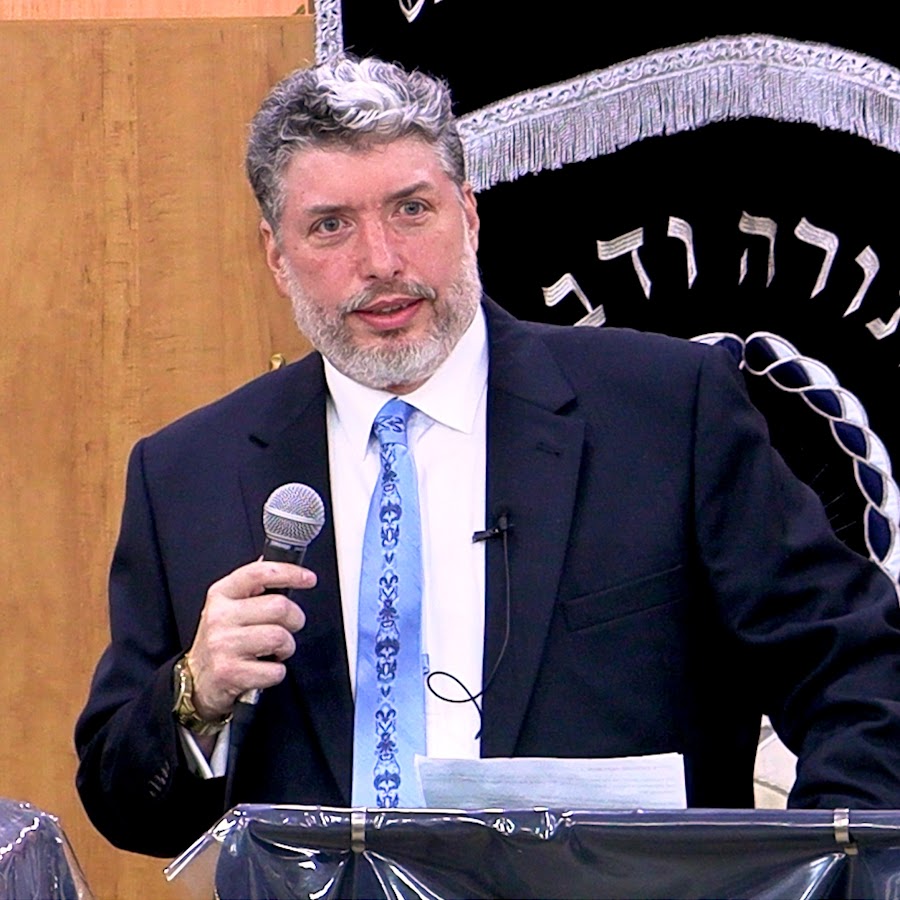
Help us combat aggressive Jewish evangelism in Israel: https://outreachjudaism.org/partners/ Let’s Get Biblical Study Guide (Volume 1 & 2) https://outreachjudaism.org/shop/lets-get-biblical-expanded-2-volume-study-guide/ https://outreachjudaism.org/ www.videvo.net https://www.youtube.com/user/tenaktalk Music: https://www.purple-planet.com Use in accordance with Israel's Copyright Law 5768-2007 section 27a. Music at the end: Adon Olam https://youtu.be/a6oS9N0hJTY http://www.toviasinger.tv/ #toviasinger #Judaism #Christianity #Messiah #joerogan
Comments(0)
Transcript
Auto-generated transcript. Not time-synced to the video.
All right, moving on into new color, Mr.
Robert, you're live on the air.
Go ahead and present your question,
Rabbi.
>> Okay, uh
Well, I My question is, why do you
dismiss the New Testament when it
explains crop circles and tornadoes,
which is Matthew 13:24-30,
and the basis the end of Jeremiah 30,
and then it explains a pyroclastic blast
of military artillery when gunpowder
wasn't even invented to what, the 8th
century? To give us any kind of a hint
of a continental or a global explosion,
and that's explained in our Revelations
18. So, that's my question. Why you
dismiss the New Testament when this It
complements the Old Testament.
>> Could you please tell me where in
Matthew we have crop circles?
>> It's uh I It's uh Matthew 13:24-30.
It talked about the good field
infiltrated by the bad seed. The angels
asked, "Can we You want to pull up the
bad ones?" And he goes, "No, in doing
so, you will uproot the righteous ones."
>> I I am sorry. You You talking about This
is the parable of the weeds and the
wheat. There's nothing there about crop
circles.
I thank you for your question, but
you're reading stuff into text that's
not there. I encourage anyone to It's a
parable. It's the parable of the weeds
and the wheat.
And it's the parable of those who will
make it and those who will not. It's
similar to other parables, and there's
nothing there about crop circles.
People are just reading things in there
that are just not there.
I don't think we need to go on, but
there's a lot of this kind of stuff
that's just not there, and I would
encourage you I'm not You know, it's not
many rabbis who would encourage people
to read the Christian Bible. If you but
then normally
a child of a Hashem should not read
books that convey false teachings. But,
if you feel somehow compelled
to believe in
in that one should believe in this then
please open up Matthew 13 and it's a
parable of the weeds and the wheat, very
famous parable. It's nothing to do with
crop circles. There's no crop circles
there and it's all made up.
And that's what people do. They take
this vague text and they say this is
what it's talking about. It's all silly.
Conversely, lahavdil, if you look at
Tanakh
and you look at the great prophecies of
Jeremiah chapter 30 verse 3 that the
Jewish people return back to the land.
That's very, very precise.
It's all about the children of Israel
who return back to the land of Israel.
There's no other way to read that. You
look at Jeremiah 30 verse 7 in contrast,
lahavdil el al fi of dollars. You read
Tanakh you have there that there's a
time that's coming. It's a sorry
Eliyahu, the time of great tribulation
for Jacob.
And there is nothing like it. No
parallel. Jeremiah lived 2,500 years
ago.
He lived at time when the Neo-Babylonian
Empire emerged
at that time. And he lived in a horrible
time. But he's pointing to the future
and saying there's something coming down
the road and there's no parallel to it.
Omi mena yevoshe but from this great
tribulation from it, you'll have your
deliverance.
Wow. That's precise. This is I I don't
mean to do this
but you when
fantastic claims require fantastic
evidence. That means if you I just want
to make one point cuz I know people will
ask this question. If a person wants to
think that a certain verse in the
anywhere in anything that they call a
Bible and it's really talking about
that, you have a right to do that. You
have a right to do that. Nothing
There's nothing wrong with a homily.
Nothing wrong with There's a passage
that's ambiguous. That's all it says. I
think it really is an allusion to that.
You have every right to do that. Okay?
Listen carefully cuz I need to teach you
how to think, which is more important
here than crop circles.
There's a difference between a homily
and apologetics. Meaning, if you're
seeking to prove something and you're
making a fantastic claim, so you require
fantastic evidence.
You can't provide some sort of homily
that this is an allusion to that. We
have to have something that we agree on.
That's the meaning of the text. Meaning,
it's a postulate.
Right? In geometry, in order to prove
that if two sides of a triangle are
equal, their opposite angles are equal.
You have to show that
from postulates, axioms that require no
evidence, no evidence in order to
demonstrate a² + b² = c².
Right? This is rudimentary geometry.
Right? But you The reason why this fails
is because you are asserting that there
are postulates here which don't exist.
And they're not axiomatic. You
understand? A postulate means definition
is that this is something that requires
no evidence at all cuz it's so
self-evident.
And you agree to that. And then your
postulates I don't mean this personally.
Please don't be offended. But you have
no postulate. Completely failed. That
means the test for apologetics. Meaning,
to prove a point means that you have to
have uh you have to predicate them on
something that's unassailable.
And this fails
I was going to say miserably, but that
sounds
very offensive and aggressive and I
don't mean that.
But you shouldn't do that. This is the
Why do I make a deal about this? Because
this is done all the time where
Christians make these outrageous claims
and then we say, "Show me the evidence."
And the evidence is something that just
blows in the wind, that is predicated on
nothing.
So, you have to have you make a
fantastic claim, we need fantastic
evidence. Now, for homily, people are
entitled. The only thing is if you have
a homily, you just want to say, "Look,
there's a verse here and I think this
verse is there." You The homily
cannot in any way, if you have there's
some secret in the text that is
esoteric, you know,
so that that cannot disrupt or interfere
with the plain meaning of the text.
You cannot have a homily of any kind if
it disagrees with the plain meaning of
the text. If it violates that, so
therefore,
there's no crop circles in in Matthew
and
and all these things are just inferences
that are predicated on things that don't
exist except in people's imagination
that are good at are fortunate enough to
have a YouTube platform. Thank you for
your question. If you enjoy this
program,
please like and subscribe.
>> [music and singing]
[music]
[singing]
[music and singing]