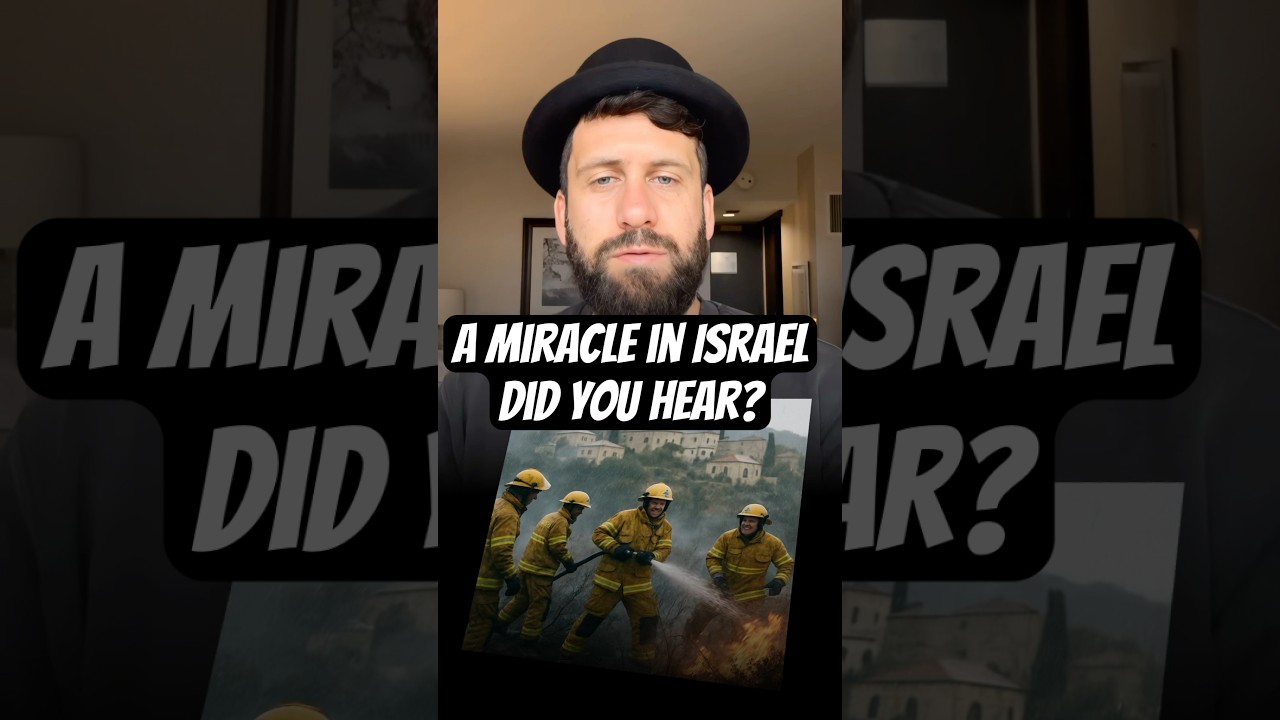
Preparing video...
0:00 / 0:00
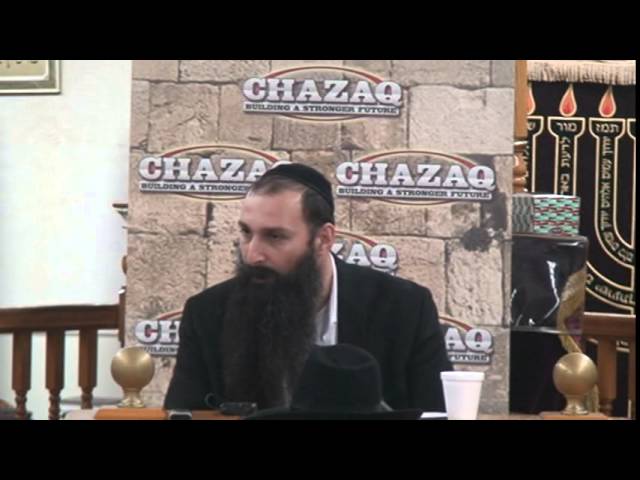
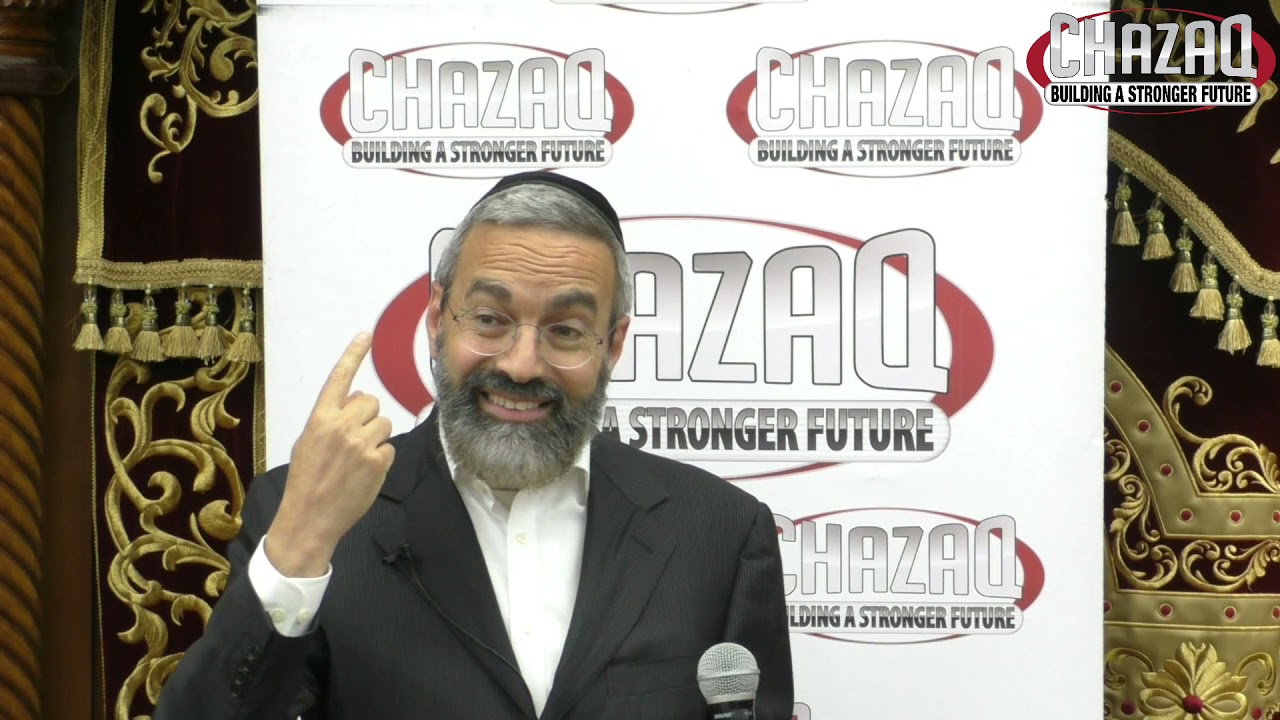
CHAZAQ’s Torah Talks #17: Mr. Charlie Harary - Unlocking Greatness
298 views

Together We Can Make A Difference, To donate online to CHAZAQ please visit https://www.fidelipay.com/chazaq For more information about upcoming CHAZAQ events and programs, please call 718-285-9132 or Visit https://www.chazaq.org
Comments
Transcript
Auto-generated transcript. Not time-synced to the video.
Welcome, welcome, welcome everyone to
yet another amazing episode of Tuesday's
Tommy Torah Talks. Tonight we have the
honor of having with us a very dear
friend, Charlie Harary, a man that needs
no introduction. He's been to the Khazak
organization many, many times at
all of our big events, I believe, if I'm
not mistaken. And he's inspired uh tens
of thousands of people. He's a man
that's filled with greatness, and we're
going to be talking about that topic.
Charlie, how are you doing, my dear
brother? I'm wonderful. Thank you so
much for having me on the show. It's
always an honor to be with you. Ah, God
bless. Okay, so we're going to be
talking tonight about unlocking
greatness. I know you have a book on the
topic. You've spoken for us on this
topic many times, and we're going to
jump straight into it. So many people
have their own definitions of greatness.
Maybe you could define what greatness is
all about, my dear brother.
The greatest definition that I've seen
in greatness took place not in an
English book. It's in um the safer of
Michtav M'Eliyahu. The Desler speaks
about
ah, good stuff. The Desler speaks about
this concept of um the way I always
remember it. It's Nekudas Habechira. And
the way I always remembered it was um a
football field. He doesn't say that, but
that's how I see the you know, it
processes in my head, right?
Um
when when if you look at life like a
football field, right? Depending on
where you are on the field, it it
doesn't really matter cuz it's the same
thing that happens, right? There is the
offensive line and the defensive line,
and the offense wants to go forward, and
defense wants to stop them.
So if you ask somebody like, "What part
of the field is greatness?" The answer
would be like, "Well, it depends where
everybody is."
So if you're on the 20,
that's where the greatness happens. And
if you're on the other 20, well, that's
where the greatness happens.
And so one of the great mistakes we make
in life is that we think that greatness
is objective.
The guy there is great. That woman's
great.
And in some cases,
there's a truth to that, right? You look
at a tzaddik. You look at a major, you
know, a mashpia. You look at someone out
there who's lived their life for Klal
Yisrael, and yeah, they've achieved
greatness, but it's not our greatness.
And that's the mistake. You can enjoy
their greatness. Moshe Rabbeinu achieved
his level of greatness.
That's Moshe's greatness.
And we can take it and learn from it and
be inspired by it, etc., etc. But as you
know the famous story of Reb Zusha, Reb
Zusha is not going to get worried about
going to the Shamayim and say, "How can
we learn from Moshe?" He's going to say,
"How can we learn from Zusha?"
So, really greatness is the
the challenges that are before you at
this second.
And the way we deal with what is in
front of us
every moment of our life
is where greatness happens, and when you
aggregate all these moments, you then
have something that other people or you
can actually recognize, which is
greatness.
I feel the greatness. I feel the energy.
I love it. I love it. So, some might
feel that in order to achieve greatness,
they need to come from a certain family,
a certain background.
Uh you know, where is the root of
greatness? Where where is it found? So,
first of all, that's out. Like I I I
write a Listen, yichus is massive,
right? If you have yichus, if you're
zocheh to have parents, grandparents,
great-grandparents that are tzaddikim,
that have done things for Klal Yisrael,
you know, just like
you know, kiss up to Hashem Yishtabach
Shmo, you have someone in Shamayim or in
this in this world that's helping you.
Like that's an amazing gift that you
have.
But
it doesn't seem like from our history,
look, that's that's the the critical
factor for your own greatness. You know
what I'm saying? Like when Moshe
Rabbeinu went to Shamayim and he looked
over and he saw Rebbi Akiva, and and he
was so to speak transported as the the
Medrash goes into his Beis Medrash, and
he said, "Who is this person?" Rebbi
Akiva didn't have yichus. Rebbi Akiva's
yichus wasn't wasn't necessarily yichus.
He was, you know, the a descendant of
converts. You know what I'm saying? Like
when you look around at even the way the
Eibishter made Mashiach work. Like look
at the way the Kadosh Baruch Hu worked
out David HaMelech and worked out
Mashiach. Like everywhere you turn these
are stories you can't even teach in
schools so like and of course the people
have but
if you look through Jewish history you
don't see that unless you have you have
no shot
if you have
like
you have people to guide you you have
people in that are dominant for you have
like
I shall have a
but if you if you don't feel you have
like that's fine you still have I was
talking to someone recently and he said
to me like I want to know my the person
I said I'll give you your he goes how do
you know I'm like simple Abraham you
Jacob like do you need better than that
like do you need someone bigger than
Abraham like what's going on like you
you got like let's move on like you're
good like Abraham you Jacob
they're the biggest they're the biggest
dude like you don't get better than them
and you for sure come from them and like
you're good like are we good now
like you know like
don't get people get caught in reasons
why they can't push hard to be great
it's just an excuse
it's just an excuse hey we don't know
so many people come from people that
have no idea you know we've been through
for so many years nobody knows where
they come from I mean people know they
can track it but so many of us have no
idea who's our great great great great
great great great great grandparent like
we don't really know
so
don't let
be an excuse for you not trying hard at
the challenges in front of you and
working on your relationship to the
who
it's just
that's not where our
great people have come from if you have
it amazing and if you don't then make
your
the best thing you can do if you don't
have
is give your children us
that would be the best answer to us
oh wow powerful you mentioned
Abraham was father was we all know he
was an worshiper he sold out of so he
didn't even have and then he could say
and complain all my life I can't become
great I have a brother, Yishmael. And
then we know Yaakov also had a brother,
Esau. So, family and yichus sometimes,
like you said it beautifully, that you
have to create it, you have to become
great, no matter where you are, no
matter what the situation is. And even
when you see people with yichus, like if
you really look at like let's say like
Siyum HaShas Rabbis, like
we don't see that the the Rabbis they
don't become Rabbis because of their
father, they become Rabbis because they
work. Like we don't know what's going on
in the homes of certain tzaddikim. Those
kids don't become leaders because they
are just born, they work really hard.
Like I remember hearing a story about
the Satmar Rebbe.
And he he he he said that in his home
they never ate
because they were in the mood. Like the
idea that you're just like, I need a
snack. Like they never ate like the
concept that like, I'm just I'm hungry.
Like you eat when you need to eat. So,
it wasn't just like the Rebbe came from
the Rebbe. It happens to be sometimes
you grow up in a home that's so holy
that like your your your habits,
but you can build those.
You can you can learn from Seforim, you
can you can you can learn from a Bayis
Em, you can you can build your home, you
can build your life in a way that has
yichus, so to speak, right? That
each one of us, if we're born into this
world, are born with a piece of Hashem,
and
there's no bigger yichus than that.
Powerful, powerful. You just inspired
me, Charlie. Ah. Ready. You always
inspire us. It's Hashem. So, uh some
people might feel that they're too far
along in their life to unlock greatness.
Uh but we know that in the Gemara it
says, "Yesh koneh olamo b'sha'ah achas."
Uh there are those who acquire their
next world in one moment. When does
achieving greatness start? And what are
the checkpoints to make sure we are on
the right path? If you if you ever feel
like you're too old, here's what I want
you to do. Open up a Chumash and track
every person in Chumash and find out
when they do their biggest things. Just
track it. I'm not Avram, Yitzchak,
Yaakov. Yosef's a little different.
Yosef was fairly young. He was 30. Keep
on tracking. Moshe, Aaron, how old were
they when they took all of them at the
same
Most of the times when you look around
in Torah, it it took a while. Avram
Avinu, how old was he when he brought
Yitzchak up to to to get slaughtered?
Like
do the work and you'll see that there's
no concept of being too old. Aleph.
There's no
Nobody know Like I said, nobody knows
what their tough kid is, really. And
nobody knows
what greatness is. It's what's in front
of you.
It's different for each person. So, you
may say to yourself, "Listen, I didn't
grow up with an education. This guy next
to me went to the best Yeshivas and he
like knows so much and I know so
little." Yeah, but his challenges are
not your challenges.
And Hashem's not looking at his
scholarship and measuring it to your
scholarship.
So many times in life, because the
society around us
has no choice but to measure us in a
comparative sense. When you go to
school, they have no choice. It's a
school. It it you you we don't we can't
afford walking around with private
tutors all day. You got to go to a
school. And that school's got to have
25, 30 kids. As great as a school can
be, they got to educate lots of people.
So, they have no choice but to give
everybody the same test. Like you know,
it is what it is. Like every time like I
remember when I wanted when I was
applying for law school, like I had all
these extra this and extra that and I
was putting my application together and
my my advisor was like, "Listen, who
cares? Just what did you get on your
LSAT?" So, I'm like, "What did I get on
my LSAT? Like that's only one measure."
And he's like, "Yeah, but think about
it. The law school's getting
applications from thousands of students.
They don't know if like you being the
president of your school's kosher or
not. They have one test that everybody
takes. Yeah, it's not perfect, but
it is what it is.
So, understand that in the world that we
live in,
everybody uses an imperfect measure
called comparison.
And you can't help but be in that world.
You can't help but look over to see what
your friend got when you get your test
back. You can't help but look to see how
your friend's doing in business. You
can't help but look over to see how your
friend davens for the amud or how much
they know or who's giving shiurim or
whatever.
And the physical world, the material
world, operates in this way.
Then we make a mistake.
We think that's how Hashem operates.
Here's the deal. Hashem's not the
material world. Hashem's got a better
metric cuz he's Hashem.
He looks into your heart. He knows your
whole life. He knows everything about
you. He's not comparing you cuz he's not
the principal of a school.
He's not the head of an admissions
committee in a law school.
He's Hashem.
And he put you in this world with all of
your weaknesses. And he put you in this
world with all of your challenges. And
he gave you your family, and he gave you
your life, and he put you exactly where
he needs you. And maybe breaking your
teeth over one line to him is more
valuable than the rabbi standing up who
is quoting, you know, chapter and verse
every gemara. Maybe.
We don't know.
But what we do know is that we're not
being compared.
It's not how we roll.
You don't see in Torah where it says we
say you don't see on Kippur and we say
sorry that I'm not better than the guy
next to me in shul.
You don't see guys like knocking each
other out on Yom Kippur so that you
could finish an ilui while everybody's
passed out. You don't see No one's
comparing how long you can fast on Tisha
B'Av to see who's going to make it to
the end of the race to see who collapses
first. You don't have these concepts.
You do in You do in the world. There are
races. There's competitions.
Not in Torah.
Because in Torah, in Judaism, there's no
competition. Which means you're never
too old and you're never too young.
Wherever you are is exactly the you need
to be right now. And all you got to
think about is what's in front of me.
What's my next move? What's my next win?
What does Hashem want of me next?
And if all Rebbe Nachman says, "Hayom."
He says,
"If all you're good for is one day,
that's the only day that Hashem wants of
you. Just today. And then tomorrow
you'll worry about tomorrow."
And to me, one of the reasons why we
can't achieve greatness is because we
use all of our energy
for stuff that we can't control.
What's going to be? What's going to be?
What's the What's it worth? You know, I
What if I do Like this happens all the
time. I get inspired. But okay. And then
you get inspired. Okay, but I can't keep
this up. You ever have this any You ever
like You'll like you're inspired. You're
like, "Okay, I'd love to do this, but
like next week is the summer and then I
got to go here. Then I'm away on
vacation. The next week something Yom
Tov. You know what? I I'll I'll I'm in.
I want to do this. How about like 2026?
That's I have a pocket of time." It's
all like, "Yeah, your mind." Like you
You You You You You You Like do you know
who runs this world? You feel inspired?
That's why when I'm inspired, I just
remember to be chazak, be strong. Just
Just stay strong. Right now. Right now.
This second. And that's That's the
problem is that
we waste our emotional energy on things
that we can't control.
And that saps us of what we need, which
is what we can control, which is the
next decision.
And if you would stop all the time
saying, "I'm too old. I'm too young.
What about him? I wish I did. I wish I
did. My parents, my family."
And we just
looked at the line and said, "What's the
next decision?" And focused all of our
energy on that,
then we'd be great. Cuz we we we'd make
Cuz we we've got enough koachus to make
one decision. Like we could we could be
great for 20 minutes. Like we can have a
great day. We can't may we may we may
not be We may not be able to have a
great week.
We can have a great afternoon.
And as soon as you start seeing the
world in these little day tight pockets
with all your energy,
that's when that's when you make real
changes.
Ah,
unbelievable. So so so you've done
extensive research about greatness. What
is the number one quality in your
opinion that differentiates between the
great life
and an average life? What would you say
is
So I'll tell you what's in the research
the research that I found and what's
not.
What they don't know is the truth,
right? Cuz they don't know the truth.
Cuz you can't study the truth under a
microscope.
E- Someone who lives a great life is
someone who lives with Hashem.
Like end of story. Not like you're
praying to God to get what you want. Not
amazon.god. Actual God.
Like when you live with Hashem and you
walk in his ways and you you think about
him and you put him into your life, you
live a different life. Period. End of
story. Game over. Like no There's no
second place.
There's only one place. Dveikus, as they
say. You're one with Hashem. How do you
do that?
Starts by talking to him.
Starts by wanting him. It starts by
seeing what he wants of you. It starts
by feeling him inside There's a lot of
things you can do right away.
But straight up, there's no money,
there's no COVID, there's no job,
there's no office, there's no car,
there's no house. There is nothing in
this world that will even be a close
second to I feel like I'm walking with
Hashem.
Period.
Now, let's get to like the physical
world.
In the physical world, the alma de
shakra, as they say.
The
the unifying principles that I found
with great people is the mind.
Great people believe
that their mind is their most important
muscle.
And they they watch it. And they tend to
it.
They don't let negativity come in.
They don't waste it on stupidity.
Great people that I've met don't spend
half an hour on the phone talking about
somebody else.
Not because the Hafetz Chaim says it's
assur, because it's a waste of my brain.
They don't spend hours upon hours
watching something on a screen where
other people become great. They don't
have that in their world.
They believe that they can change. They
really believe their brain is
neuroplastic and it can change, whether
they know that word or not. They believe
that tomorrow could be better.
And they believe that if they try hard
enough, they can be different people.
They believe in the power of their of
their brains and their minds. And they
tend they watch their minds like the way
the Israeli army watches the border.
They're always on the lookout. They
never let the negativity They never let
that seep in. They guard themselves to
jealousy. They guard themselves for
envy. I'm telling you, Hazal know what
they're talking about. They say,
"Ta'avah, kin'ah, kavod take you out of
this world."
Great people without even knowing
they're like doing that are always on
guard here.
Because this is your most powerful
muscle.
And if you can say, "I want to work on
my relationship with Hashem. I want to
work on my the health of my mind."
There's no telling what you can do.
Wow. Unbelievable.
He's like such inspiration. So so
Charlie, we know in Judaism it says Kol
Yisrael arevim zeh lazeh, all Jews are
responsible for one another. What impact
does helping others in their journey for
greatness impact us on our journey? Uh
you know, when that's involved with
chazak in helping others, that's what I
feel what makes us great is we make
others great. So, what do you say about
that? So so remember, there's always two
parts of us. There's the body and the
soul.
The body wants to survive and the soul
wants to be great.
The soul isn't limited. So, the soul
feels something when you connect to
others, right? That's why when a person
goes through a life cycle, they feel
something.
They expand themselves. They expand in
marriage, expand in children, expand in
teaching.
Ask yourself, try this. Whenever you're
giving, how do you feel? Whenever you're
taking, how do you feel? Just try it. Go
to a a door, hold it open for somebody,
have the person walk in, and let's smile
at them.
Now,
see how you feel.
Next time someone holds the open for
you, see how you feel.
You'll feel differently. It's because
the soul needs
enjoys expansion. The body wants
contraction. The body wants to
accumulate, the soul wants to share.
Body and soul.
When you help another, you expand
yourself.
That's greatness. Greatness is the
expansion of self.
So, when you look at a godol or a
tzaddik, they're not a godol or a
tzaddik cuz they know more pages of
Talmud
than I'm sure there are people that are
sitting somewhere that know pages of
Talmud. They're They're godol or a
tzaddik because their souls are expanded
to include more people.
You tell them your issues and they feel
for you. You walk into a shul and the
rabbi looks at you and you know he cares
about you, right? When you're around
great people, what makes them great
isn't that they have a photographic
memory.
What makes them great is that they care
more.
So, it's counterintuitive because the
body says, "No, don't do that. You're
going to lose. Take."
You got to do it with common sense,
obviously, but when a person understands
that their essence is
to expand their soul and that's where
their greatness is,
giving becomes
their method of doing it. And so, giving
and being great is
it's part of the it's part of the same
coin.
It's like in Hebrew, the word for giving
is natan. Natan backwards would just
spell the same way. When you give in
essence you are also getting. Yeah, for
sure.
And that's what a raven means. A raven
call is raven is is is even a deeper
concept which is
we're not even complete unless we're all
together.
Right?
At our essence the call is real is one
soul.
Right? It's one soul call you so.
And so me and you are just pieces of the
same soul.
And my perspective is so limited
thinking that I'm different than you.
But really really really me and you are
in our essence the same. Like two two
parts of of an ocean. Right? If you look
at a wave and you take two cups of water
in the same wave, it's two cups of water
but they're the same wave. The same the
same ocean. So when you put it into a
vessel called a cup it seems different.
So when God puts our soul into a body
it feels different than you. But when
you really look at it it's water from
the same ocean. So me and you are the
same. We're connected. And so when I
reconnect to you, I feel like I'm more
of me.
Right? So we feel this way with our
family, with our friends, with the
people that look that are like us etc.
But if you really really were operating
at the highest level, live the real
level, every Jew that you know is really
a piece of you. So you are you're you're
up when they're up and you're down when
they're down and that's why the halacha
follows us which is a tremendous kiddush
in halacha which is
if you make kiddush
and then someone else doesn't have
kiddush you can make kiddush again.
That's a tremendous tremendous kiddush
cuz it's a bracha levatala and we're
very careful with you know saying
Hashem's
Hashem's name in vain, yeah. And yet we
still can say Hashem's name multiple
times in a kiddush because you need but
what do you have to do with me?
It's your kiddush not my kiddush. The
answer is no, it's my kiddush too cuz a
piece of my kiddush wasn't fulfilled if
you're not if you if you haven't
fulfilled it. Such a tremendous concept
if you think about it that there's a
piece of me that hasn't fully kept the
mitzvahs if you haven't kept the
mitzvahs.
So I am not just like whatever live and
let live. Now I got to do with the
saykhel. I can't yell at you if you're
going to like run the other way, but
I have to feel for you. And that means
if you're in pain, I'm in pain. And if
you're happy, I'm happy. It's a
tremendous level when you think about
it. You know, if you look at the real
tzaddikim, they didn't like
Of course they had their own children
and their own family, but they weren't
like as long as my kids are okay, I'm
okay. Right? They felt the pain of Klal
Yisrael. They walked into a room and saw
somebody and if they were struggling,
these tzaddikim were struggling. Because
they didn't see a chilluk. They didn't
see a difference between themselves and
other people.
That's greatness. The extension of self.
Klal Yisrael, we're all on the same
boat. We We all think yet 100%.
Ah, you're giving me so much chizuk, so
much inspiration. I'm sure the audience
all over the world is enjoying it as
much as I am. And uh we'll leave you off
with the one final question is if you
could leave us with a final closing
remarks, inspiring story, a message for
the whole world.
I I don't I I
got my head on I don't know what story
to say, but um Doesn't have to be a
story. A final message for Klal Yisrael.
Message. You know what? I I got to tell
you the message that I think is on our
heads is is dreaming.
If I can leave you with this, you know,
the the famous Ponevezh Rebbe would say,
you know, I the famous he would always
say that I'm people with he'd have all
these dreams of Ponevezh.
Now, Ponevezh is Ponevezh. It's you
know, Bnei Brak is you know, the
capital, the center of Torah. Um you
know, it wasn't like that all the time.
And when the Ponevezh Rebbe came to Bnei
Brak, it was hills. It wasn't what it
would look like today. And he would walk
go around fundraising and they would
say, "You're You're dreaming." And he
would say, "I am, but I'm not sleeping."
Right? Um Hayinu Hayinu K'Cholmim. The
the the ability of a Jew is to dream and
not sleep. Very powerful.
You know,
we're at a time where we got to start
dreaming again. We got to stop getting
We got We got to get out of this little
muck called everyday life. We got to
remember that we're the Jewish people.
We remember that that Mashiach is
coming. And we got to remember that we
got to have big dreams.
Dreams for each other. Dreams for our
families, dreams for for call Israel. We
shouldn't have organizations that need
to
knock on our door 100 times to help each
other.
We got to have dreams that every Jew is
taken care of.
We got to have dreams for ourselves that
we're not going to like judge our
Judaism by whether or not God's not mad
at me on Yom Kippur.
It's I want a relationship with Hashem.
Like I want to dream about life where I
can live in this world, but really walk
with God.
I want to dream about living in Eretz
Yisrael at a time where it's safe,
secure. I want to I want to Eretz
Yisrael should be in our sights. If it's
possible to go, if it's possible to be
there.
If we're in the diaspora, we have to
dream that our communities should be
should be spiritual and physical.
We have to dream of
big things, a Beit Hamikdash, Mashiach.
We can't allow this world to
lure us
into smaller dreams.
Just as long as we're safe and the
restaurants stay open and everyone's
okay, we're good to go.
Just as long as we don't have, you know,
um, you know, marches down our block
with people that are ready to hurt us,
we're good to go.
We have to raise our eyes up, all of us.
And if you It doesn't matter our
backgrounds.
It doesn't matter if we have the back
That's excuses.
If your eyes are open, you're in this
world in the fourth quarter of Jewish
history, cuz the Kodesh Baruchu sees
something in your soul, whether you
agree or not. He sees something in your
soul that is shiyach for a time of
geulah.
We got to breathe that in,
drop the whole I'm not enough nonsense,
and realize that we got to think like
geulah Jews.
And what wherever you are and you're
watching this, you got to realize that
we got to big dreams for our
relationship with Hashem, our
relationship to each other, our
knowledge of Torah, our ability to
Daven, and to really be the people that
are lights into the world.
That's right. That is a powerful
message. Think big, dream big. That's
been the rule of
It's It's enough is enough dial it up.
There's so much suffering going on in
the world. So many people are going
through all these difficulties. But as
I
hear our prayers and bring the
final redemption. Charlie, I want to
thank you for everything you did for all
of Israel. For nothing. Thank you.
your time and we really appreciate you.
You're always there for us. And what a
powerful message you just left us. What
an inspiring Tuesday timely Torah Talks
with our dear friend Charlie Harary. And
looking forward to seeing you at the the
new stream of the complete redemption.
Should be
feeling it. I brought it to you. You
know it was at this Tisha B'Av as well
as doing it in
we should do it at the new headquarters
in Jerusalem at the base of Migdash.
We'll have a barbecue coming in from all
the
so
what could be better? We'll hang out.
It'll be 67 degrees and cool on a
beautiful Jerusalem evening.
We're dancing in the streets. That's
what we should do. We shouldn't be We
shouldn't be hungry on Tisha B'Av this
year. We should be We should be
satisfied spiritually and and and
physically. Amen. That's a great and yet
every year we have Charlie on Tisha
B'Av. We should be in
Charlie once again. Thank you. Thank
everyone. Every Tuesday we have amazing
timely Torah Talks. Amazing topics.
Talking Torah. Spread the word. Tell
your family, your friends, your
neighbors, everyone and continue to get
inspired. Thank you.
Up next
24 recommendations shown

Berel Solomon
3 years ago


Matisyahu
18 years ago








Chazaq Organization
2 months ago





Chazaq Organization
2 months ago