0:00 / 0:00
Bitachon 272 - Positivity for the Future
28 views
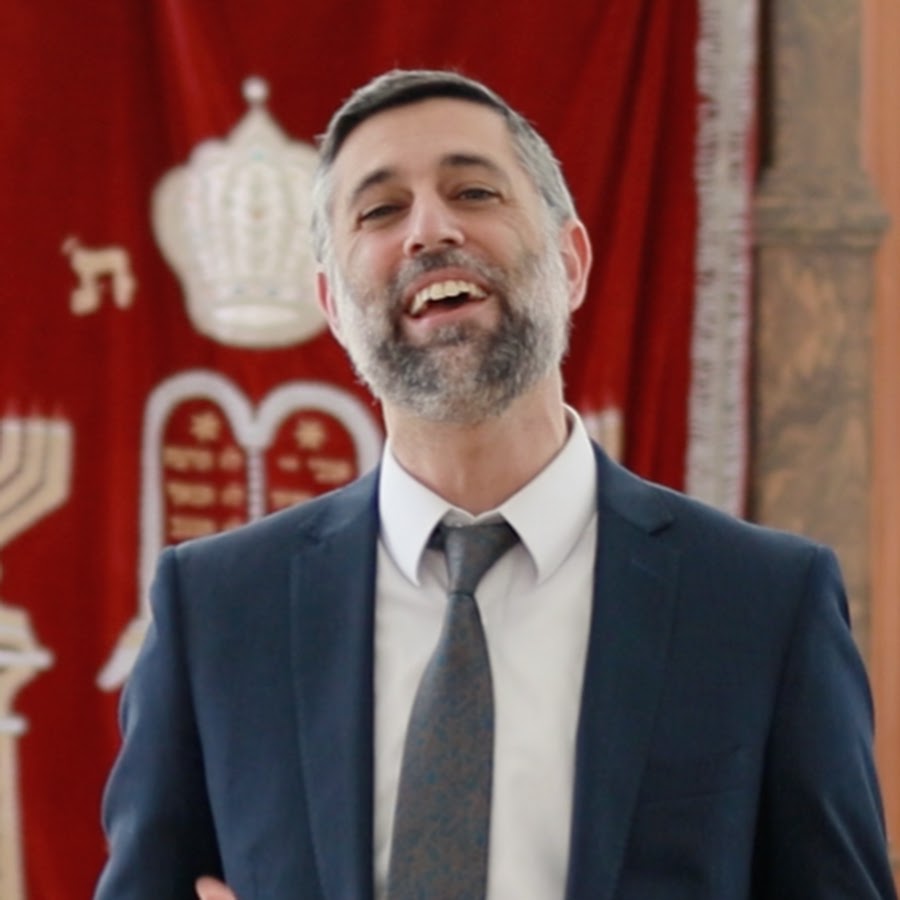
We discuss at length the opinion of the Chazon Ish, who seems to say that one can not have bitachon that good things will happen, as well as those who try to explain this to mean that this is referring to after the fact - that one can assume that even a seemingly negative event is Hashem's will for us, and will ultimately be good for us.
Categories:Music
Comments(0)
Transcript
Auto-generated transcript. Not time-synced to the video.
You're listening to the 272nd edition of
the podcast and we're going to continue
exploring the sheet of the Khaz.
If you recall at the end of last week's
Pak podcast, we quoted the Khazones who
seems to say
he does say that if you have two paths
in front of you and you don't know which
path it's going to be, is it going to be
something positive in your life or is it
going to be something that seems to be
negative in your life? He says does not
mean that I assume that it's going to be
the good path.
Means that I know that whatever happens
whether it's something that seems good
or whether it's something that seems
negative I have faith that it's from
Hashem. I know that it's absolutely from
Hashem. Now this
opinion this concept obviously requires
explanation in light of what we've
studied together. And so Rosen is going
to help us in theem
to look at this and understand it.
There were those who made a mistake in
the understanding of the of the
and others came to rectify the mistaken
understanding.
We're going to call the first group, the
ones who misunderstood the first
opinion.
And those who came to rectify the
mistake, we will refer to them as the
second opinion.
The first opinion is
the intent of the is
It's the serenity of the spirit
to be able to receive whatever happens
in your life with equinimity.
It's all the same. It's all okay.
anything that happens and to know
to also know that every single detail of
my future is in Hashem's handshu
and it's only to Hashem that I'm
supposed to turn
my eyes are if I want salvation it's
Hashem
according to this first opinion If a
person believes that it's for sure going
to be good
the way that I want it to be
according to this opinion that's fake.
That's uh you think you're happy but you
don't. You're going to end up being
disappointed.
Just because you imagine that it's going
to be good doesn't mean that it's going
to be good.
And I'm sure that whoever's listening
right now, many of you may have
experienced that it does work out well
when you have that belief. So let's see
what's going to happen here.
day obeys. So in regards to these words,
the second opinion writes
understanding as we just explained
understanding it that way is founded on
an error
because himself continues in the seventh
section and says
there is a further level
that a person who has
he has a spirit of holiness on him and
he feels a certain strength
which gives him an indication or gives
him the news.
Hashem will help him.
So the seems to say one thing then seems
to say the opposite. He seems to say
that a person who has the right
so he has a sense and a feeling that is
going to help him and that it's going to
be good.
glow.
So we've just we've just uh taken away
the first understanding which seem to
say that you can't expect anything to be
good because a person who has a reput
has a feeling that it's going to be
good.
says the thing that's that doesn't make
sense here is that really what's the
contradiction between the first
understanding to the second thing that
was said
gives us a definition of
the language of the is that this matter
is called the mida the character the
trade of faith.
So if you don't have the prophecy which
he talked about in the first explanation
which we said last week he said if you
don't have prophecy so you can't know
it's going to be good right? So
so how do you know it's going to be
good? If you don't have prophecy
that according to the level of the one
who trusts and how much holiness he has
he has on him a divine spirit and he's
accompanied by a powerful strength a
spirit of strength
he does have a sense that it's going to
be
So David Rosen explains that the second
aspect is a type of inspiration that
comes from above
according to how much holiness the
person has
according to the level of the person
who's trusting. And that's not a
contradiction at all.
He's not going to explain this at
length.
But what I understand to be the mistake
of the first opinion will explain
in the continuation of what we're going
to speak about. Okay? So it seems to be
that unless you have prophecy,
you can't know what's going to be. You
can't expect it to be good. But at the
same time you can you can according to
your level be inspired by a spirit of
feeling that it will be good. So let's
explore this more.
King David says this is a
King David said that since this is what
is that whoever trusts in you, you save
them. So therefore, I'm going to have
trust in you. I'm going to believe in
you.
It's a message. It says in speaking
about the people of Israel, they trust
in hem and hem protects them.
There's lots of for this. We've
discussed many of them. There's many uh
sources for the fact that if you trust
ine things work out well.
So the second opinion writes that now we
can have a new light in the words of the
is not saying something contradictory to
all these other opinions and all of
these sources
would strengthen a person and give him
the give him the potential to believe
will help him with a treasure. house of
free gifts.
As far as a person's future, he needs to
imagine in his mind Hashem will help him
the way that he believes, the way that
he understands, the way that he needs.
But the second opinion posits that after
the fact
if you should see let's say it doesn't
work out the way I expected doesn't work
out the way I wished
so he needs to understand and have a
depth in his mind of awareness
that exactly what happened is the best
thing for me right there's two of things
there's how do I look at the future and
how do I look at what has happened as
far as the future? I need to believe and
I need and I can affect the future with
my that it's going to be good. But now
what happens if my didn't work so to
speak? How do I look at that? Am I a
failure? Am I a loser?
Does Hashem hate me? No. I need to think
about it that clearly whatever has
happened is for my best.
according to the second opinion. So what
the says that you can't know the future
unless you're a prophet can't know it's
going to be good. It's talking about
after the fact which is kind of funny
as he's about to point out
and cl
the words of the second opinion the the
understanding is not so clear
I would say if I'm looking at it you
know in a you know just browsing through
his opinion so there seems to be a
mistake
The the foundation of the issue is that
it seems like the is saying something
different from the midrash and the other
opinions of the
so we're saying here that there's no
contradiction and they explain how they
explain
theem explains that according to my
understandings
Let's not think that there's any
contradiction between there's no it
doesn't even start this question
never says that you should trust in
Hashem that he's going to do what I
think I should trust in Hashem that he's
going to do the way that I think is the
best thing for me that's not what it
says
writes exactly do the opposite.
The Zora says the person should not
trust in Hashem that he will save me,
save us. Hashem will do a specific
thing, a specific way.
What does come out of the midash is
that in the merit of one's
Hashem will save him. Hashem will take
care of him.
Whoever trusts in you, the says this
language of the maj listen carefully.
Whoever trusts in you, you save him.
says,
"The one who trusts in Hashem, he is
surrounded by kindness."
To trust in Hashem, that is going to
help him in the way that he believes
he's supposed to be helped. That's not
what it says.
The truth is, if it would have said it
that way, it would be a contradiction to
what the says, and we would have need to
explain it. the
the way they understood it that there's
a question so they needed to explain
that is speaking about
he's talking about after the fact
it's impossible to say this
he says explicitly he's talking about
before the fact
because he says quote this what we read
last week
a mistake, an old mistake.
Person is standing in front of an
undecided future. I don't know what's
going to be.
There are two things that are going to
happen in the future.
As long as the the future has not
occurred yet, you don't know how it's
going to play out.
It's clear that the is speaking about
before. It's talking about some event
that's not yet occurred.
Says a similar thing.
The essence of is that Hashem will do
that which is good for you the way that
he understands.
And it's clear that we can't say that
the is talking about after the fact. So
we're talking about before the fact. So
this is actually quite cool because it
comes out obviously we're not going in
the of the of the maj
but what comes out is this the very fact
that I have
means
that that affects the future outcome and
it's going to be good
even look good but it's going to be good
says
the safer. He says that the idea of
trusting in Hashem that the thing that I
think the good that I think it's
supposed to be, it's going to I want it
to look good. I don't want it just to
just be something that works out well in
the end. I want it to look good the
whole way through. I want it to be the
way I think it's going to be or the way
that I think it should be. That's not
that's a different concept.
This is not
This is not something that pertains to
the essential concept of
that's not what is speaking about.
It's a different concept for me to hope
that Hashem will do something in a
revealed good way. As I've heard people
say revealed good should do it in a way
which is revealed good. It should look
good. I should never I don't want to
ever have a situation where it seems
like Hashem is doing something that's
that's not good for me.
That type of expectation is not called
that type of expectation is called which
means hope.
So if if we're correct says Rosen. So we
have here two concepts.
The first is
This means that I absolutely believe
that no evil can come down from heaven.
Like we said two weeks ago, everything
that Hashem does,
it's for the good.
Because a human being sees things on the
surface.
A human being can see something that is
actually good, but he calls it bad. And
I can see something that's good and I
call it I I can I can see something
that's bad and I call it good
knows what's good for me. Shem will do
that for me. Okay. So that's what's
means that I hope to Hashem I expect of
Hashem
will do kindness with me and he will
fulfill the desires of my heart
that A person will hope
and he will expect that he will get that
which he is asking for from Hashem
because of Hashem's great compassion.
This is what's referred to
in the sic from
as somebody who hopes for the kindness
of hem
and waits for
someone who is hoping for hem's
compassion. Okay. Okay. So it comes out
that there's that's the word which means
hopef
now according to this
and the word which means hope which
means trust and the word which means
hope they have one central theme
and that is a very powerful hope or a
very powerful belief better that it's
going to be good.
But the good that's good in Hashem's
eyes is called
and the good that looks good to us
is referred to as which means hope.
When we look deeply into the words of
the
according to the there is no obligation
to believe that it's going to be good
the way I think it's going to be.
He says that that's not true.
He he says in a negative way
that that has nothing to do with
and he says deeper
he explains why a person should not have
that type of
which which means that I think that it's
going to be good the way I think it
should be
because before the future is decided Ed,
it hasn't happened yet.
Who knows how is going to let things
play out and who knows what Hashem
considers to be good?
There's something called the attribute
of divine justice in the world.
But a person on the other side of things
should not think, "Oh, it's going to
work out bad.
or it's for sure going to work maybe or
possibly or even for sure. None of those
because Hashem does not have a greater
inclination towards bad
than towards good.
So we have a we have a problem here. You
can't think that it's going to be good
because it might there is something
called there is judgments in the world.
So,
but you can't think that it's going to
work out bad because Hashem has a
kindness.
So, what are you supposed to believe?
He said you should believe that it's
possible to be saved.
You have to believe absolutely
absolutely without any doubt that Hashem
can save me. There's nothing that stops
him from saving me.
So
there's nothing that can stop Hashem,
but it's just a possibility that you'll
be saved.
But it's possible that I won't be saved
because there might be something that
prevents that
says
that that a person's sins can prevent
good from coming to him.
According to the it's true from Hashem's
perspective, there's nothing that stops
him from saving me. But I might from my
perspective had done something which
prevents me from being saved.
because I sinned against
brings up
which says that we can expect that there
should be judgment and if there's not
salvation it seems distant from us that
the salvation it's because we have
sinned so
So there is something that we can do
though and that is to look into our
deeds. Right? Because if we're in a
place where let's say we don't deserve
good.
So but there's something that we can do
to clean it up.
That's to look into our deeds. Look to
the things that we've done wrong.
Chuva clear my heart to do chuva to feel
of it prayer and charity
how appropriate the days of we can talk
about
the fact that hey there's stuff that we
can do if we don't deserve the salvation
we can get back into the space of
deserving it and that's if we're on the
side of din we're on the side of mishbot
and that's what the is speaking about
and we're going to speak more about
this. We're going to get to the depth of
it. How we can get to the side of let's
say we don't deserve it. Okay, we start
with
we get to the space of deserving it
more. But there's also another deeper
way of reaching and trying to get the
free gift which also affords his
creations. We'll speak about that more.
Thank you so much for listening. See you
again next time.