0:00 / 0:00
Bitachon 261 - God Destroys Israel's Enemies
0 views
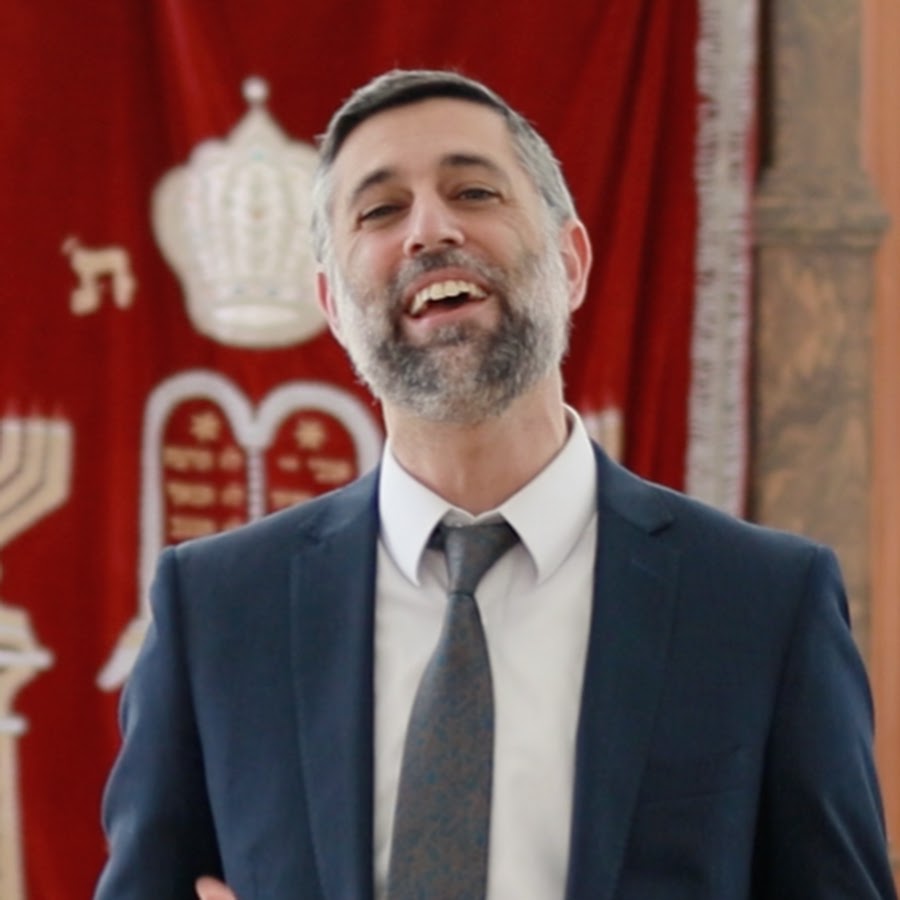
We continue our study of the story of King Yehoshafat in Divrei Hayamim II chapter 20, who faced off with the enemies of the people of Israel, among them Amalek, and instead of simply going out to fight, he chose to ask Hashem what the right course of action was to be. The response he received was that he was to stand by and watch as the enemies of Israel fell.
Categories:Music
Comments(0)
Transcript
Auto-generated transcript. Not time-synced to the video.
You're listening to the 261st edition of
the We're Talking podcast.
We are learning together the Sukkot that
have to do with the story of
Yehoshaphat,
the king of the Jewish people, who faced
off
with the enemies of the Jewish people.
Old theme.
And
he stood and he davened in the Beit
Hashem,
in the Beit Hamikdash,
and the result was
they sang,
they thanked Hashem,
and they were saved. Our enemies were
destroyed.
So, we're looking together at the Sukkot
one by one.
Not all the Sukkot, but a number of
them.
As it says, this is in Divrei Hayamim
perek chof, pasuk tes vov. Vayomer,
"Hakshivu kol Yehudah."
So, Yehoshaphat says,
maybe it's uh Yechaziel,
the uh the prophet,
says like this, "Hakshivu kol Yehudah,
listen up,
all people of Judah, yoshvei
Yerushalayim, and those who sit in
Jerusalem,
u'melech Yehoshaphat,
and the king,
Yehoshaphat, ki amar Hashem lachem,
this is what Hashem has said to you,
al temau tiru v'al techatu,
do not be afraid
mipnei hahamon harav hazeh,
don't be afraid of this great multitude.
Ki lo lachem hamilchamah ki le'Elohim.
The war does not belong to you, this war
belongs to Hashem."
Says Rashi.
Al temau v'al techatu, musav al
shamra'am b'ruach l'tei'am.
Hashem is responding through his navi
Yechaziel
to the first point, which was
that they're so they're such a great
multitude, so many people.
Don't be afraid of them.
V'navi amar lahem af al pi she'eim rav
mikem al tiru tir'um mehem. Even though
they're
uh
much
more in number than you. Don't be afraid
of them.
Kill all the king.
And then in response, which we spoke
about last week to to that which we said
We don't know what to do.
Right, I'm not sure. Should I
invest
my efforts into
the natural means that I have, the the
armies that I have, or should I trust in
you, Hashem?
So Hashem is responding to that and
saying
the war is not yours, it's God's.
You don't have to worry about it. I'm
with you. I'm on your side.
And the Navi is saying like this, it's
certainly true as you said
Place your trust in Hashem.
Turn your eyes towards Hashem to save
you.
That's what you should do.
Because this is indeed going to be a war
that's won by Hashem.
That's Rashi.
And then he brings from Rabbeinu Saadia
Gaon.
In the first chapter
it speaks about Obadiah was a Ger
from the people of Edom.
And he speaks about the destruction of
Edom.
We're going to see here Rabbeinu Saadia
Gaon says
that
one explanation of what's going on in
Obadiah is that it's referring actually
to the war that Yehoshaphat fought.
Fought.
Because amongst or perhaps the main
instigators of the war were Amaleki
people who were from
Edom, who were from Esau.
Now the possuk there says
that there will be a an axis of evil
that's going to be sent
and we are going to say "Kumu v'nakumu
aleihem l'milchama. Let's get up
and face off with them for war." And
we'll see that the kumu, which means to
to get up, to stand,
doesn't I mean it sounds like it means
let's go and and battle them. We're
going to see it's referring to the
Arab Sukkum
and how it refers to not just standing
up in battle, but actually standing up
to watch how Hashem is going to save us.
V'yado'atem she'lo vi'chaziel.
So, the Saadia Gaon says this is a
reference.
I'm not sure if Y'chaziel is the same
person as Obadiah or not. It's not clear
to me, but
um
it's certainly a reference to what
happened with Y'chaziel. V'yisa
Y'chaziel ben Y'chaziel v'yishafat.
This is a war of Edom.
There's a note here and he goes into
showing that
the even though the possuk refers to
B'nei Ammon B'nei Moab,
the Moabites and the Ammonites were
fighting against the K'lal Yisrael, but
it also
mixed in with them was the people from
Seir, which was the people of Edom,
which is Amalek.
Ki Obadiah ben Obadiah says the Saadia
Gaon says that Obadiah was in the days
of Y'hoshaphat.
K'asher bo'u l'hilachem B'nei Ammon
u'Moab b'Seir,
when we came to battle with Ammon and
Moab, the mountain of Seir,
k'asher m'foresh b'Divrei HaYamim, as is
explicit in Divrei HaYamim, that's our
possukim. Sam Y'hoshaphat v'yispalel
l'Hashem.
So, Y'hoshaphat he fasted,
he brought
the Jewish people generally to fast,
and they all davened to Hashem as we
saw.
K'asher hu kasuv, as the possuk says,
"V'shalach Y'chaziel b'yad Obadiah
u'vahem."
And Hashem sent
the prophet Yechazkel
to prophecy
about those nations.
Yechazkel said, "You stand aside.
Stand aside and I'm going to save you
from Edom."
The war is not yours.
Right? It's our possuk that we just read
the beginning.
Just like Hashem said to Moshe Rabbeinu
when Klal Yisrael was going out of Egypt
Hashem said, "Stand aside and you will
see the salvation of Hashem."
Sometimes it's not necessary for us to
fight.
When we're in the right spiritual place
we don't have to do that much. Hashem
does everything for us.
Right? So, the possuk says as we pointed
out at the beginning in in Ovadiah it
says
we we will get up
and we will fight the fight. Sounds like
they're going to do something active,
but in our psukim it's talking about
something passive.
It's when it says we're going to get up
doesn't mean we're going to get up and
fight. It means we're going to get up
and watch.
Like Yechazkel says, "Stand up
and plant yourselves
and watch what's going to happen. Asher
Sham Yisrael Yisrael
Yisrael
Now, when they heard this
so they understood that there was advice
here. Right? He's telling you to stand.
What does it mean to stand? It means
just to stand aside and watch or it
means stand aside. Are they supposed to
do something? This is important.
So, they understood that the implication
of standing aside doesn't just mean
stand and watch. It means stand and and
say how great God is.
Stand and sing.
Stand and praise.
Right? He He took advice from the
nation.
Or he gave advice to the nation and he
said
um
get some singers.
Let the singers sing to Hashem.
That's our job as singers.
And in so doing
>> [snorts]
>> he
fulfilled the will of Hashem.
Oh, better. Not just he fulfilled the
will of Hashem. He brought about
Hashem's will. Hashem's will
came true, so to speak,
because
of the fact that he did this, because he
stood up and he sang.
You see them in all of them. Hashem
saved them from their enemies. As we
saw, as soon as they started singing, as
soon as they started thanking Hashem,
it happened.
At the time that day
began singing, that's where
the That's where the salvation happened.
That's where the enemies of the Jewish
people were destroyed. So,
I said an incredible thing. I really
just
contemplate, ponder.
An incredible thing.
A person is supposed to have a sense
that Hashem is going to take care of
them. Person is supposed to have a sense
that Hashem is going to save them.
The person is supposed to get up. We're
supposed to learn from Yehoshafat.
That's what Ram Zvi
is teaching us by placing these
pesukim that we said all the time.
We're supposed to say these pesukim all
the time. Think about it all the time.
Contemplate.
Hashem is saving me now. Let's start
singing. Let's start praising Hashem.
Let's start saying thank you
before it even happens.
And the thanks itself
causes, brings out
the promise of Hashem that it's going to
be it's going to happen.
I can tell you right now in Eretz
Yisrael we're
we're concerned.
We would like to see our enemies
vanquished.
We would like to see the job done.
Now's the time to sing.
Now's the time to
thank Hashem
for all that's been done until now to
vanquish our enemies
and all that will be done.
Cuz certainly Hashem
is standing there by our side. I saw an
interview with one of the politicians
who's in the inner sanctum, not from
but he said it was clear siyata
d'Shmaya. There was undeniable
divine intervention
in all that that went on there
during the war.
So let's acknowledge it. Let's say thank
you Hashem.
And let's praise Hashem for the
completion of it too, even though we
don't think that we've seen it yet.
Let's praise Hashem for it now.
Brings you from the Talmud of the
Ramchal, the Ner Yisrael. Says like
this, "When he saw Yehoshafat flee
because Hashem had decreed
that he had to flee from the war."
It says Yehoshafat was afraid
because he felt pressured in the moment.
He didn't He wasn't ready for for a war.
That's just not where he was holding. He
wasn't ready for it.
Also the king, he was humble. This is
important also. Like
Sometimes we might feel like, "Oh, I
have to talk to him. Oh, I'm doing
what's right. Hashem should help me."
You got to be careful about that.
The melech anav
the king who was talking about Yehoshua,
the king who was humble
didn't feel confident in his own merit.
He didn't feel confident in
his warriors.
Kim is in Hashem Yishuasa.
The only thing that he felt confident in
was Hashem.
Hashem's help.
Hashem's salvation. If you call
Vayar Yehuda al panav.
As the possuk says
that Yehoshua felt looked
and he
faced his face. V'al av rak al am
Yisrael.
That means that he all of his
aspirations, all of his hopes
where they placed in the direction of
Hashem.
All of his efforts went into
saying, "Hashem, help me."
"Hashem, save me." Vayikra tzom
al kol Yehuda and that's why he called
for a fast
for the people of Yehuda. Ki lo horas
rachamim.
Because that's how you awaken Hashem's
compassion.
It's through humility.
It's through
subduing my own passions.
It's through not eating.
Making myself weak.
Weakening my ego.
A melech hatzadik rotzeh l'hispalel
l'Hashem l'einei kol ha'am.
Look what a look what a leader is.
Look what a leader is.
The leader, the tzadik, so he gets up
and he prays. He davens to Hashem
in front of everybody.
Ki l'fi she'hispalel gam heim k'eilu
asah.
This is what a leader does.
Leader gets up, he prays
so that everyone else around him will
pray.
And by doing this
so there's an incredible amount of
awakening
whether below or above.
He davens. What happens when we daven?
We awaken
the desire down here for Hashem to come
in and show himself to us.
When we awaken that
so it brings it down from above.
The awakening below awakens something
above in shamayim and in the in the
heavens and the spiritual realms.
So why it says that Yehoshaphat stood
amongst the congregation of Judah in
Jerusalem in the house of Hashem
before the new uh
the new courtyard. Okay, so he had up he
had upgraded
the courtyard of the Beit Hashem of the
of the
Beit Hamikdash
Ezras Yisrael
which is the area where the Israelites
would stand when they would pray in the
Beit Hamikdash.
We know
says the Arizal that
generally there's a principle that
only someone from a a king from the
house of David has permission to sit in
the courtyard.
Yehoshaphat wanted everyone to see I
could sit down.
He stood up from his throne.
He gave up his honor
in order to pray, in order to lead the
people in prayer,
this is what you have to do.
This is what we have to do. You want to
invoke Hashem's name, you want to bring
about bitachon, you want to get into I
would say a space of bitachon,
remember that it's Hashem who gives us
the power.
And ask Hashem to come down into this
world.
But again, it's like a giving up of his
own ego that's going on. There's a
humility. That's what he keeps saying.
This is how we pray. They used to say
like this,
Hashem, the God of our forefathers, you
are the God in the heavens.
I see as the kind of
um
mechanics of it.
The mechanics of the prayer.
He was saying, you Hashem, you are the
one who has the power in heaven,
which really means to say,
their power, the the root of the power
which manifests in this world. You want
to know why a country has power? It's
because there's a spiritual source of
that power in the higher realms.
But you Hashem, you have power over
their powers.
They don't have any power.
The the spiritual source, the roots,
they don't have any power of their own.
Any power that
the spiritual roots have is from your
power, Hashem.
Is the source and the ruler over all of
the power above, certainly Hashem is the
is
has power over all of the kingdoms
of the nations below.
The taikef of the letata, the taikef of
talked about le'aila. Interesting,
similar concept to what we said before.
We spoke about us below, we
awaken through our prayer
a shafa from above, an influx to come
down from from the higher spheres.
But we're saying that how does that how
should that work? It should work by
cutting off the root of the power of
those
powers above that influence the powers
below in our realm.
So, what he means when he says
you have the power over all of the
kingships of the nations.
All of the power above and below it's
all on what Hashem said.
If you if you see in the world
if you see that a nation is being
vanquished by another nation, it means
let's talk about Iran.
If you see that that of Israel have
power over Iran
it's because
there's a weakening of their spiritual
power.
And by the way, the the Muslims
understand this.
They understand this. We've spoken about
it in weeks past. I'm not going to go
back to it, but
they have a weakening of the power and I
would say it's because of their intense
hatred.
Their intense hatred, the it's like it's
like Haman and Russia. Haman and Amalek
builds a builds a
uh tree a a pole
50 amos high, 50 cubits high in order to
hang
in order to hang Mordecai. His anger is
what brought about his own death. He is
hung up. He's hanged
on that very tree and and that's the
truth of what's going on today. The very
anger and hatred that
the nation or the leaders of Iran have
towards the Jewish people is the very
thing that's bringing about their own
downfall.
Sham takes it away, gives it to them.
According to his will.
Nobody can stop Hashem.
Nobody can
can stand in Hashem's way.
This is what a boss says.
The power is in your hands. No one can
stand up to you.
So, all of that is the praise.
Which of course we're we're praising
Hashem saying he has the power to take
away their power.
Which is
implicating
the following which is the actual
prayer.
You want to have a proper prayer, when
asking something you have to start off
by saying Hashem you are great. Hashem
you have the power. Hashem you are
awesome.
Right, like we say in the in the
davening. We start off say how great
Hashem is.
Recognizing for ourselves Hashem doesn't
need my praise.
Recognizing for for ourselves that
Hashem is the source of all power.
Hashem is the one who has
the ability to save me, help me,
take care of me,
sustain me.
Then we ask for our needs.
Then we go in it and that's what Yoshafa
did. Then we go in and we say Hashem
help us out. Take care of us. Save us.
Bring about the salvation.
Thank you so much for listening. We'll
see you again next week.