0:00 / 0:00
Bitachon 259 - Singing Before Salvation
20 views
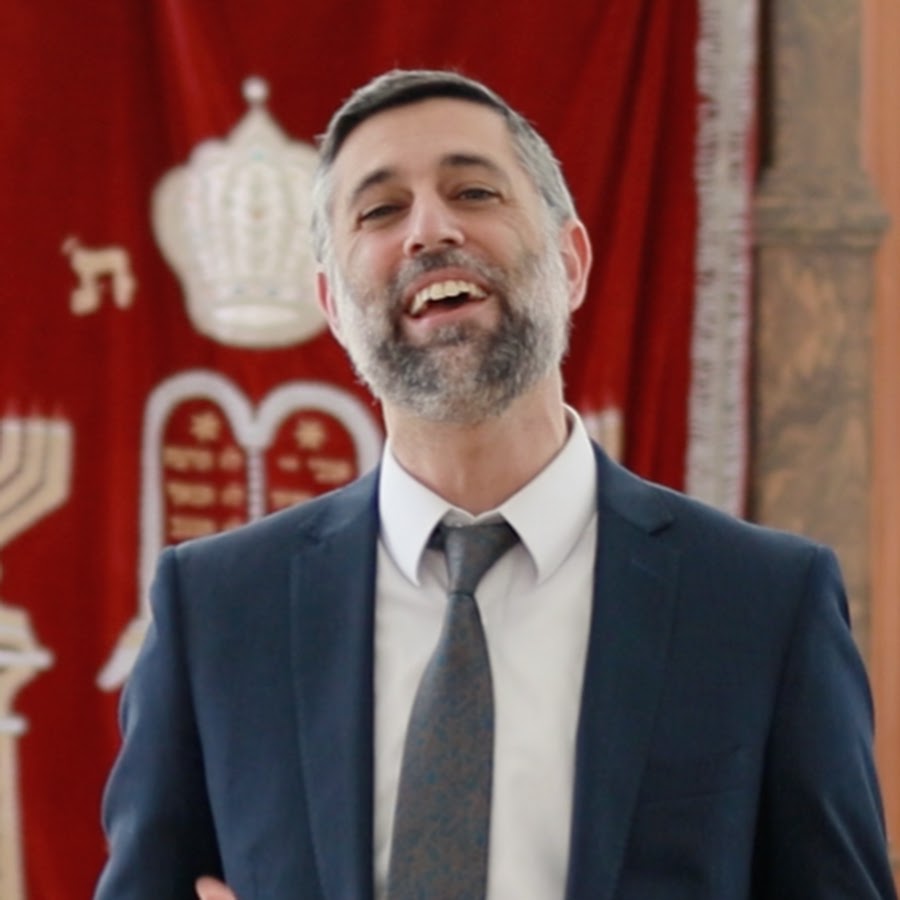
We study together chapter 20 of Divrei Hayamim II which speaks of the miraculous salvation that King Yehoshaphat and the Jewish people experienced when Amon, Moav and Amalek sought to fight a great battle with them. They prayed for salvation and also sang before the salvation even came. At the time of their singing, their enemies were miraculously vanquished.
Categories:Music
Comments(0)
Transcript
Auto-generated transcript. Not time-synced to the video.
You're listening to the 259th edition of
the B'tachon podcast.
And this week we're going to do
something we haven't done
um I would say ever. We're going to
learn a perek in Tanakh
which is a perek that Rav Simcha Zissel
of Salant
included in his list of p'sukim.
And so this entire perek represents the
idea of B'tachon the idea of trusting
Hashem and
now it's a tremendous lesson for all of
us about what real B'tachon looks like
and what a a true king of the Jewish
people, how he behaves
and how he interacts with Hashem
in the face of his enemies.
And uh
I'm going to just read the introduction
here. It says kind of like it says that
the prophet Yeshua ben Hanani went
to Aram.
Before the story that we're about to
read so King Yehoshafat, who is the the
subject of our
coming p'sukim
he had gone out to help Ahab in war.
And in that war, Ahab
who was an evil king
was killed. Yeshua Yehoshafat returned
in peace.
Yehoshafat returned in peace.
And then Yehu ben Hanani, who was the
seer, he was a navi, so he told
Yehoshafat that he made a mistake in
going to help Ahab who was evil.
And he told him that Hashem was angry at
him.
But he also told him that because of the
fact that he was a great tzaddik, he was
a righteous individual
Yehoshafat would not be would not be
forsaken by God.
Afterwards the navi tells us that Hashem
I'm sorry that that Yehoshafat causes
the Jewish people to do chuva, to
repent.
And he establishes judges
and policemen
according to the obligation that the
Torah sets down. Must hear him share
doing the co-cohen.
And he warns them that they should judge
people properly. Sorry that there's a
lot of bugs in my where I'm sitting over
here.
Okay, now we're going to read the come
together. We're going to study this
chapter until in Divrei Hayamim days
perek chof.
The children of of of
the people of Moab and Ammon they came.
And not only that, but also
as the first one explained here,
the people from Amalek also came to
battle with Yehoshaphat.
They came and they told Yehoshaphat that
more people of Ammon have
A tremendous amount of
of people has come, a great multitude of
warriors.
They've come from the other side of the
salty sea.
He ain't getting there in En Gedi,
which we know where that is today.
So, Yehoshaphat was afraid.
Okay, and then let's see what he does.
He turns his face to ask Hashem for
help. What is it that Hashem expects of
him? What's the ratzon Hashem?
And he also
calls for a fast
for all of Judah,
for all of the southern kingdom of the
Jewish people.
So, not only did the people of Jerusalem
fast,
but the people gathered from all over
Judah.
And they came to Davin to Hashem.
>> [snorts]
>> Or as the explanation here says,
they came with his mind and mouth to
Hashem to contemplate what is Hashem's
will.
So now, at this time, Yehoshaphat,
let's see, you know, think about it.
Where do we go to Davin? So naturally
today, we go to the Koisel. Right? Why
do we go to the Koisel?
Because it's the remaining wall.
Not of the Beis Hamikdash, not of the
temple, but of the
Har Habayis, of the Temple Mount from
the times of Herod, from the times of
Hordus.
Right? So that's the closest
we can get to the Beis Hamikdash, and
that's the place of prayer. That's where
we want to go. We want to really go to
the Beis Hamikdash, obviously.
If we could get up on the Har Habayis,
that would be ideal.
At that time, of course, they were able
to go cuz they had a Beis Hamikdash,
they had the temple, and they had a way
to be metayer themselves.
So Yehoshaphat and the congregation of
Judah and Jerusalem, they all came to
the Beis Hamikdash,
came to Har Habayis,
to Davin to Hashem in the new courtyard.
Okay? At that time, there had been
a reestablishment, a rebuilding of
Har Habayis
that it seems that Yehoshaphat had
enacted.
And the purpose of Har Habayis, the
purpose of the temple was not just a
place to bring in sacrifices of
atonement, but it was a place, of
course, also of
Torah learning. The Lishkas Hagazis was
there, the Sanhedrin was there.
And it was a place of prayer.
>> [snorts]
>> Right? As we know, Ki Beisi Beis
Tefillah Yikarei L'chol Ha'amim.
It's going to be a house of prayer for
all of the nations.
Vayomer Hashem Elokei Avoseinu,
Halo Yatoo
Elokei Hashamayim, Ata Moshel B'chol
Mamlechos Hagoyim.
>> So they said, this is how they pray,
this is what they said. They said
Hashem, God of our forefathers,
behold, you are God in the heavens, and
you have power all over all
of the mamlacha is over all of the
kingships, the kingdoms
of the nations, and you have the
strength.
You have power over them. You give them
strength
then for you have power over them.
You are
our God.
You gave us this land, the land of
Israel. You took out the nations who
were here before and you gave it to us.
And you gave it to the seed of Abraham,
the one who you loved forever.
Or the one who you loved, you gave it to
us forever.
And the Jewish people settled there and
they built for you a Beit Hamikdash, a
temple
for your name. Okay, so
Yehoshaphat had clarity. What is the
premise of the Beit Hamikdash? It's not
a political location.
It's a
it's a spiritual location.
And it's a place where we rededicate
ourselves to Hashem.
It's a place where we recognize that the
center of our lives is our relationship
with Hashem.
Okay, and I and I would say and I would
point out that
what does it mean that we be talking?
What does it mean that we have bitachon?
What right do I have to trust in Hashem
that things are going to be good in my
life? He's going to take away my
problems.
And the answer I believe is, and we see
this from Yehoshaphat,
and his prayer,
>> [cough]
>> that
um when he he he emphasizes
he emphasizes that the center of my
life,
the place where I go to pray, what right
do I have to pray, what right do I have
to have a token
because you are Sham are the center of
my life.
And the person says in my heart and my
soul and my body and my soul and my
heart and my soul and my body and my
soul.
He says that he the base of English was
established so that
if any bad thing will come
a sword meaning a battle.
A plague.
A famine, so we're going to come and
we're going to dive in right here. We're
going to stand in front of this temple.
For
your name is inside this house.
This is the place where we remind
ourselves that you are the center of our
lives. The tire which is inside of the
RNA brace inside of the arc
reminds us that that's the center of our
lives is our relationship with you a
Sham.
And this is like a mix of sadness and
joy this year. And we will call out to
you a Sham and you will hear and you
will save us.
Okay, so the base of English understand
what we're missing when we don't have a
base of English. We're missing
the center that reminds us and brings
home and is a place where we can see
that a Sham is in our midst and that
the relationship that we have with a
Sham
is
central to our lives.
Okay, and whenever things are going
wrong, that's the problem.
That's a hidden in the Ammon and Moab
and Assyria shall not be Israel and
provide my answer to my question and my
answer to my
Right, he points out
that our enemies are coming against us,
the people of Ammon and Moab and and
Amalek. Amalek was from
Edom. These are places that you did not
allow us to conquer.
We came out of Egypt. We weren't allowed
to
do anything to them.
And
nevertheless
we weren't we didn't cause them any
destruction, but here they are coming to
try to cause us destruction. You know
God will lay down the law for you and go
shine on you.
Their response to us not causing them
destruction is
they're trying to
they're trying to throw us into the sea.
May you wish us a shower of stones on
you.
To
kick us out of the land that you've
given us as our inheritance. Look at
you.
So you shall say our God will bomb came
out of the oven.
He says Hashem judge them cuz we don't
have power against this great this great
amount of people coming to rob us of our
land.
That's coming against us.
I don't know what I need that I need
you.
It's a classic classic we say every day.
The entire clan
I don't know what I need that I need
you. We don't know what we don't know
what to do. Our eyes are to you.
We don't know what actions to take. We
don't know how to face off with our
enemies.
The entire
kingdom of Judah was standing there
in front of Hashem. Their children as
well, their wives as well, and their and
their sons.
Their babies and their children.
Yechaziel ben Zachariah ben Benaiah ben
Yael. There was a particular
individual whose name was Yechaziel, the
son of Zachariah son of Benaiah ben the
son of
Yael Yechiel, son of ben Mattaniah Ha
Levi.
The Levite ben Asaph. He's from the
children of Asaph. I saw you say call.
So he was
he had a divine inspiration. Hashem's
uh spirit
was upon him.
Which is interesting because he was part
of the people there praying. He was part
of
those who had come and he received a
special Nevuah.
And he said like this, "Hakshivu kol
Yehudah v'Yerushalayim. Listen up all
the people of Judah and those who live
in Jerusalem and Malkei Yehoshafat and
King Yehoshafat. Kah amar Hashem l'chem,
this is what Hashem says to you, "Al
tir'u v'al tichatu mipnei hahamon harav
hazeh. Don't be afraid.
Don't be worried
because of this great multitude. Ki lo
lachem hamilchamah ki l'Elohim.
The
The battle is not yours. You don't have
to fight this battle.
This is Hashem's battle.
Machar redu aleihem hinam al ma'aleh
hatzitz.
This is what you should do tomorrow, you
should go down to where they are.
They're going to be coming up from a
place called Ma'aleh hatzitz.
Utzatem el mitzad hanachal
im Yeru'el. You'll find them
at the end of the river
across from the wilderness which is
called Yeru'el.
Lo lachem l'hilachem bo
ki lo don't need to fight them. You
don't You're not going to need to
actually go into battle with them.
Imdu v'ru et yeshu'at Hashem imachem.
Stand.
Just stand still and you will see
that Hashem is going to save you.
Yehudah v'Yerushalayim, oh people of
Judah and Jerusalem,
do not be afraid. Machar tze'u lifneihem
v'Hashem imachem.
Tomorrow go out in front of them and you
will see that Hashem is with you.
Okay, so
they davened.
Immediately there was
a a message of victory which they
received.
Vayigah Yehoshafat al panav artzah
v'chol Yehudah v'Yerushalayim naflu
lifnei Hashem l'hishtachavot laHashem.
When they heard this, so Yehoshafat and
the people of Judah and Jerusalem,
they they bowed down in front of Hashem.
And the Levites
the children of God, the children of of
Korach
they stood up and they started to praise
Hashem, they started to sing
praises of Hashem.
They got up in the morning. They went
out to the
wilderness of Tekoa. I would say some
When they were going out, Yehoshaphat
stood up and said, "Shimon Yehuda
Yerushalayim, listen up
people of Jerusalem
people of Judah
>> [snorts]
>> Believe in Hashem. Trust in Hashem
and you will see that his faith
his faithfulness
will
will be shown.
Believe in his prophets and you will be
successful."
Interestingly, Yehoshaphat did something
amazing.
Unusual. He sent these people to go
along with them and to sing songs of
thanks Hashem before they even won the
war.
They were already singing songs of
thanks to Hashem.
And as soon as they started singing
songs of victory
singing songs of thanks Hashem
so Hashem
sent
and it seems from and we'll see this
with Hashem in the weeks to come
but it seems that some other people came
uh
basically they ended up fighting with
each other.
They set some kind of ambush. It's not
clear exactly who.
But, someone came
to set an ambush
on the people of Ammon and the people of
Moab
and the people of Amalek. And as a
result of that,
they were they were
they were weakened.
And what happened was
that because of those who ambushed them,
so the Bene Ammon and Moab and Amalekite
people, they turned on each other.
And they started to kill each other.
So, our enemies basically, we didn't get
near them.
But, they started to kill each other.
And the people of Judah, they came
overlooking the area where the enemies
were.
And they saw
that they were all dead.
There was nobody left of them.
And so, Jehoshaphat and his nation came
and they took the spoils. They took the
bounty, the booty.
Tons of gold and silver and clothes.
They took it all. There
was too much even for them to carry.
Took them 3 days to collect all of
the booty of the enemies of the people
of Israel who had died, the people of
Ammon and Moab and Amalek.
On the fourth day, they gathered
together in a valley which they ended up
calling the valley of blessing. K'sham
Beracha Hashem.
That was the place where they blessed
Hashem.
Okay, and K'nai Sham
Y'varech Hashem
and that was
the reason why that valley was called
valley of blessings
until until today.
The people of Judah and Jerusalem
and Yehoshaphat was
at their head.
Returned to Jerusalem b'simcha, with
joy.
It caused them to rejoice
over their enemies.
They came to Jerusalem
with
with harps and with trumpets.
A kesser good band.
A great band, lots of singing
to the house of Hashem.
And there was a fear of of God
that came down upon
the other nations around Eretz Yisrael,
around the people of Judah.
When they heard that Hashem
had battled on the side of the Jewish
people against the enemies of Israel.
And so Yehoshaphat
he ended up with quiet.
God allowed
him to be free
from the fear of his enemies.
And indeed
the Jewish people were saved at that
time. So let's let's just give a
summation and b'ezrat Hashem in the
coming weeks we're going to look at a
few of these p'sukim
individually and and look at them in a
fortunate way on the p'sukim.
But the bottom line of this whole story
is
that Yehoshaphat was a righteous king,
right? We started off saying that he
set up a return of the Jewish people, a
teshuvah, to Torah, and he set up
those who would make sure that the Jews
kept
their relationship with Hashem alive and
proper.
That was number one. Number two was that
they
when they were faced with their enemies,
they went to the Har Habayis, they went
to the Beis Hamikdash to daven.
They focused again on their
relationship with Hashem.
And the result was
that their battles were won not because
they actually battled.
Their battles were won because
Hashem battled on their behalf.
And
throughout it all,
throughout it all, very important,
they're singing.
They are singing
and singing and singing. They sing
before they win.
The singing itself
is that which
brings about
the enemies killing each other.
And they sing after they win on their
way back to the Beis Hamikdash.
At every moment, at every point
of this story, they don't forget where
their success comes from. Before their
success comes,
they recognize that it's Hashem.
When their success comes, after their
success comes,
they recognize that it's from Hashem.
Constantly coming back to Hashem.
Thank you so much for listening.
We'll see you again next time.