0:00 / 0:00
Bitachon 256 - There is Hope
259 views
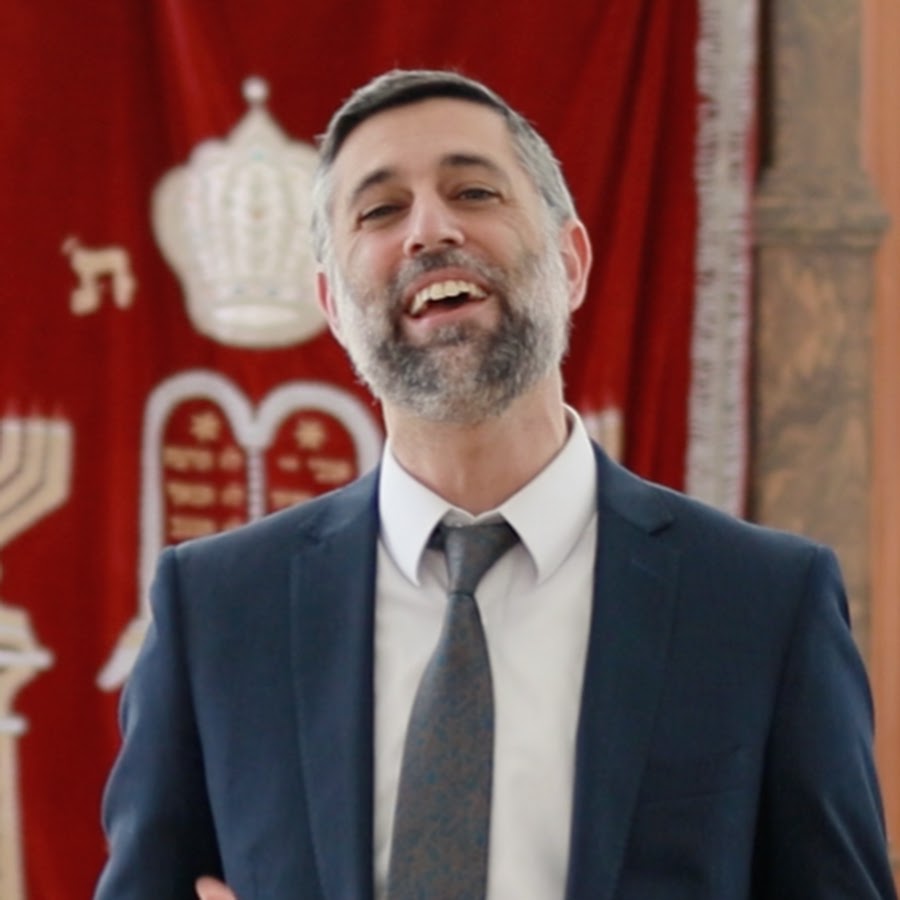
We study together the passuk in Iyov perek 11 passuk 18, which speaks of the hope that is possible with bitachon, and the concept of 'digging' and 'sleeping soundly,' which have a few different interpretations.
Categories:Music
Comments(0)
Transcript
Auto-generated transcript. Not time-synced to the video.
You're listening to the 256th edition of
the B'tachon podcast.
And we are returning to the possuk that
we started at the end of last week.
Possuk in Iyov, perek yud alef, possuk
yud ches, "Uvatachta, you shall trust.
Ki yesh tikvah,
there is hope.
V'chafarta, lavetach tishkav.
And you will dig."
We'll see what it means to dig.
But you will dig
and you will sleep soundly. You will
sleep with confidence.
Right? Last night,
I didn't sleep so well.
I was dreaming about
um
buzzing of phones because of sirens
coming
because in the middle of the night my
wife told me that the Israeli planes
were heading towards and over Syria.
But a person who has b'tachon
sleeps well at night.
A person who's afraid has trouble
sleeping at night. The anxieties keep us
up.
So what do we do?
Says the Ralbag, "Uvatachta ki yesh
tikvah.
V'tzel amar,
shelo yitefached sheyitov v'al kinyanei
mahim
k'mo she'asu asu mikedem. Do not be
afraid that you will lose those
acquisitions
as you did before.
V'tihyeh l'cha tikvah b'tachon
sheyishameru.
>> [snorts]
>> Have b'tachon.
Have faith. Have hope
that they will be protected.
V'ya'afach hamasul mimcha
and you should have you should allow
your fear to be removed from you ad shem
tach b'vasadeh
to the point that if
you are digging in a field
b'zulas geder v'kisui.
Says the Ralbag, "The digging means
you're in the field, you're doing some
kind of work there, there's no fence,
and there's no protection, there's no
protection from the elements.
And there's no protection from marauders
and robbers, etc.
Lavetach tishkav sham.
You'll be able to rest there
with confidence. V'ravatzta,
you'll lean over. You know, sometimes
I'm in a place like this and I wonder if
someone's going to pass by
or if there's somebody who's
not a good person who might do
something.
Right? It's easy to be afraid when you
feel unprotected.
But that's not the case if a person,
right? Because when a person is chaifer,
when a person is digging, so you're
involved, I would say like this, you're
involved in your actions, you're
involved in
your goal of
doing something in the field.
And
you feel a little vulnerable cuz you're
focused on one thing and someone could
come from somewhere else. Something some
danger could come.
But he says, "If you trust, if you have
b'tachon
and you believe that there is hope,
and you believe that you live in a world
where there's Hashem and Hashem is a
good God and he wants the best for us,
you don't have to be afraid. Yagi'a
me'eit matzlachascha she'arav umachmanei
chalulei panacha.
He says,
"When you have that attitude, when you
have confidence, why do you have
confidence? You have confidence because
you believe Hashem is there, Hashem is
with you, Hashem wants your good.
So then
there's going to be a success, you're
going to be a mutzlach, you're going to
have
an aura of goodness that surrounds you
and people will come and they'll respect
you.
V'lo amar she'omein l'matzlachus,
but the wicked individuals
who are, I would say, afraid because
they're dependent on themselves and they
know the truth about themselves,
so they don't have success.
Hinei v'yagon u'pachad kol yamam. So
they have anguish and groaning and fear
all of their all of their days ad
she'einam tuchlinu me rov yagon
until their eyes
>> [sighs]
>> are they come to an end, which means
they don't have any hope. They have no
hope because of their great sadness.
Because of their great fear, they don't
find any way or any place to escape. Lo
yimtzu makom yiftachu vo. They won't
find a place where they can feel safe
and confident.
Okay, they could if a person is fearful,
they could be inside of their mamad and
be fearful.
Right? If a person
is faithful,
so they can be faithful whether they're
in a mamad or outside of a mamad.
I'm not saying a person shouldn't go and
try to be safe.
But the sense, the emotional safety that
we're talking about,
a person has to have emotional safety.
That's what b'tachon means.
I have trust, I have faith, I'm
connected to Hakadosh Baruchu.
Lo yimtzu makom yiftachu vo v'lo tiyeh
tikvasam shiv'im taiv.
A person who doesn't have b'tachon lives
in a world where
they sense and they feel that good
things are not going to happen to me.
They feel like
I'm a I'm a magnet for bad stuff.
V'heim kamshu v'yamim ra. They actually
expect that bad things will come.
Yiru mimenu ad shetibach nafsham
me'idaiga. They're afraid of it to the
point where
their their soul is,
I would say, exploding within them
from the from their worry.
And about b'tachon is the opposite.
About b'tachon,
that's what we're after,
feels and senses and looks for and is
optimistic and is positive and believes
Hashem is with me, Hashem is going to be
with me. I've seen it so many times in
the past, I see it right now in this
very moment. The sun is shining, the
birds are singing, the bugs are biting.
But I'm here and I'm happy and life is
good. Right? That's
and it's going to be good. Things are
going to be good.
M'tziltas David says, "Uvatachta,
teisei betach ki yesh tikvah lasheves
betach k'asher kein ta'asa.
He says that
you can sit in confidence, you can you
can live
in a feeling of
everything's okay because why? Because
there is hope.
Right? When you have tikvah, when you
have hope, and we've mentioned before a
while ago, but that the word tikvah
comes to the word kaveh, which means to
hope, and it comes from the word kav,
which means a line. There's a direct
line into Hakadosh Baruchu, into Hashem,
that all of us can access.
And when you have that,
you feel confident.
V'chafarta,
and there'll be a digging. What does
digging mean? So the M'tziltas David has
his own p'shat, "K'ilu chafarta svivcha
chafirah amukah.
It's as if you've created a moat around
you. You've created a dig
that surrounds you,
a deep dig, a deep ditch. Lo yikrav
eilecha. Nothing can come close to you,
nothing can touch you.
You feel protected.
Kein tishkav lavetach b'li machrad.
You feel protected. I can go to sleep at
night. Doesn't matter if the planes are
flying overhead, they're heading over
Syria, whatever.
I feel safe. I feel safe.
Brings here from Rav Shimon Schwab.
Efsher l'faresh v'chafarta milashon
lachpor et ha'aretz. He says we could
explain this possuk
from the language of lachpor et
ha'aretz. It says by the meraglim,
when the spies went to check out the
land of Israel to see what was required
in order to
be able to come in there and to overcome
the land. So it says that they were
lachpor et ha'aretz, which can mean to
dig, but it can also mean to check it
out, to unearth and discover.
Shema peresh l'vakesh l'galos et hakonus
hatzfunus b'eretz Yisrael k'sheyishlichu
et Yisrael. And there it means that they
needed to come into Israel and
understand the challenges and the
difficulties and the dangers that were
involved
in in trying to conquer the land of
Israel. V'chein hacha,
tzafon magi'a Iyov al chayei hakadoshim.
And so too over here in the possuk of
Iyov,
so Iyov's friend is
giving him
advice and calming him down about his
new life.
Ki k'sheyachver ha'am ki yichabes bahem,
because when he will
try to unearth reality, try to discover
what's going on, yimtza sham betach b'li
machrad. He'll see
that his life is is a life of
confidence. There's nothing to be afraid
of.
V'seishkav lavetach, and in this way
he'll sleep with confidence.
Okay, so there's a discovering, there's
a
and and I would say that the meraglim,
they came in with a very difficult
attitude. Their attitude was it's not
going to be good. And so they discovered
that everything is bad.
But if you come in with hope,
if you come in with b'tachon,
and you're really looking, you will find
the good, you'll find the truth. Hashem
is interested in in giving you good, in
giving you benefit, taking care of you.
Brings here from the Alshich, "V'lo
yit'arbeiach b'ma shehigata ad she'arim
oves v'chayecha
hu yisbarech.
He talks interestingly about t'chiyas
hameisim.
He talks about the dead coming back to
life.
This is an important principle, of
course. In Yiddishkeit, in Judaism, we
believe that we're not just here once.
We believe in Google women
reincarnation.
We also believe that there's something
called the Mason, the the revival of the
dead.
And it's important to know that because
if all that I have is this world and all
that I have is this life, so
it can it can uh
it can be pretty limiting. It can feel
limiting. But if I know that first of
all, there's other chances. Second of
all,
what I do does matter.
What I do does matter and it affects
what's going to be in the future.
When there's going to be a
Mason, there's going to be a a Yom Din
Hagadol, a great judgment day, where
we'll look at
we'll look at all the things that we've
done and
and there will be uh there will be an
accounting. There we will be
accountable.
Made some
Sometimes a person says the Alshich,
can feel like it's hard to believe.
It feels too hard.
Life is tough.
Things are not going my way. God is not
doing my will.
Right? It's easy to to
to make that mistake. It's very common.
It's normal.
But will that ruin me?
Will I get lost because of that?
Person can feel like, "Hey, things are
not going my way. Maybe there's no such
thing
as the revival of the dead. Maybe there
really is no accountability. Maybe I
really can do whatever I want."
We do find that generally speaking, a
person
when we are in a situation where things
are really tough
and we start to question Hashem. So,
that's not something that
Hashem will hold us accountable for,
right? When a person is facing a
difficult situation,
it's natural for them to feel,
"Where is Hashem?"
And that's okay.
But that being the case,
a person can come to deny that Hashem
exists.
So,
we can be afraid of that. You know, it's
it's something to be afraid of. I don't
want to get to such a situation.
That when facing this doubt or this
worry,
so you can trust
that there is goodness in the future.
Right? A person If a person thinks that
there's going to be a Mason, you know,
there's going to be a Yom Hadin and I'm
not going to make it. It's going to be
bad for me. Right? So, that can cause a
person to give up. But no, don't believe
that, says the possuk. Don't believe
that. Believe that things are going to
be amazing in the future.
There's a good God. Hashem is his name.
And we believe that Hashem wants the
ultimate good for each and every one of
us.
There's going to be a There's going to
be a
a great joy,
a great happiness that's going to happen
because there is hope.
You will see
in this very world the Mason,
the revival of the dead,
both physical and spiritual.
Possuk says before
that
there's going to be a light.
There's optimism.
There's goodness in this world. How does
a person fall down into sin? How does a
person fall down into disconnect from
Hakadosh Baruch Hu?
We fall down because we feel hopeless.
We feel like we're not going to make it.
No,
no, says the Novi. Don't believe that.
It's going to get It's going to get
brighter and it's going to get lighter.
Things are going to be good.
Over there, it's possuk in Iyov, which
we're discussing here today. So, he was
near to death. He was in danger of
showing Hakadosh Baruch Hu to be
curable. It was a miracle that he was
his life was saved.
Okay, so
it's going to If Hashem saved you, if
Hashem put you here and you're here
right now, it's going to be good. It's
going to be better.
Don't make a mistake as far as your soul
because
you're going to see with your very eyes
the Mason, the revival of the dead. It
was a key key key key key.
So, therefore, be confident that there
is hope.
And strengthen
your abilities. You have the ability to
do right. You have the ability to turn
back to good. Here it is. Start again.
It's a new day.
The sun is shining.
You can make this. You can make it. You
can do this.
And don't sin. And the word sin, of
course, means don't go off the mark.
Okay, that's the Alshich.
He says, maybe the pashut shot, which is
that the righteous individual,
so he will sleep
the eternal sleep
in his grave.
My flesh will will dwell
confidently. It's talking about when a
person passes away,
so there's a confidence. Right? And when
we think about death, we don't to think
about it negatively. You know, the same
Hakadosh Baruch Hu created us, created
life, created all the wonderful, amazing
things in life, all the sunshine.
So, he also created death. So, that's
got to be good, too, right? So,
it's it's How do we have confidence that
it's going to be good in the end? Even
in that place.
So, you're going to be in a place
of the Garden of Eden.
The Alshich says a similar thing to the
Alshich that be confident. There's going
to be a good place for a person after
they pass from this world and they they
enter the world of the neshamos.
And there's also going to be a good
situation for them when it comes to the
revival of the dead.
So, this could then they will merit to
to come back. It's a shalom shalom.
It's
it's possible to believe
that things are going to be good at all
times.
Right now,
after I die,
after I come back to life,
things are going to be good. Hashem
wants the best for me in every
situation.
Brings the Malbim.
A person can trust and when a person
incorporates into his personality
the ability to trust,
so
he has
this world. Things are good in this
world, which is a passing world.
The world that we exist within.
You know, we're here.
We pass through this world.
But things are going to be good.
Says the Malbim also,
there's also hope for the eternal life.
Right? Eternal enjoyments, eternal
connection to Hakadosh Baruch Hu. That's
what we're here for.
I don't want to be afraid
that after I die, it's not, you know,
it's going to be
a negative situation. No,
I can be confident. It's going to be
good. Here and there.
He says,
the the friend, Zophar, I think is his
name,
the friend of Iyov was saying to him,
that if you get rid of your sin, if you
distance yourself from wrongdoing,
you will be saved with a tremendous
amount of success.
Darkness will turn to light.
The possuk The possuk before says to
come back here, Teya.
The darkness will turn into morning.
Morning as in the beginning of the day.
You can put your faith in this. You can
be confident about this. Yesh tikvah.
There is hope.
You don't even know It doesn't seem like
it's possible that I'm going to be
saved. It doesn't seem like it's
possible that I'm going
to get out of this one. But
a person can still hope. Right? Hashem
has endless ways of saving a person.
Yesh tikvah.
He says, "Certainly,
there's
and there is kivui. Right? Kivui is a
hope. I hope it's going to be okay. I'm
confident that it's going to
Certainly, a person can feel more
confidence, says the Binyan David,
if I distance myself from sin, so it
makes it more likely,
first of all, that I can believe I'm
going to be saved, which is an essential
component of it.
But also, according to this,
it's more likely that Hashem will say,
"Okay, this guy is trying to have a
relationship with me. This This person
is trying to be close to me. This person
is trying to distance himself from those
things that distance him from me.
So, I'm going to take care of him."
Okay? So, bottom line, yesh tikvah,
there is hope. Thank you so much for
listening. We'll see you again next
time.