0:00 / 0:00
Beshalach - Hearing God's Voice
290 views
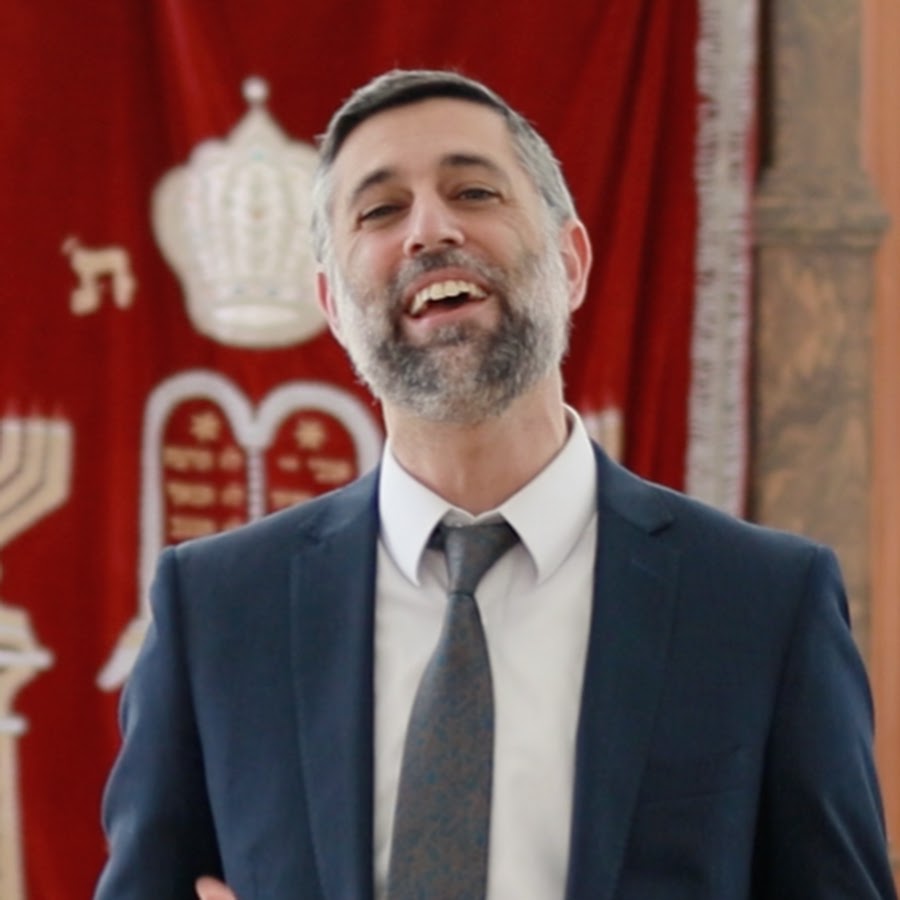
Why does Hashem respond to Moshe's tefillah with the statement, 'why are you calling out to me?' Why should Moshe not be davening at this time, as the Jewish people are about to experience the miracle of the Splitting of the Sea? What are the two times that Hashem answers our prayers - sometimes before we pray, and sometimes as we are speaking? What type of Tefillah is always answered? Why should we seek to 'serve Hashem properly' before we 'direct our heart in prayer?' When does Hashem answer or prayer before we even speak? Why does Hashem know the heart of the tzadik more intimately, as it were? Find out in this week's Parsha Podcast.
Comments(0)
Transcript
Auto-generated transcript. Not time-synced to the video.
You're listening to the weekly partial
podcast with Ari Goldwag recorded with
Hasham's never ending assistance in Bish
Israel 57886
2026. This week's par is par Bashalak.
It's a great moment. It's also called
Shabashira. It's the song Jewish people
go through the sea on dry land and they
come out the other side. They're free
from their enemies. They're no longer
slaves. They sing a Yoshir.
But I'd like to bring you to the moment
right before they cross. The moment
right before they cross [snorts]
was calling out to Hashem saying, "Help
us." Hashem responds in an unusual way.
Says, Hashem says to Mosh, "Why are you
why are you screaming to me? Why are you
calling out to me right now?
Is so speak to the children of Israel
and let them move. Let them move. let
them travel. So, walk into the sea.
It's not a time for prayer right now.
So, it's very unusual that Hashem would
say, I don't know if there's other
examples of this in in Tanakh, but that
Hashem would say, don't d
like to share with you a beautiful,
beautiful piece in the Mish um and it's
in par and it's in Sim Gimmel. I'd like
to give you just a little bit of an
introduction. I don't want to read it
inside. It will take too much time. But
in the first section there infal so the
metric talks about the call of Jacob the
the call the voice the fact that the
Jewish people have a unique heritage
which we got from Jacob
Jacob's power was in his voice
and the voice is expressed in prayer the
voice is expressed in learning Torah as
well as we'll see
And what is the concept of the voice?
Pik says five earlier that the Jewish
people called out to Hashem. That is our
heritage. We have this ability to call
out when things are tough. Where do we
go? We go inside and we go to Hashem. We
talk to God and we say, "God, take care
of us. God, save us." And imagines
off by telling us
that that Mosha Raenu is being told by
Hashem, you don't need to daven yourself
because the Jewish people have already
doed. They've already used that power
from Yakov. They've used their voice and
now I'm going to take care of them. I'm
going to save them. So you don't need to
be involved in prayer at this moment.
The prayer has already done its thing.
That's that's the first section, a quick
sum up. But I'd like to draw you deep
into this section in Gimmel which speaks
about the idea of and it speaks about
the idea of calling out using our voice
and he speaks about the heart. Let's see
this together.
And the magic is trying to understand
why is Hashem saying to Moshe, don't
call out now. Why don't you know? So we
just had an explanation. You don't need
to call out because I've already heard
the Jewish people's calling. I've
already heard their prayer. You can stop
now.
The mages says another idea
says in Isaiah 65 24 it says it will be
before they they call I will I will
answer them. That's what the puzz says,
right? When when does Hashem answer us?
Hashem knows what we need, right? Do we
even need to really pray? So, we'll see
what what it means. But the Pik says,
Hashem says, "Before they even call out,
before they even pray for their needs, I
will already answer them. Help is on the
way before we even call."
[snorts] And then the Pik says the
second half of the Pab,
"Even as they're speaking, I will hear."
There's an interesting thing about
hearing and speaking, right? as opposed
to looking at a picture with with one's
eyes. The sensation of seeing is
different than hearing. When you see
something, you see a whole picture all
at once. Wherever you are right now, if
you look around, you can see a picture
that if you would have to describe it
with words, it would take many thousands
of words. A picture is worth a thousand
words.
when I when I look. So I see a big
picture when I hear and when I speak. So
there's one word and another word and
another word and another word and then
the pieces come together by the time I
sentence is finished. So I have a
concept and my brain puts together all
of the pieces at the end after all the
words are said.
Now Hashem is saying like this. I hear I
hear your prayers. I hear it. I hear it
as you're calling. I hear it. And we'll
see that Hashem even hears it before. As
we said, before we even say it, Hashem
already sees the picture before. Hashem
sees it before.
And the message points out that the says
twice. It says,
"And it will be before you call and I
will answer." Okay. So the I Hashem is
saying I will answer even as you're
speaking which sounds like a different
thing. You are now praying. You are now
asking for your needs
and I will hear.
Again uses the word I. Right? The Isaiah
is quoting God and he says I I. Why does
it say I twice?
Points out. Why does it say this?
We find that Moshe says again he's a
prophet quoting God.
See now it's seeing
that it is I. I am I am. It says twice
an.
[snorts]
So what is what is the concept of I
twice? Why does Hashem say I over and
over again?
says the medish like this very
interesting it's really deep listen in
here this is an important concept that
can change your life
whoever whoever says the majush how do
we davin how do we dav how do we pray
you ever have a really good file did you
have a davin and you felt like oh I I
dave well I really had cavana I really
had cavana
right we're supposed to have kavana in
davin what's kavana what is the word
kavana mean? Maybe it means intent.
Maybe it means focus.
What does it mean? So, we're going to
see what does good prayer look like?
What does it really mean to have a good
prayer? What does it mean really to dav?
Well,
get this.
Do the will of Hashem. That's how the
prayer starts. You want to you want to
have a good prayer. be in a space where
I'm looking to do the will of Hashem
maybe focus your heart the word means
means a direction right direct your
heart get your heart in the right
direction put your heart in the right
direction
in your prayer right we're talking about
our hearts now okay the is
the service of the hearts we need to
understand what is the heart exactly
involved when you're domining and you
have a good domining. It sounds like you
got your heart into it. That's what it
sounds like. Your heart was directed
into it. And we'll see what that means.
If you do Hashem's will and you and you
direct your heart in your prayer. So
then
Hashem says,
Hashem says I twice because I Hashem
will help you in this world if you dive
in correctly and I Hashem will help you
in the next world if you dive in
correctly.
This is mysterious what this means
exactly. Let's try to understand it.
Pik says before you call
I will already answer you that's talking
about now
that's in this world in this world you
don't even have to say anything if your
heart is in the right place that's what
the measure seems to be saying if your
heart is in the right place
if your heart is directed correctly
then you don't even have to say a word
and Hashem is already going to answer
your prayer he's We're really going to
to give you what you need
in the future. Not sure exactly what
this means, but somehow in the future
time, maybe it's Msiah time, maybe it's
as they're speaking,
I will hear it. And I had this thought
about the concept of voice, the concept
of sound, right?
I'm saying something and as I'm talking
so if I speak loud enough they can hear
me far away. Right? There's a there's an
advantage of sound over sight.
Sound you can hear something that's very
far away even if you can't see it.
Right? Often you can hear the thunder
but you don't see the lightning.
Sound is something that I can
communicate here and it will get to you.
I'm in Ram Shemesh. You might be in
America. You might be in England. You
might be anywhere in the world hearing
this, Australia, wherever. The sound of
my voice carries and it can carry far
beyond
what I can see. That's something unique
about sound.
So
the the there's an aspect of the heart
which is as we'll see we'll see soon
there's an aspect of the heart which is
the the the foundation of it. The
feelings
we say in the
human being has the the system of heart.
We have the heart. We have the feelings.
It's Hashem who gives us the beauty of
speech, the full expression of
something. The way that it comes out,
the way that it manifests, the way that
it's heard. I'm saying something. I'm
see I'm thinking something. I'm feeling
something. And you're going to hear this
and you're going to interpret it and
receive it as you do. I don't have
control over that. I can just try to
communicate something, but you're going
to hear the thing that you need to hear.
That's not up to me. Right? So, in
communication, there's there's the
speaking. There's the heart. I'm sorry.
First, there's the heart. And then
there's the speaking, which is the
emanation of it, the giving out of it.
Right? There's which is kind of like
we're in the space of the heart. We
don't see the results of it yet. We're
in the emotions of it and it hasn't yet
expressed itself in words when we get to
the future time. So then everything is
manifest. Everything comes out
when we get to that future world. So
there's already a speech. There's
already a manifestation of it. There's
already something that's become concrete
and I will hear it. Hashem says,
but Hashem hears it even when it's in
our earlier stage. Even when it's just
in our heart, it's just a feeling in our
heart. But when does when does he hear
it? When is it it I think this is maybe
the
said it's I. It is I. What does it mean?
It means
you're looking for Hashem's will. Why am
I domining? We spoke about this in the
Buff podcast not long ago. Why am I
domining? What am I asking for? What is
the purpose of my prayer? Is it to for
me to get what I what I want? Is it for
me to get what I need? Even
the ultimate prayer is I recognize it's
about me recognizing that what I need is
provided for by Hashem.
And the type of prayer that I'm supposed
to pray is not for myself that I should
have my needs per se. That's fine. But
the reason that I want these needs is
because Hashem, I want to serve you. I
want to be someone who is able to share
with others, inspire others, give to
others. Hashem, I want to be a vehicle
for for you to manifest in the world.
That's a different prayer. That's a
different feel. That's what this message
seems to be saying.
I'm I'm interested in doing Hashem's
will. This is not about me.
And I'm directing my heart in my prayer.
What does what does it mean? I'm
directing my heart in my prayer. This is
what kavana looks like. Kavana means I'm
directing my heart in my prayer that the
prayer should be one that I could be
able to do Hashem's will
that if you do Hashem's will then you'll
have rain in its time. You'll have
everything that you need. All the
blessings will come. When do the
blessings come? They come when we're
trying to do Hashem's will. That's
really what it comes down to. The
prayers are answered when the va which
is Hashem speaking and saying it is I
displaces the eye of my ego.
When I move out of my ego and I'm moving
into Hashem's will. I'm trying to do the
rashem and I'm trying to direct my heart
that that's what I'm doing for. Hashem,
please give me wisdom so I can
understand your tra. Please, Hashem,
give me health so that I can serve you
properly.
Hashem, please bring a B English.
There's more clear. Rebuild Jerusalem so
that we can serve you there.
Right? So, if that's what my looks like,
then I'm going to be answered.
That's where the heart directs the
words. That's where it starts in my
heart. But a heart that's filled with
the vani the eye of Hashem where my
lowercase self my S with a myself with a
lowercase S which is my ego and my
selfishness that moves to the side and
the capital S of my nishama of my soul
of my the piece of Hashem that's in me
becomes the the moving force of my heart
says
what are What are they going to be
talking about? Right? What are we going
to really need when Msiah comes? Right?
When Msiah comes, we're going to need to
ask for anything. Everything will be
perfect. Everything will be perfect.
Everything will be provided for. People
won't need any money. There's not going
to be anything. We're just going to sit
and learn. The says, "What are you
talking about? We're not even asking for
our needs," says the speaking.
The says, "We're just going to be
sitting and learning.
We're not even going to be dovening.
We're not going to need to do and ask
for needs. They'll just be provided for
automatically. So, what are we going to
do? We're going to be talking. We're
going to be speaking about how do I get
close to Hashem? How do I fulfill
Hashem's will?
We're going to stand
and we're going to make
the Torah learning. How do I do Hashem's
will? What does he want me? How do I
keep Shabas better? How do I serve
Hashem better? How do I dav better? How
do I come closer to Hashem? How do I
discover the Hashem inside of me? The
capital S self.
So the measure says something amazing.
The measure says that when I
in the future time, and by the way,
anyone anyone can access the future time
right now. We're doing it right now. If
we're talking about Hashem's will, we're
accessing that future time right now.
But it's going to be that everyone's
going to be involved in that. The Rambam
says when
they they didn't want Mashiach so that
we could have power over everybody else.
That's not it. It was so that we could
sit and learn
so that we could be focused on Torah
wisdom, which is all about serving
Hashem. But what happens is an amazing
thing. as we are sitting and learning
right now as we are sitting and
learning. So, Hashem is standing where
actually the says he's sitting
who
Hashem is taking part in our
conversation
is talking through us. When we're
discussing Hashem's will, Hashem is
right here talking through us,
discussing with us. Hashem, his divine
presence is here. If you sit at your
shabas table and you're talking about
how can I serve hashem is there talking
through you
how do I know says
it will be then
as those who fear hashem which as we've
spoken about it means those who seek
hashem's will
as they speak one to another
listens hashem hears and he listens.
What does it say? He hears and he
listens. So the Marzu explains that he
hears and he makes heard. Right? What
does it mean he listens? Right? If
you're listening to me, so that gives me
a chance to speak, right? It gives me a
chance to to say what needs to be said.
I'm also listening to what I'm saying.
I'm also benefiting from sharing these
words of Torah with you. And Hashem
pays attention and he listens. It means
that Hashem gives an opportunity for it
to be heard.
He gives an opportunity for whatever
spiritual seeking that we're doing. It
it gets shared when we sit and learn
right here right now right here for
you guys are hearing wherever you are in
the entire world. Right? And that's true
in a spiritual sense. Whenever you sit
and you learn Torah, seek Hashem's will.
It has an impact on the entire world. It
starts in your heart, right? Just like a
thought, a feeling starts in a person's
heart and then it's expressed through
his mouth, it comes out to full
expression. So too, when we are luring
Torah, it's something if we're having li
if we're aligning, that's what means
aligning my heart with Hashem's will. So
then the result is that the words come
out and the words don't just stay here.
Even if I'm by myself, the words don't
just stay here, they impact the entire
world. It changes the entire world when
we seek Hashem's will. We talk about his
will.
says in reference to the Msiah time that
we will see with our eyes we will see
Hashem as it were we'll be able to
witness
the presence of Hashem in our lives
everyone will have and notice where it's
in the heart right where's ru the ru
which means the wind of of holiness
means divine inspiration but where is it
in the place of wind where we breathe.
Where do we breathe? In our lungs.
Where's our lungs around our heart?
Right? So the is something that's felt
in the heart and that's when we are
lining up our will with Hashem's will.
Then we hear we hear Hashem's voice and
we see Hashem in our lives.
Hashem
says all of your children are the
learned ones of God. What does it mean
the learned ones of God? Hashem means
that when we are searching through our
Torah, learning for Hashem's will, we
become godly. It is the learning of
Hashem
and that Hashem is present. Hashem is
present and felt and seen.
[gasps and sighs]
This is what Hashem says. You don't need
to call out to me at this time.
You don't need to call out to me at this
time. Why? Before
you even call, you don't have to say a
word. I'm already going to answer you
cuz I see what's in your heart. Once
your heart is aligned with my will, I am
there. I'm present in your heart. I know
what you're thinking. You don't even
have to say anything. And by the way,
that's the feeling of
that's the feeling of you just you just
feel like you're in in Hashem's
presence. You feel like you're in
Hashem's space and you know everything's
going to be fine. You know it's all
going to work out. It's all going to be
awesome.
Yeah.
So before we read the the rest of the
medish, it comes out an amazing thing.
It comes out an amazing thing. You want
to know what real looks like? It doesn't
look like what we think. Doesn't look
like Hashem, give me what I want.
It looks like Hashem, give me what you
want. I've said this idea before and
I've been using this in my my since I
had this had this uh thought. Hashem
dropped the thought in my mind in shel I
say Hashem hear my prayers but I also
add in Hashem help me hear your prayer
for me help my children hear your prayer
for them help Kalis hear your prayer for
us help all of your kids all the people
of the world hear your prayer for us
right that's what this is talking about
that's a real Hashem help me hear your
prayer for me
that's the heart that's the of the heart
but by aligning our heart with Hashem
aligning our our heart with Hashem
hearing what does Hashem want and Hashem
is like I know what you want it's not
different from what I want
okay
I'm going to skip a little piece here
because I don't want to get involved in
this little idea
We're going to get to the end of the
year and finish off.
King Solomon said, "Know, understand the
God of your father and serve him." Such
a beautiful way of saying it. You should
know. The idea of knowing is something
intimate, intimate knowledge.
You got to get a feeling of what does
Hashem want for you.
We find out, we learn that from studying
the Tyra, from studying Gumar, knowing
we get it also from understanding,
understanding the depths of ideas, the
kind that we're discussing here. We get
a sense of we get a sense in our arts of
what does Hashem want? It gets we start
to resonate with it. What does Hashem
want? What is Hashem's will for me?
know intimately the God of your
forefathers
and serve him. We got to serve Hashem
from a from our heart.
The says
says Hashem understands that which
fashions your thoughts.
Where do my thoughts come from? It can
come from one of two places. I really
have two hearts.
I have two hearts. I have a start rah
and it depends what I feed, right? I
have an evil inclination and a good
inclination. The evil inclination is all
of my desires and all of my ego and that
can feed my thoughts and I can end up
thinking thoughts about doing things
wrong. But I have another heart and
that's the heart that we're talking
about that we're developing. That's the
the good inclination. That which is
Hashem's voice inside of us, that which
is our conscience.
And Hashem understands all of that which
fashions our thoughts, right? Our
thoughts, we think thoughts, but they
really come from the heart. Our feelings
begin. That's where it's we can have a
feeling about something, we don't even
have the words for it. We're feeling
something and we don't even know what it
is. We could be we're afraid of
something, we're not sure what. Or it
could be we feel great love and we're
not even sure why.
And then our words will form
based on the feelings. It's called
the fashioning of the thoughts.
Hashem is maven. He intuitively
understands
how our thoughts are fashioned.
says the message actually
even before the the thought is formed in
our heart which means to say we have a
feeling and it hasn't formed into a word
yet hashem understands it the word maven
is from the word bina which means
intuition intuitively understands our
hearts
listen to this
hashem could see seven generations
before a particular ular individual had
a thought. Hashem knew what was going to
happen.
The evil king of Babylonia was not even
born yet. It was long before he was
born.
Isaiah had the following prophecy.
And he knew based on Hashem's informing
him what was going to think in his
heart.
You said in your heart
the the heart of a wicked person is is
fashioning egoic desires, egoic
thoughts.
And what was he thinking even before he
was born? What was he thinking? He was
thinking, "How can I get up to heaven
and fight with God? How can I be the one
who reigns over heaven?"
So, Hashem knew that that thought's
going to happen.
If before seven generations before the
thought was even thought by this wicked
person knew what he's going to think
[gasps]
certainly
a one day old righteous person which by
the way could mean me right now I just
did chuva and now I want to do Hashem's
will. Does Hashem know what I'm going to
think? Of course he does. Well, why is
that?
Why is that certainly true?
Hashem certainly knows what the saddic
is going to think more than a wicked
person because the saddic has aligned
his heart with the van, the eye of
Hashem, with the capital S self.
The saddic has aligned his heart. So
certainly Hashem knows what the satic is
thinking and certainly Hashem knows even
before that thought comes into his mind.
That's why the Pik says even before they
call out I will already answer them
before it's even manifest before they
even speak it. I know what's in their
hearts because I know
that's what
you don't need to even
if you're in the heart space. If your
heart is aligned with Hashem's will, you
don't even need to say anything.
It doesn't even need to be expressed
because your heart is so full. It's so
full of just I want to do Hashem's will.
Hashem, I just want to be close to you.
Hashm, I just want to be whatever you
want me to be. I just want my life to
look like what you want it to look like.
That's that's the real tila. That's a
tila that's for sure going to be
answered. You don't even have to say it.
You don't even have to pray the prayer.
Your heart just feels it. You're just
aligned. You're in tune. You're
resonating
with the va.
And if that's where you're resonating,
if that's where your heart is,
eventually usu it's going to be in the
future. We're gonna be sitting and
talking about how do we get closer to
Hashem? Even when the is gone, we're
still gonna be talking about how can we
get closer to Hashem and Hashem is going
to bring that out and make that real.
Hashem is going to bring that out and
make it real and make it be heard.
I want to bless you and ask you to bless
me. Hashem should help us to have real
prayers, realism
should help us to to want his will.
Should help us to be
direct our hearts
get them in that space of hearing the va
of hearing the eye of the capital S self
of our nishama which is our eternal
connection with Hashem. Thank you so
much for listening our wonderful Shabas.
This podcast was made possible through
the gracious donations of listeners like
you. [music] For more podcasts like
this, please visit www.ariegoldwag.com
or search on iTunes Ari Goldwag.