Preparing video...
0:00 / 0:00
Succos - Ascending the Spiritual Mountain
157 views
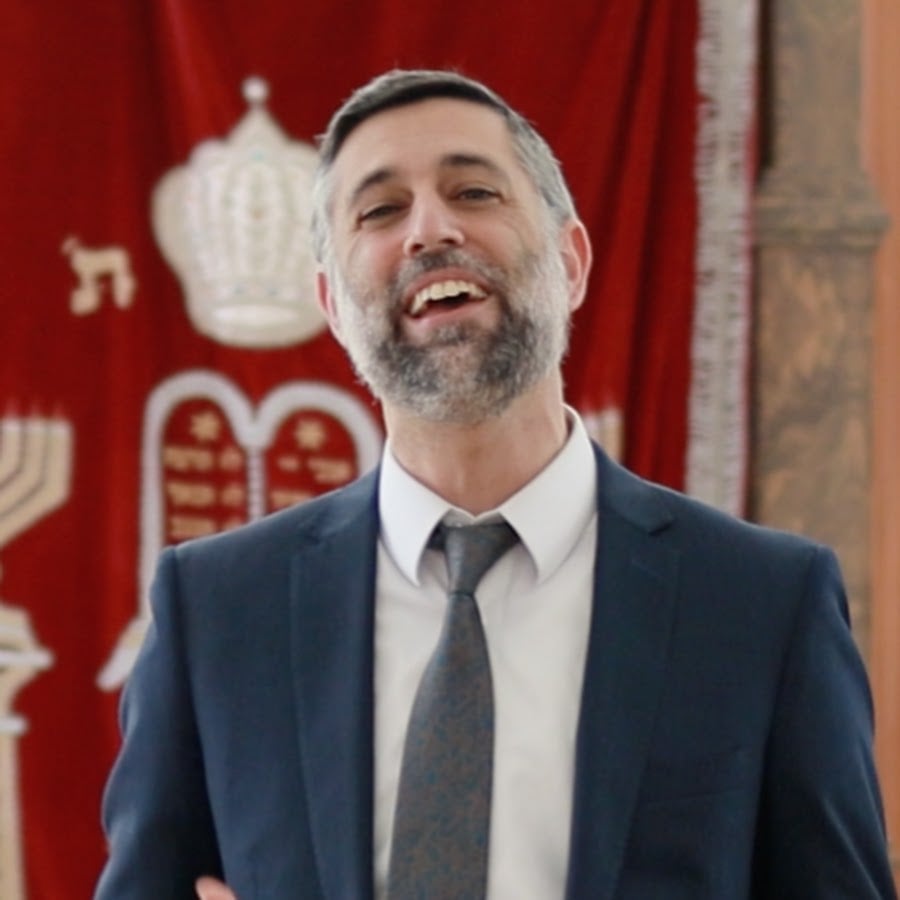
What is the concept of the water that is poured on the altar in the Beis Hamikdash on Succos? What is the secret of it going down to the center of the Earth? Why were these holes created during the six days of creation? What is the idea of being 'oleh l'regel' - which is to make a pilgrimage to Jerusalem during the holiday? Why does it literally mean to 'raise up the foot?' Why are these 'footsteps' so beautiful, and how do they relate to Avraham Avinu, the first of the proselytes? Why does the Jewish people praise Hashem 'from His crown' and on down, while Hashem praises Israel 'from the feet' and up? Find out in this week's Parsha Podcast.
Categories:Music
Comments
Transcript
Auto-generated transcript. Not time-synced to the video.
You're listening to the weekly parsha
podcast with Ari Goldwag, recorded with
the Shamash never ending assistance in
Ramat Beit Shemesh, Israel, 5787, 2026.
This week we don't have a parsha, we
have the holiday of Sukkot.
This shabbat, next shabbat, will be
Simchat Torah.
And
I like to share with you a thought
about Sukkot, a very deep idea that's
connected to two different concepts that
are spoken about in the Gemara in Sukkah
on daf mem tet on page 49.
And one concept has to do with a unique
and special mitzvah that we do
on Sukkot in the Beit Hamikdash, in the
Holy Temple.
So
you might be familiar with the idea of a
Simchat Beit Hasho'evah
which is the incredible celebration
that the Jewish people would would
involve themselves in during
the days of Sukkot.
And we today remind ourselves of what
took place in the Beit Hamikdash, in the
Temple
that had to do with
that amazing joy. And the joy had to do
with Simchat Beit Hasho'evah means the
drawing.
They were rejoicing in the drawing of
the water.
It's a deep idea, beautiful idea.
Uh Ushavtem mayim besason mimayanei
hayeshua. They would draw water. They
would take the water and pour it onto
the mizbeach, onto the altar.
Right? We're we're probably more
familiar with the offerings that were
brought of different animals. And there
were flower offerings and there were
wine libations, but on Sukkot there was
a special mitzvah of pouring water onto
the shittin, which were these holes,
special holes that were in the altar.
And the holes would go down, the Gemara
says, into the center of the earth.
And these holes, where they would pour
the water
the Gemara says were created. These
holes were part of creation.
Hashem created these holes that go down
to the center of the earth during the
six days of creation.
The Gemara says, I know I'm
giving you a lot of information you
might not be familiar with.
The Gemara also says that
part of the reason that we would pour
this water onto the mizbe'ach
was
as an offering to Hashem. We always
offer something to Hashem
when we're praying for something that we
need. We want to show that we believe
that this
is something that comes from Hashem.
For example,
on
on Pesach, we bring a special korban.
And the korban has to do with the thing
that we're getting judged about in on
Pesach. The Gemara says this in Rosh
Hashanah.
On Sukkot,
the Gemara tells us that
we're being judged about the rain that's
going to come in our Israel in the
Middle East.
So, the rainy season starts around
Sukkot time, a little after Sukkot.
The winter is the time when there's
rain, the summer there's no rain in in
Israel pretty much.
>> [snorts]
>> So, we're being judged about what's
going to happen in the coming months.
How much rain is there going to be?
How much sustenance will we have, right?
Cuz the rain is that which provides us
with
the nutrients to grow the crops that are
in Israel.
So, we show and we recognize and we
offer an offering to Hashem and that's
the water.
We pour this water
onto the mizbe'ach, into these shitin,
into these special holes that go down to
the center of the earth. And by
making this offering to Hashem,
we are showing God we believe
>> [snorts]
>> we know that the water is all yours.
The rain that we're going to have, the
sustenance that we're going to have,
it's all from you.
And we are praying that you judge us
positively and
bring about your decision to bring bring
plentiful rain.
So, that's one of the things that we do
on Sukkot.
And interestingly,
the Gemara says
that not only were they show if they
would draw the water from the Mayim
Shiloh, the Siloam River,
they would bring that water
pour it onto the miz bayach onto the
altar,
but this drawing of the water also
brought along with it not only pouring
this libation of the water,
but it also drew with it
Ruach Hakodesh. They were drawing as
they drew this water, they also were
drawing
divine inspiration. That was part of
what was happening.
And the Gemara says, Tosafot says that
that was the Beit Hasho'eivah, the joy,
the simcha
of the Simchat Beit Hasho'eivah. What
was this joy? What was the
intense joy? They were dancing and
singing and
just an amazing spectacle, an amazing
scene in the Beit Hamikdash, which we
emulate. What was it about? It was about
the connection
that we have to Hashem.
It was about the divine inspiration that
Hashem gives us,
especially when we're involved in
mitzvahs, when we're involved in doing
Hashem's will.
So, we're pouring this water, or we are
requesting of Hashem to have a good year
as far as our sustenance and as far as
the rain, and at the same time we are
drawing down divine inspiration
and connection to Hashem. We're saying,
"Hashem, we want to receive
the light and the love that you want to
give us."
Okay, so
that's all contained in this special
mitzvah of drawing water on Sukkot.
Now, in the context of this, we come to
our second
idea,
which is true for all of the the Shalosh
Regalim, there were three holidays
that the Jewish people would all come up
to Jerusalem and indeed today we still
emulate this as well. We can't go to the
Beit Hamikdash, there's no temple, but
we can
go to Jerusalem, Yerushalayim.
Can come
to our holy
capital city.
And
three times a year, Pesach
Passover, Shavuot
and Sukkot, this holiday that we're
approaching today, tonight.
The following days.
There was a mitzvah of Aliyah L'Regel.
Interesting language. There was an
obligation to
Aliyah means
as you know the word Aliyah
means to go up.
L'Regel
the word regel means literally to the
foot.
But it also means a regel, the the
regalim
are the the three different holidays are
called regalim. Pesach, Shavuot, Sukkot
are called regalim. And the reason is
the word regel, which means a foot, also
can mean something that's common. Ragil
in Hebrew means common.
And it also it means something that
happens
it there's like a
you know, when you're walking so one
foot goes down then the next foot goes
down and the next foot goes down and the
next foot goes down. So there are
stations so to speak in the year.
And the stations, the regalim, where the
feet fall
those feet
perhaps we'll get a little bit of a
depth about of what those feet are that
are falling, but those feet represent
the places where we have
on one hand a din, there's a judgement
on Pesach on on Shavuot and on Sukkot,
they're times of closeness to Hashem,
times of connection to God.
And each of them has their own
their own character, of course.
Their own connection. Pesach has its own
special mitzvahs. Shavuos has its
special mitzvahs. Sukkos has its special
commandments. The Sukkos The Sukkos ones
are the most obvious. I mean, Pesach we
eat the matzah. We don't have chametz in
our house. Sukkos, we build the sukkah,
which represents the Ananei Hakavod, the
clouds of Hashem's glory.
And, of course, we have
the the mitzvah of lulav and esrog.
We bring together the four species. We
shake them.
But, the mitzvah of Aliyah L'regel means
that on the regel, which means on the
holiday,
on the place where that foot falls,
the three times a year, so we are
obligated to come up to Jerusalem.
To make a pilgrimage to Yerushalayim.
So, it's called Aliyah L'regel.
Okay?
Now,
I'd like to read to you the Gemara.
The Gemara says something
which
seems to be difficult to understand.
Da'ah Shmuel.
Gemara is in Sukkah 49b. Rabbi says the
following.
Ma'i dichsiv? Ma yaftu pa'amayich
banetzulim bas nadiv.
The verse says in Shir Hashirim, I'd
like to actually read to you the entire
verse.
It's at the very beginning of chapter 7.
So,
the first verse of chapter 7, and we're
trying to understand these verses.
That's what Rabbi is coming to explain.
We're going to get back to the Gemara.
The verse says, Shuvi, Shuvi,
Hashulamis.
Come back, oh come back,
oh perfect one. It's a refer- a
reference to the Jewish people.
Shuvi, Shuvi, Venechzehbach. Come back
to the that I can see you.
And, interestingly,
the Gra points out that there's two
references in this verse.
There's Shulamis, which means perfect
one or complete one, shalem.
There's Nechzehbach, I will see you.
And seeing and perfection are both two
parts of the of the names of the of the
city of Jerusalem, right? Which of
course is not a coincidence in this
context.
Yira, Yerushalayim means Yira and
Shalem. Yira is to see
because Avraham Avinu, we're going to
talk about Avraham Avinu.
Abraham saw
he was seen by God or he saw God.
He saw a divine revelation.
And Shalem is the perfect place, the
place of peace,
the place of perfection.
So come back, oh perfect one, come back
so I may see you. Hashem is speaking to
Klal Yisrael, to the Jewish people. Ma
tovecha b'shalom k'macholat machanayim.
I want to see this perfect nation
who has a double encampment.
Which is a reference to the Jewish
people as they encamped around the Beit
Hamikdash, in the Temple.
When they were around the around the
Mishkan, I'm sorry.
But also around the Temple.
Right? So come back to to Yerushalayim.
And then pasuk bet, which is our pasuk
in the Gemara, says like this, "Ma yaftu
pa'amayich b'na'alayich, bat nadiv."
How beautiful are your footsteps, okay?
We're going to have the regalim, which
means the footsteps, as it were.
That that
I don't know if you're watching me, but
if you're watching the video, you can
see my hands. The foot step the foot
comes down, then the next foot comes
down, and the other foot picks up, etc.,
and it keeps going, like they alternate.
Right? So there are footsteps. There's
alternating points of the foot coming
down in the world.
Those are the regalim. How beautiful are
your footsteps in your shoes,
bat nadiv, the daughter of the generous
one.
Right? So who's the nadiv?
Who is it referring to? Klal Yisrael is
the bat nadiv, we are the daughter of
the generous one. We'll see.
So we're referring to Avraham Avinu.
Abraham was the nadiv, the generous one.
And then it refers to the Shitan.
Remember we spoke about these these
holes in the altar where they would pour
the water.
So Chamuke Yerechayich
the hidden thighs
which the Gemara says
are are the uh
are a reference to the hidden holes that
go down into the center of the earth.
K'may Chalaim Ma'aseh De'Amon they're
made by by the craftsman.
Who's the craftsman? Of course the
master craftsman is Hashem himself, God.
Who created during the six days of
creation
these special
Shitan, these holes that go down to the
center of the earth where we pour the
water.
Okay?
A lot of ideas here, a lot of concepts.
Let's try to understand this cuz there's
a beautiful depth and beautiful lesson.
So Rashi says, what is it referring to?
How beautiful are the footsteps of the
daughter of the generous one.
Mayavu Pama'am Shali Yisrael
It's referring to the footsteps
of the Jewish people. How beautiful are
they? Bashasha Olam L'regel.
When the Jewish people come up
to Yerushalayim for the Regel, for the
Yom Tov.
How beautiful are the footsteps?
Bas Nadiv
So who is it referring to? Bita Shel
Avraham Avinu
Shenikra Nadiv
It's the the the children or the
daughter, right? We are the daughters
the kids of Avraham Avinu, Abraham.
He was called a generous one, Shenemar.
Where do we see that Avraham Avinu was
called the generous one?
And we'll see what a generous one means.
Nedivei Amim Nesavu Amalek Avraham
So at the end of the chapter until
Lamentations Mem Zayin, 47, which we
read seven times on Rosh Hashanah when
we blew the shofar,
which speaks about the future time when
all the nations are going to come
to Jerusalem. They're going to join the
Jewish people in serving Hashem
ultimately after the
war of Gog and Magog.
So, they come together
to the nation
of the God of Abraham.
That's what the possuk says in Tehillim.
The generous ones of the nations come
together joining
the nation of the God of Abraham. Elokei
Avraham, Elokei Yitzchak v'Yaakov. Why
does the possuk talk about the God of
Avraham Avinu? What about Yitzchak and
Yaakov?
Elokei Avraham.
Shiru Tehillos, Tehillah l'Geirim.
What was What does it mean that he was
an an adiv?
Why was it Avraham Avinu who was the
generous one?
Avraham was the one who was the first of
the Geirim, the first
of the proselytes, the first one who
What was he generous about? He
generously gave up his life
to
the will of Hashem in his lifetime, the
will of Hashem to do with his to do with
to do God's will
in any way that he could in his life,
but also to teach others about God.
So, Elokei Avraham means
that the nations of the world will
recognize
that this is their opportunity to also
join in serving Hashem properly
after the incredible events which we're
on the cusp of witnessing ourselves.
But, they come
they come to join the
they to serve the God of Abraham,
the God who of the man who was the first
to convert,
to become a Jew, okay? So, it's very
Again, I know this is a lot of
information,
but we need to try to understand
what is it? What is the concept? Why is
it that they're coming
What is the connection I would say
between Aliyah L'Regel, which means that
we're coming to
uh serve God, to be present
in the Beis Hamikdash in
Jerusalem for the the holiday?
What's the connection to legs, to feet?
What is the idea of Avram being the
first of the Gerim, of the proselytes?
What is the What's the you know, in a
Hameddish L'Dorosheini?
The Meddish is not clear what it's
saying. It's It's a Gemara, but it's
a Meddish style Gemara.
Now,
there's a Marsha
on this on this Gemara, which points out
that what does the fact that Avram was a
was a Ger have to do with anything?
What does it have to do with Aliyah
L'Regel?
And the Marsha points out that Avram
wasn't just a Ger, he wasn't just a
proselyte,
but he was the first person
maybe the first Jew, we could say, to
come to Yerushalayim.
He brought his son, Yitzchak, in order
to bring him as a sacrifice.
He was ready to sacrifice his son
to do the will of Hashem. He was Aliyah
L'Regel.
He came up to Jerusalem, to
Yerushalayim, and that's where he
experienced Hashem said, "Stop." Sent an
angel that said,
"Don't Don't slaughter your son.
Instead, bring the Bring the ram."
It's very much connected
to
very much connected to the
to the blowing of the shofar. That's the
the The shofar is the ram's horn.
Let's leave that. But
But Avram Avinu was Aliyah L'Regel. He
came up to Yerushalayim.
And he came up to sacrifice his son. So,
therefore, says the Maharsha, that's the
connection to Avraham Avinu. He's the
one who's We're the children of Avraham
who was the first one to come up to
Yerushalayim.
The question that I had when I read this
Gemara and when I read the Maharsha was
that
what is the fact that he was ready to
sacrifice his son have to do with the
Gemara? The Gemara just says that he was
the first of the Gerim.
He was the first of the proselytes. It
doesn't refer to the fact that he
actually
came up to Jerusalem. That's not That's
as we say, "Ikar Hasima Na'asefa." If
that's the p'shat, so then it doesn't
say it in the Gemara at all. It just
says that he's the first of the
proselytes. That's the idea.
So, so what's the connection here?
What's the explanation?
So, there's a Rashi on the pasuk.
And Rashi says something
very, very interesting.
He says,
again, I'm going to read the pasuk in
Shir Hashirim.
It says, "Mah yaftu pa'amayich
ba'ana'alim, bat nadiv." How beautiful
are your footsteps in the shoes?
Which is an interesting language, right?
The footsteps that you're wearing shoes
have, you know, you wear shoes when you
when you step.
Bat nadiv,
oh daughter of the generous one,
"Chamukei yerachayich."
The deepest depths
of your the thighs, which we said again
are those are those holes that go down
all the way to the center of the earth,
"Kemo chalu'im ma'aseh uman." They were
created by by the ultimate craftsman.
Says Rashi, "Dei'ah kodsho baruch hu."
The hands they were crafted by the hands
of God himself.
The Maseches Sukkah,
Maseches Sukkah, which is what we were
reading from,
"Uman k'uman shel Hakadosh Baruch Hu."
Yisrael mekalsin otam lemalah lematah.
He says like this. Listen to this Rashi.
Okay?
So, there's two different ways of
praising.
We're going to praise Hashem. Okay?
That's part of what we do.
We praise God. Right? But, how do we
praise Hashem?
When Clavius praises Hashem, Rashi says,
so we praise Hashem from top to bottom.
Which means to say,
Matzliach Hashem K'ilu Hashem has buzz.
We talk about the fact that Hashem his
his head is has is full of gold. Right?
We talk about the Kesser, the the crown
of Hashem as it were.
Yarden Hashem K'ilu Hashem has cough.
We talk about Hashem's strength.
That's his arms as it were. We talk
about Hashem's Tiferes, that's the
heart. We talk about the legs. Kamuki
Rechaich, the legs.
Means the the thighs.
Amud Shesh.
Where we call we we talk about it.
Listen carefully.
I know we haven't yet explained what's
going on here. We're going to get there
very soon.
We praise Hashem from top to bottom.
We start with the highest realms.
And we're I would say it this way. We're
drawing down Hashem's Shefa. We want We
want Hashem We want to talk about and
think about Hashem as the highest there
is. His His head is filled with exal-
He's He has a crown. He's exalted. He's
so high up. And then we talk about it
coming down, the power of Hashem, the
Shefa. God's divine influx comes down
from the highest places down to the
lowest places.
Hashem Bonu Tzelem Hashem Min Ha'elyonim
L'tachtonim.
We start with the top.
And we get we go further and further
down.
Because we want to get down to the We
want to bring God's divine presence to
the lowest places.
U'man K'ilu Min Ha'elyonim L'tachtonim
L'ma'ala.
When Hashem wants
to praise us,
so he talks from down to the from the
bottom to the top.
He talks
first about how beautiful are your
footsteps. Footsteps are the lowest
aspect of the human being.
Right?
Then he talks about the legs. And then
he talks about the legs. And it goes on
and on until it gets up to the head. If
you read the verse again,
that as they continue, it goes to the
neck, goes to the head, etc.
It's it's in verse six. It's in the
sixth verse of Shir Hashirim in chapter
seven.
So, what is Hashem? Why is Hashem
talking about Israel from the bottom to
the top? Right? What is this
description? Because Hashem is drawing
us up to him.
Hashem is lifting us from the lowest
place, from the feet,
up through the legs, through the heart,
up through the head,
to the to the highest place.
Right? So, Israel is is trying
We we're asking Hashem, come down from
where you are. Bring your Shekinah, your
divine presence down from the highest
realms, down to where we are in the
lowest realms. Hashem is saying, I'm
going to lift you up. I'm going to
raise you from the lowest place to the
highest place.
Okay? We're starting to have a concept,
an idea.
Now,
let's think about this in terms of
Aliyah L'Ragel.
Aliyah L'Ragel literally means the
raising or the lifting of the feet.
We're taking our feet,
which is the lowest aspect of ourselves,
and we are starting to walk. We're
starting to move up. We're climbing that
mountain. Aliyah L'Ragel, we are
climbing up the mountain of Hashem. Mi
Al Har Hashem? And we said on Rosh
Hashanah,
who can go up to the mountain of Hashem?
We are lifting ourselves up. We're
asking Hashem, you come down. But Hashem
is saying, you come up.
On the other regal, we take our feet and
we come up.
Okay? So, the idea of coming to
Yerushalayim on the regal is, here's an
opportunity Hashem is saying, it's the
regal. It's the time of connection to
me.
And when there's a time of connection,
I'm going to decide about how things are
going to unfold over the coming months
when you're not as high and you're not
as connected to me. Right? This is the
time It's a time of we call it judgment.
It's a time of decision.
It's a time of Hashem's shefa coming
into the world and we need to
we need to offer Hashem, we need to say
to Hashem, "Hey, hey, I understand
everything comes from you. Here's the
water. I'm giving it back to you.
Please, let this water come down." It's
like I'm lifting up this water. I'm
taking the water out. I'm drawing it
from the Mayan Shiloh and I'm lifting it
up to him. I'm offering it to the onto
the altar.
And where does it go from there? From
the highest place, right? The highest
Jerusalem Yerushalayim is the highest
spiritual place. The altar is the Holy
of Holies is obviously the the high
point of the mountain. It's the peak of
the mountain of Har Hamoriah. But the
altar is the place that we connect and
we bring our service. We offer what we
have to Hashem. What happens? The water
goes into that high place down into the
depths of the earth.
Down to the lowest place of the earth.
And I think that the teaching here is
profound.
And it connects into who Avraham Avinu
was.
And there's two things that we see over
here. He's the first of the gerim. He
was the first of the proselytes. What
does that really mean? That means that
he recognized
that he was a human.
But he he wanted to lift himself up to
go from that deepest place, from the
darkest place, the most distant distant
place, a world of idolatry
to the highest place, which is where
Hashem is.
He was the one who was lifting himself
up. That's what an ager is. A proselyte
is someone who takes himself from the
world of darkness and joins the Jewish
people and says, "I want to be in the
world of light.
I want to climb that mountain."
Aaron was the first of those type of
that type of person.
And he was
Oleh l'oregel, what does it mean he came
up? He brought his son, he was willing
to do anything that he believed
and he understood to be the will of
Hashem.
He was willing to raise up.
He was willing to raise up himself,
raise himself up, raise up his child,
offer him to Hashem. Lay Yitzchak
l'olah.
And of course, very interesting, he's
ready to give up his son
and paradoxically in being willing to,
he doesn't kill his son, he ends up
bringing an ayil, but he brings a ram,
but in being willing to sacrifice his
son, he's offering his son
on the on the mizbeach in a similar way
to the fact that we offer our the water
on the mizbeach. It goes down into the
depths of the earth, and then Hashem
makes it possible now with that offering
that there's going to be children. All
right, right after
Yitzchak is offered or bound,
come they come back, Yitzchak finds his
wife, Rivka is born.
The offering that I do, the the raising
up, the the the praise of Hashem in his
highest place,
trying to get myself up from the depths,
climbing up that mountain, offering it
to Hashem, offering my life to Hashem,
offering the water to Hashem,
so that has the effect of Hashem saying,
"Hey,
I'm going to send down the water to the
deepest places."
That water is going to go it's going to
go down to the center of the earth, down
to the deepest places of the earth. And
this was all created from the six days
of creation. This is part of the design
of reality. She designed it all so that
we would be able to lift ourselves up,
to rise up. Aliyah l'oregel, we take our
feet, which is the lowest parts of
ourselves, the most the most physical
parts of ourselves, it's the part of our
body that interacts with the earth.
Stepping here, stepping there, stepping
here, stepping there, interacting with
the earth.
And it's raised up. We
are dual
we rise up. We we are coming up
to your shall I mean that's the bus to
leave. How beautiful I shall say it's my
apple pie my such a beautiful language
but no bus to leave. How beautiful are
your footsteps?
Footsteps are not really I mean do you
think of feet as beautiful?
Or footsteps are something beautiful?
How beautiful are your footsteps or
daughter of the generous one?
You're the child of our venue.
The footsteps, the one who came down
came up from the from the lowest place
from the place of the feet.
He he rose. He he ascended to the
mountain of a sham. How beautiful are
those footsteps? You're you're rising
the mountain. You're taking the lowest
part of yourself and you're coming up.
To have a relationship with a sham.
So again, that I shall remind us of my
apple pie my all my city. What does it
mean? My apple pie my essentially so how
beautiful are the footsteps of the
people of Israel?
The
regular we are coming up to Jerusalem.
We're looking for that greatness. We
want to be seen by a sham. We want to
get to that
Jerusalem shall I mean the perfection,
the spiritual perfection, greatness.
You we want to be seen by a sham.
But bus to leave beat the show of a
venue. We are the children of Abraham.
We are the the offspring. We are the the
ones who are the spiritual this we are
the spiritual heirs of his legacy which
is to rise up from the the lowest place
and to rise to the highest place to be
the regular.
I want to bless you and I ask you to
bless me. I shall help us to have the
opportunity to take the opportunity.
When in history could it you get to your
Hashem should help us take this
opportunity to recognize where we are.
We might be out in galus, we might be in
Eretz Yisrael, but we're all in a place
that we can grow and rise and walk
higher and climb that mountain. Hashem
should help us indeed to use this Sukkot
to use this holiday as an opportunity to
rise, to be oleh b'areishis, to climb
the mountain of God, and indeed get so
much closer. Each and every single day.
Thank you so much for listening. Have a
wonderful Shabbos and a wonderful Yom
Tov.
This podcast was made possible through
the gracious donations of listeners like
you. For more podcasts like this, please
visit www.arigoldwag.com
or search on iTunes Ari Goldwag.