Preparing video...
0:00 / 0:00
Shoftim - Forgiveness is a Gift
12 views
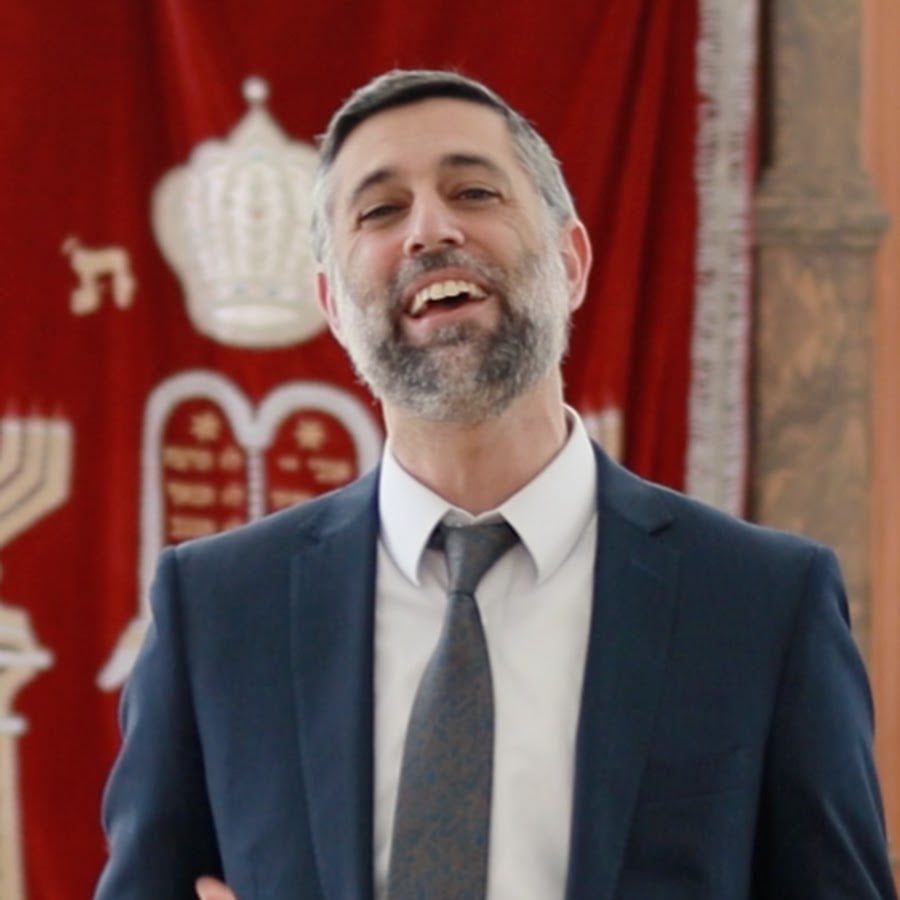
What is the deeper concept of peace? What is the depth of the teaching about the peace that comes when Hashem returns the souls of the idol worshippers for another day of life despite their denial of Him? Why did R' Meir allow the woman to 'spit in his face' to satisfy her husband who was not allowing her to come home? Why is Jerusalem associated with the concept of peace? Why is the ultimate redemption connected so intimately with peace? What is the approach to peace and forgiveness with others who have hurt us? Find out in this week's Parsha Podcast.
Comments
Transcript
Auto-generated transcript. Not time-synced to the video.
You're listening to the weekly para
podcast with Ari Goldwag recorded with
Hashem's never- ending assistance in
Israel 5786 2026. This week's para is
parim
and in our para we're going to see a
small discussion that we get a lengthy
discussion in the medish pik says
chapter 20 10 of Deuteronomy
when you approach a city you want to do
battle with it.
So the first thing before you do battle
is see if they're interested in peace.
And in the when we talk about peace, we
mean are they interested in surrender?
If they're not interested in a war, so
they open up to you.
So whoever you find inside of that city
um becomes your servants. They need to
pay you tax.
But if they're not interested in
becoming your servants,
so then you will wage war with them.
Okay? So I'm not going to get into what
happens after that. But I do want to
read to you the med which extensively
speaks about the concept of peace. And
it's interesting because the Pik itself
conceptually peace means
um come you come under my dominion
right but we're going to speak about
peace in a different in a different vein
says the par section
we get a lengthy talk about the power or
of peace.
Come and see.
When a human being has an enemy, so he
wants to see, he tries to see what he
can do to him, right? How can I get away
with causing my enemy damage without him
per se even knowing about it?
She also lo
so the individual who hates somebody
else wants to cause him harm. So he'll
go to somebody who's wealthy. He'll be
nice to the guy who's wealthy. They'll
butter him up and then say, "Can you do
some kind of damage for the person for
this particular person, the one who he
hates?"
Listen to this. Hashem is different. And
obviously whenever we see something
about Hashem himself as it were. So this
is a lesson for each of us because we're
supposed to emulate Hashem, Hashem's
good ways.
All of the idol worshippers, they anger
Hashem. Those who deny his existence
anger him as it were.
Now that person who denies that God
exists, his soul goes up to the heavens
every night, goes to sleep.
The soul of every living creature is in
Hashem's hands.
Now does not say, "Oh, this guy's this
guy's a lousy guy. I'm going to get him
back. Not going to wake up in the
morning." That's not what happens.
but rather Hashem gives back the soul to
every individual. Even those who despise
God, even those who defy God.
In Isaiah 42:5 says that Hashem gives
the souls to all of those who dwell upon
the land.
So before we get to the next thing,
there's a whole bunch of different
teachings here in regards to peace. But
the first one is Hashem
has power over all the individuals, even
those that we would say that God hates.
Even those that deny God's existence,
even those that
behave as if God is not there. So well,
what does Hashem do even though he has
power them? He he gives them life. He he
causes them to wake up in the morning.
Okay. So it's a lesson a powerful
lesson. So this the entire s of timer
that we need to emulate Hashem's ways
his loving kindness that Hashem is
constantly giving life even to those who
are actually sinning against him with
this very moment of life that Hashem is
giving them.
Okay. So we see what it means peace. We
see what the concept of peace means. It
means
a high level of vtor, a high level of
forgiveness,
of giving up
my own power against somebody, somebody
causes me damage. Should I not respond?
We learn from Hashem that that's not the
right thing to do.
Another
example says the maj let's say someone
does ruin does something really not nice
to Shimon
Shimon's hurt by it he's upset tells his
wife you know how long does it take for
that resentment to go away it's not so
quick right the way the measure says it
is it doesn't leave his heart forever
right it's inside of his heart still
even when I forgive forgive somebody for
something they've done wrong. It's not
always the same as it was before. It's
still in my heart.
God is not that way.
The Jewish people who are God's special
chosen nation.
So we were in Egypt and we were being
treated
terribly. We were slaves.
They made us work with with brick and
mortar.
After all the bad things that those that
the nation of Egypt did to the Jewish
people,
Hashem still expressed that we are to
show them kindness.
Says, "You shall not treat Egyptians in
a negative way because you are a
stranger in their land." which means to
say
that there's such a thing as
appreciating when someone has done me
kindness even though they've also done
something wrong for me. They've also
done terrible things to me. The
Egyptians oppressed us. They enslaved
us. They treated us like dogs. But we
lived in their land. And we need to show
them. to show gratitude
rather run after peace.
Seek peace. Run after peace. So I mean
that requires running after peace. You
have to be a serious runner in order to
not notice that someone has done wrong
to you because they've also done
something nice to you. Right? That's
really hard. That's a difficult
challenge. But the mages is telling us
that that's what we're supposed to do.
That's what the Tyra is teaching us.
When the Tyra says about the Egyptians
that we are to show them gratitude that
we lived in their land,
it's saying don't look at the bad stuff.
Don't look at the bad stuff. Look at the
good stuff.
Another explanation. What does it mean
to seek out peace and run after it?
My mayor, this is a story we learned
together elsewhere in other mediev
The uh the candle had been extinguished.
Her
husband said, "Where were you
until now?"
She said, "I was she said I was
listening to Mary. He was saying
that particular guy was a clown." or as
the explained here was a Russia.
She said she was told by her husband,
you can't get into my house until you
spit in the face of Mayor.
So she left. She left her husband's
house. She was kicked out of her
husband's house.
Alan Novi Elijah the prophet was you
could say half man half spirit right we
know that he went up to to heaven in in
in a fiery chariot chariot right and he
would and he has reappeared and he
continues to reappear to this very day
to teach great people things that need
they need to be taught
so
appears to every mayor
He tells him, "Because of you, because
of your long rash, a woman was kicked
out of her home."
And he told Elijah the prophet explained
to what the whole story was, what her
husband had told her, don't come, don't
come home until you spit in his face.
He sat in the great study hall.
This woman was a righteous woman. She
came to pray.
So
Mary sees her. This is the this is the
lady and she he knows.
And uh he made himself look as if he was
sick. He had an eye an eye infection.
And he said, "Who knows how to cure an
eye infection with their saliva?"
Of interesting in this version of it.
So,
so uh
she says that she does know what to do.
In the other version, she said she
didn't know what to do. Okay.
So, so she did it and she spit she spit
in his eye, spit in his face.
So, says to her, "Now you can go home to
your husband and say to him, I spat in
the face of
go and appease your husband."
We see the power of peace. So I think
about it what what's happening in the
story? What's happening in the story?
Ravi Mayor is Ravi Mayor is showing an
incredible kura
an incredible strength. I mean the guy
the late son the clown the evil
individual the wicked individual had
told her uh his his wife to spit in Reb
mayor's face for saying along to Russia
causing her to come home late.
You know, that's not my friend. If
you're Revy Mayor, that's not your
friend, right? But Ravi Mayor, Ravi
Mayor didn't care about his own honor.
Mayor didn't care about this guy being
wicked and saying for her to spit in his
face. He cared about a husband and a
wife
that their relationship should be
mended.
That's what he cared about. That was
more important to him than his own
honor.
Unbelievable power of peace
says what is the great power of peace.
This is parallel what did he gave up on
his own honor. Hashem himself as it were
gives up on his own honor. Torah
commands us that if you write Hashem's
name, you can't erase it. The Torah also
commands that if you have a woman
who seems to have been unfaithful,
you're allowed to erase Hashem's name
into the Morim
into the bitter waters.
You're allowed to erase allow Hashem's
name to beak
erased into the waters in order to prove
her innocence so she should come back
into a relationship with her husband.
Now, we're not talking about a sadus
here. We're not talking about a
righteous woman, not a righteous guy.
She's been seen with someone else. It's
not a good thing. But still the the the
honor of Hashem, Hashem allows his own
honor to be erased in order that this
Rashanta,
this evil, wicked woman
should be able to return to her husband.
Incredible thing. So again, I want to
point out that we all have lots of
reasons. This is an important thing.
Begins now.
I am to my beloved and my beloved is to
me. You know, everyone talks about
comes he's his
the the uh the king is in the field,
right? So, it's it's a special time, but
at the same time, it's uh
it's also a it's also a time to think
about our relationship with our fellow
man. Right? We're going to come into Yam
Kipper, Rashim Kipper, and uh we're
rededicating ourselves in our
relationship with Hashem, but Hashem
says, "I can't forgive you for the stuff
that you've done to my other kids."
We've got to ask them for forgiveness.
It's hard to ask for forgiveness,
especially when we feel like they've
done something wrong to us. But what we
see here is that my job is not to think
about the other person, what they've
done wrong. My job is not to think about
how bad they are or how much they hurt
me or even how wicked that person is. I
got to I got if I've got something that
I've done wrong in that, I got to clean
it up.
I have to find peace.
find another example says
of of peace that the brothers and Yoseph
the brothers suspected that maybe Yoseph
was still angry at them after Yakov Ainu
died. So they s they told him a lie.
They said that their father had said
treat them well. Don't be upset at them
for what they did to you. Jacob had
never said that.
They afraid that after Jacob died, he
would avenge what they had done. They
had sold him into slavery.
They said to him, "Your father commanded
before he died that this is what you
should say to Yseph."
We don't find that Jacob actually said
that
that he should treat them well.
It's interesting. It's set up as theim
tell us
something which is untrue in order for
us to get to a state of peace. Or
alternatively,
the brothers were permitted to say
something which wasn't precisely true.
Maybe it would have been something that
Yakov would have said if he would have
known. He didn't even know about the
story
according to many opinions.
Right? So, so they were permitted to say
something which was a halftruth or which
wasn't true at all in order that there
should be peace.
Sometimes you got to sometimes you got
to say a little white lie in order to
maintain peace between people to
fellows.
It's known that
Aaron the priest he would he was
he loved peace. He pursued peace. He
tried to there were people in fights. So
he would go to either side and say, you
know, the other person really wants to
reconcile with you. And then he would go
to the second guy and he would say, you
know, the other guy really wants to
reconcile with you. They would end up
getting back together. Now, it wasn't
true until he said it,
right? But it's permitted. It is not
only permitted, but it is obligated to
to
bring about peace sometimes through
subtrifuge.
says another aspect of it.
Peace is very dear.
This is something that Hashem gave to
Zion.
Zion is another name for Jerusalem. But
he says in
chapter 122 of Psalms,
request the peace of Jerusalem.
Right? So shalom is something which is
we're asking for. We're asking that
there be peace in
we want peace. We know I mean it's all
over the
final war of the world
might be what we're in the middle of
now. Final war of the world has to do
with the peace of Jerusalem. Everyone
comes to fight over Jerusalem
but ultimately there's peace. It brings
about a new age of peace.
So Jerusalem is associated with the
concept of peace. Shalim itself the name
of Jerusalem Salem is shalom. Yerush
shalim y shalom Jerusalem. So the city
itself its very name denotes the concept
of peace.
Another
place that we see that peace is
something which is very dear to Hashem
is because God placed it in the heavens.
Right? Obviously God wants to keep it
close to him as it were.
God makes peace in the lofty spheres.
Another possible explanation peace is
very dear.
God gives it to those who are distant
and those who are close
which means to say as M for explained
there are those who have
a relationship with Hashem that's always
been strong and never wavered those are
called sadikim then there are those who
lost their relationship with Hashem they
drifted away from Hashem but they want
to come back or they've come back
they've done chuva
How does Hashem feel about that as it
were?
Peace. Peace to those who are distant
and those who are close. Right? Hashem
is interested in everybody. She wants a
relationship with everyone. Even those
who have drifted away.
You see that it's something that's very
dear because Hashem does not give it to
the wicked.
says also in Isaiah first
is in
this one's in chapter 48 of Isaiah
God says there is no peace for the
wicked which means that it's something
that's reserved for the righteous peace
is something that's precious it's
precious it's something you know think
about it those who are wicked they don't
they don't create they create drama in
the world they don't create connection
they create disconnection. Shalom is
about connection and it's about it can
be about connection between those who
are not the greatest people but we still
want their them to be connected like we
said earlier but those who are wicked so
their whole essence is disconnection.
So peace is not for them.
Biscar, we find that Pinas who did a
great mighty brave act caused the end of
the plague by killing Zimry
who was connected to a woman in the
wrong way.
Correct. Connect connected to the wrong
type of person.
Hashem gave Pinas who by the way is also
same soul as Elio. So we saw
something about him earlier.
is
Hashem gave him the gift of peace
by giving to him a covenant of peace.
He maintained the peace between heaven
and earth, between God and the Jewish
people.
When Hashem wants to talk about the fact
that we're going to be redeemed, that
the redemption is going to come, the
messianic age is going to arrive. How
does he describe it? And it's described
as peacem
or the rag maser the the footsteps
the footsteps of the of the mavaser. The
mavaser is the one who tells over the
news.
The one who tells over the news bringing
the news of peace. Bringing the news of
the redemption.
It's a it's peace that he's talking
about. That's what the redemption is.
That's what it looks like. the lion and
the lamb, the nations who until now are
fighting, Iran and Israel, Russia and
Ukraine, etc. There's going to be peace
between nations. No longer will they
raise their swords to fight each other.
They will beat their swords into
plowshares,
right? But peace is the description of
what it looks like at redemption. So you
see how great peace is.
says,
"Look at the completion of all
blessings. Peace is always there at the
end. It's the bottom line. It's the it's
the that which rounds out the
blessings."
So what's the blessing after Kesha that
that finishes off the blessings of
Kishesha? Hashem is going to spread out
his tent of peace,
right?
Which by the way really means that
because what is
we spoke about it previously not long
ago
is all about a relationship with Hashem.
Everything is him.
It's all one.
Love Hashem. Fulfill the commandments.
through the mitzvah. We spoke about this
last week. But what is the bottom line
of all that? What is the result of all
that? We're in a state of peace, which
means that I should be able to get to a
place through the Tyra
where I don't hold a grudge against you.
I don't I I let go of that stuff like we
spoke about earlier. But that's the
result of the Tyra. That's the
foundation of the blessings. You want to
know how to have blessings? Forgive
other people.
Right. The beautiful blessing of the
priests that they give here in Israel
every day in at chakras they give that
should bless you. They're the masters of
peace. They're the ones who bring the
corbonus the sacrifices on our behalf.
They're the ones connecting heaven and
earth. They're the ones who give us the
blessing out of their love.
With love they bless us. And what's the
foundation?
Peace,
right? It says at the end of the
blessing.
Another place that we see how precious
and important the concept of peace is is
that
what is the consolation that God gives
to Jerusalem
says again in Isaiah 66:12,
God is going to send a river of peace to
Jerusalem.
A river of peace.
That's a good river. I'd like to jump
into a river like that.
King David says, "I was interested. What
is Hashem talking about when he talks
about the Jewish people? What does the
conversation look like? What's the
topic?
I wanted to know what he talks about and
I understood. I heard that he's involved
with their peace.
Posix says in written by King David
perheapter
85em
I will hear that which God will speak.
He speaks peace about his nation.
He's looking for the good. He's looking
for our best.
I want to just comment here. I've said
this to my kids many times. I think it's
important for us to think about
especially as we're in
we have a hard time forgiving. We're
human. We have a hard time letting go of
stuff and we think therefore that God
has a hard time forgiving us.
Can bring proofs to it.
Whoever thinks that Hashem is just he
just lets go stuff. Don't think that cuz
I'll say that. But on a deep level it
says
is compassionate. Hashem gives free
gifts. Hashem is
which means that he pardons people even
though they don't deserve it.
Hashem is a compassionate one. He's a
gracious one who who forgives a lot.
This is his mida the mid of shing. We
got to work on this my friends. We got
to work on this. Being able to forgive
others to find a place of peace. No, let
him let him apologize first. That's our
ego.
Let me pray inside of my heart. Let me
dive in and Hashem, please help me love
these people. Hashem, help me forgive
these people. Forgiveness is hard. It's
a hard thing to give. It's something I
need to receive. I need to be able to
receive the gift of being able to
forgive someone else. Because as long as
I don't forgive somebody else, I have
that that resentment inside of my heart.
I'm killing myself.
Okay,
let's read the final statement of the
medish before we close it out here.
See how beloved is peace.
When wanted to give a blessing to the
Jewish people, the vessel that holds all
the blessings is peace. I can't have a
relationship with somebody else unless I
have peace with them. Unless I know how
to forgive them. I don't wait for them
to
prove that they're worthy of my
forgiveness. I got to do and then I
should be able to forgive people. And
then I have peace. That's the cle that's
the vessel.
Peace is the vessel that holds all the
blessings.
Shem will give power to his nation. and
Hashem will bless us with peace. You
know, we could look back in very recent
history. We don't need to look back very
far. When Kal is not loving each other,
we get into trouble. We get into
trouble. Our enemies see that we're at
each other's throats. They see we're
vulnerable.
And the greatest power, where's the
power,
where does Hashem give us the power? It
comes through peace. Comes when we can
forgive each other. We can forgive the
person who's hurting us.
doesn't mean that what they're doing is
okay, but I can let go of it. I can let
go of believing that it's happening
without Hashem's will as it were. I want
to bless you, ask you to bless me.
Hashem should help us as we begin el
we're in the countdown to the high
holidays should help us to have some
peace. Should help us pray for
forgiveness. Pray to look past the
mistakes of others and ourselves.
Thank you so much for listening. Have a
wonderful Shabas.
This podcast was made possible through
the gracious donations of listeners like
you. For more podcasts like this, please
visit www.argoldwag.com
or search on iTunes Ari Goldwag.