Preparing video...
0:00 / 0:00
Nitsavim-Vayelech - The Truth is Inside
510 views
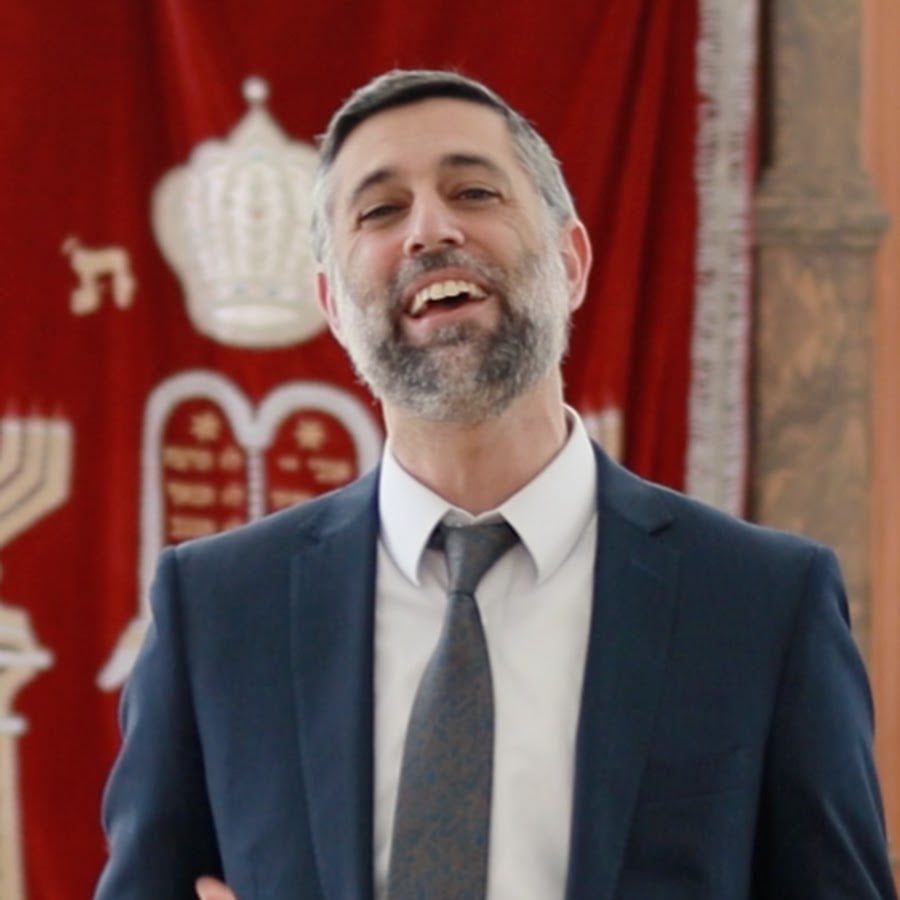
What is the idea behind 'those who are here and those not here' being part of the covenant? How can 'those not here' be included? What is the power of the idea that every new Torah idea was told to Moshe at Sinai? What is the unique power of even a single person doing teshuva (repentance)? How does Teshuva relate to redemption? What is the 'space between the mouth and heart' which is the center of Teshuva that anyone can access? Find out in this week's Parsha Podcast.
Comments
Transcript
Auto-generated transcript. Not time-synced to the video.
You're listening to the weekly partial
podcast with Ari Goldwag, recorded with
Hashem's never-ending assistance in
Ramat Beit Shemesh, Israel, 5786, 2026.
We are heading into the end of this
Jewish year, 5786.
And
I'd like to share with you some
beautiful pieces from the Medrash.
And this week we have Nitzavim and
Vayeilech, two parshas, and
um as we get into Sefer Devarim, so it's
always a challenge because
there's less and less Midrashim
in Medrash Rabbah
on the parshas in Devarim as they go
along.
So this this week I decided to in my
research for this week's parsha,
I decided to look at a new Medrash
called Medrash HaGadol, which is a
beautiful Medrash,
which was collated in the 14th century,
I believe,
in Teiman, in Yemen,
by a scholar named Rav Avadani.
And
he has many different sources for his
Midrashim, and he also has these
beautiful
poems that he has at the beginning of
each parsha.
So I'd like to read to you before we get
into the ideas of the parsha and we get
into
some teachings and some things that
relate to we are
in the
in the final countdown into Rosh
Hashanah. Once it's Shabbos, we're going
to start saying
the
uh
the Slichos. If you're Ashkenazi, if
you're Sefardi, you've been doing it
already for a while, for a few weeks.
But let's see. We're going to talk about
chuva, we're going to talk about
connection, we're going to talk about
Torah.
But I'd like to read to you
there are two parshas, so there's two
introductions. I'm not going to read the
whole thing, but a little bit of
each one. First from Nitzavim.
Shma Yisrael, Yotzei Yitzurim U'cheinam.
Kabtzeini Nidachei Ammi U'Ashiveini
U'Mochleini.
Beautiful poem.
Hear our call,
the one who created everything and owns
everything.
Gather in those who are dispersed and
bring them back to their proper place.
Bring back the priests to their service
and the Levites
to their platform where they sing.
And then we will hear the voice, we'll
hear the sound of raising up a sham with
their with their voices.
Change changes from a state of sorrow
to joy and consolation.
Do it for the sake of your great name,
for your sake and not for ours.
Okay, it goes on. I'm not going to read
the whole thing. I want to turn to what
he says
And this is the verse we always read
before Rosh Hashanah.
Return us a sham
with your will
and
reach out your right hand, which is your
hased, to receive your children.
Place upon them the good that which is
good in your eyes
and desire them
for the sake of your outstretched arm,
your power, the light of your face.
On the day of judgment let us be judged
with
with proper justice
and not through anger.
Don't allow us
to be sent away empty-handed.
Cuz we are the great-grandchildren
of the one who you the the mighty ones,
the forefathers.
They are your nation, Hashem. They are
your portion.
They are we the Jewish people are his
sheep.
We are the ones who live in your land.
We are the ones who love your home, love
the base of Migdash.
As the possuk says, we are strangers in
front of you.
Okay, I thought do something a little
different today. Start off with a poem.
A beautiful poem. We're heading into the
days of
I don't want to call them days of
judgment. They are days of judgment. I
would call them days of reckoning.
Days of looking at ourselves honestly
and seeing and trying to understand how
we can improve in our relationship with
Hashem, how we can make Hashem our king
again.
And this week's parsha starts off
You're all standing before Hashem.
Your God.
Every single one of us stands before
Hashem whether we are leaders we're all
leaders
within our own
dolaramas.
Uh we're whether we're talking about the
tribes, the elders of the tribes
>> [snorts]
>> those who make sure that we do what's
right. Call each Israel all every single
Israelite man Israelite person
your children, your wives
and the strangers
the the proselytes that are with you in
your encampments.
This is something that applies to those
who chop the wood, those who
draw the water.
So, Sham is making a covenant with us.
That's what Rosh Hashanah is about.
That's what the whole time is about.
That's what we're going to be
we're heading into.
And the possuk says
not only with you am I making this
covenant.
A yom.
I'm not only making this covenant. This
is 3,300 years ago, right? Sham says,
"This covenant is not just for those who
are standing here today, but it's for
those who are not standing here today.
Also, we, I and you."
Those who are with us and those who are
not.
So, what is this idea? So, the first
idea I want to share with you from the
Medrash Hagadol
from Rav Adda bar Ahavah
>> [snorts]
>> is he says an amazing thing, a beautiful
thing, and it's so important because
sometimes we feel disconnected.
Sometimes we feel
we're not connected to Hakadosh Baruchu,
to Hashem. We're not connected to Torah.
Sometimes we feel like we've done wrong.
Sometimes we just don't We're not
feeling it today.
But, he says an amazing thing. That's
Sh'eineni Poy.
Ilu Avraham Sh'eineni
Imon, Sh'ekulan Yichnisu B'eisa Am
Yisrael.
So, the first thing, who's not there?
Who's not there?
So, there's a few people who are not
there at at the
at the point in time
Moshe Rabbeinu is
entering into land of Israel, where the
Jewish people are about to enter into
the land of Israel,
but they're still part of the covenant,
even though they're not there.
So, the first thing that it says it's
it's it's referring to
the fetuses
that are inside of their mothers' wombs
that even though they were not yet born,
they were still part of the covenant.
Mikan amru from here our sages teach us
arm loy
that when a court
has to
get a person to to make an oath
so they say to them
al da'at da'at da'at da'at
They say, "Where
when we give you this oath, when you
make the oath
it doesn't go by the way you think about
the oath. It goes by the way we think
about the oath."
And we see that that's something that's
possible because a fetus is not yet
born. Also certainly doesn't have any
da'at doesn't have any intellectual
capacity. So for for that fetus to be
included in the oath
in the covenant shows that the covenant
that's made where the oath that's made
is done
based on the people who are
making the who are I would say enforcing
the oath.
K'she'kein amru
Moshiach says, "I want you to know this
covenant
that usually you could think about a
covenant as a deal between two parties,
but this is not exactly what this
covenant looks like."
Moshiach saying, "I am I'm telling you
that the covenant looks like what I say
it looks like."
The relationship looks like what Hashem
says it looks like.
Sh'na'amru sh'na'amru lecha k'ilu k'ilu
yesh sham yesh na'ar
Right? It's not just those who were
there, it's those who were not there. So
how could it be that that it includes
somebody who's not there? But clearly
it's an oath that's being made or it's a
covenant that's being made with somebody
based on
Hashem himself.
Hashem is our creator, he has the right
to do that.
How
do we know that the generations that
come afterwards how do we know that we
are still included in this covenant?
Maybe Hashem gave up on us or maybe
we're not obligated in the midst of this
anymore as they're written by Moshe
Rabbeinu heaven forbid.
How do I know that a ger if he wants to
become part of the Jewish people
that a proselyte
has to keep everything and that in order
for him to become part of the covenant
he's got to keep all of it.
That's what the possuk says it includes
those who are not here today.
What about the mitzvahs that were not
yet at the time of Moshe? Right? We read
the Megillah we say
we read the Megillah.
On Purim wasn't yet existent how can we
say it's a commandment?
So listen to this this is why I'm
reading this.
There's nothing new.
When they when they accepted upon
themselves to read the Megillah
it was just a
confirmation of something that had
already happened.
It's a beautiful thing.
Listen to this listen to this this is
for all of us.
King Solomon says in Koheles in
Ecclesiastes
that which was is what's going to be
again later.
You might say that there's something
new.
But think about it the story of Megillah
that there's divine
uh intervention that Hashem's involved
in our lives
working behind the scenes.
Now, Sham's involved making sure the
missiles don't land,
protecting us from Iran.
So,
the it doesn't it looks new. Looks like
a new thing. Oh, look at this new type
of way of Hashem interacting with us.
Kvar haya l'olam lo haya achar haya
milifnei olam says King Solomon.
Anything that looks new is not new. It's
been there before.
Listen.
Beautiful, beautiful image.
You learn something. You learn some
Torah. Or you think of some chiddush in
Torah. You have a new idea, novelty.
It's sweet to you. It feels right. It
feels feels right. Rings, it resonates.
You know why it feels right? You know
why it resonates? You know why it's so
sweet? Cuz you heard it way back at
Mount Sinai. You and I, our souls were
there.
L'eich l'eicho says the Maggid. You know
what it's comparable to? The Maggid
said, "A little bit knaft talit of
ibda."
A person who had
used a part of he had a pocket and he
used that pocket for a coin. And the and
the pocket
or the maybe it's a
a little leather pouch
that
was formed to the size of that coin.
And that coin was spent or lost.
It was tailor-made to that coin. So, you
put a bigger coin, it's not going to
hold it well.
Put a smaller coin, it could slip out.
You put the same size coin in, so then
it sits properly.
Beautiful mashal.
It sits right. It feels right. It it
locks in. You hear a word, you hear an
idea, it resonates. It It's
I know that from somewhere. It sounds
right. It feels right.
That's because we all were there.
We weren't there, but we were there.
It's like it says it's true about Torah.
It's true about the Torah learning, and
it's also true about the Nevuas, the
prophecies.
There's no new prophecies. Every single
prophecy that was said 1,000 years later
500 years later, however many years
later it was.
Yeah, even 1,000 years later.
So, these were received at Sinai.
It says those who are here and those who
are not here.
It says as well the pasuk.
It's It was a
a burden. The word of Hashem was
something he carried
to the Jewish people in the hands of
Malachi.
Doesn't say el Malachi.
El vi ad Malachi. Says Doesn't say it
was said to Malachi. It says in the
hands of Malachi.
He had it already. It was sitting in his
hands
all the way back from from Mount Sinai.
From the time that it was there, I was.
So, they say to Yeshayahu
from the time that it was, that's where
I was.
What took you so long to speak if you
knew this already?
Why didn't you tell us your prophecy
before?
He said I did not yet have permission to
say over my prophecy.
Now I was sent by God.
and his spirit.
So,
Yeshayahu had it also. The Nevuah of
Yeshayahu, of Malachi, of each of the
prophets went back all the way to Sinai.
It was something that was embedded into
the world waiting to drop
onto the correct person through his
soul, but his soul already received it
then.
All of the wise individuals that ever
were and are going to be
Pasuk says
Moshe Rabbeinu says
Hashem gave me
the two tablets of stone a laam va laam
dvarim hadvarim
kol hadvarim
Pasuk says
It's interesting. The Medrash is
pointing out the Pasuk says
va laam k'chol hadvarim
Right, there's an extra vav and there's
an extra hey and there's an extra kol
and there's an extra kaf.
es ve es mikra u'mishna medrash halachos
v'aggados
Each of the different aspects are
included from the extra letters and
extra words in the Pasuk. There were
lots of different aspects of Torah that
were included in Moshe Rabbeinu's
reception, his receiving the Torah.
A Rebbi
is going to teach a little child a word
of Torah. He's going to have a chiddush.
In a in a kneitch, in a way to teach the
child Torah so he learns it better.
That's already been planted.
It's already been planted.
Reish zachalashu.
Right, that's why Melech said as
we quoted it before. Someone might say,
"Look, this is a new thing, a new
kneitch, a new
uh a new way of educating our children.
If it works,
you think it's new?
This is old. This is something old.
When she made a Sinai, so it sound like
it sound like oh my gosh,
why do I need to bother for? Right?
Anything that I say is already been
said. Nothing new, right? No, it's it's
actually incredible. Let me say I today
in 2026,
3,300 years after her Cena, I can
resonate, I can access,
I can access
the original
revelation of my share of my no. We all
have it cuz we were all there. It was
embedded into our souls. It was stuck
into our pocket.
When that coin lands in the right place,
the right word, the right idea, the
right depth, it will sit in the pocket
just right. It will feel just right. We
can connect to it and resonate with it.
It's just beautiful.
And you think about it, it's like
I I think it's so important to think
about this. See, you come into
the new year, the Rosh Hashanah.
The year begins and we feel like
I didn't I don't know if I did it right.
You know, what is it that gives us that
sense, that feeling like I don't know if
I did it right? Cuz we we know we didn't
do it right. We know it could be better.
We know our relationship with Hashem
could look better.
But it's I don't know, there's some
consolation. Not just a consolation, but
a tremendous hisic.
It strengthens us to know that we all
have inside of us
a recognition, an understanding.
We can all realign. It's not hard. It's
it's in our hearts, it's in our mouth.
It's accessible. It's something that we
all can access.
Okay, so that's the first point.
There's [snorts] a whole bunch of other
ones that I don't think I'm going to get
to all of them, but
some beautiful things here.
He's talking about He's talking about
chuva.
He's talking about connecting to
Hakadosh Baruchu.
And one of the Sukhim it says
Hashem is going to remove the the
klipa, the outer
stuck nature of our hearts. Right,
sometimes we feel disconnected. We don't
feel Hashem. We don't feel spiritual.
Hashem is going to remove that husk.
Hashem is going to remove it and we're
going to love Hashem. We're going to
feel connected. We're going to live.
Says this Medrish in Matos Oiseh
Me'ahavah.
Ata Oiseh Ata Koneh Lo Atzmo Chaim
She'ein Lo Hefsek. She'ne'emar L'ma'an
Chayecha.
When we serve Hashem out of love
Right, there's different modes and
reasons why we can serve Hashem. And I
think that hearing it, when we hear it,
becomes ours or we can sense that it's
our Torah, it's our mitzvah. It's our
mitzvah.
There's something in us that knows this
is ours. This is our Torah. This is our
heritage. The Torah is our We feel
connected to it. We don't always know
why. There's something in us, right?
That's the love.
When we serve Hashem out of love
L'ahavah Hashem Elokecha L'ma'an
Chayecha. The Pasuk says in order that
you live. It's not just talking about
living in this world, which it is.
Having a good life in this world, but
it's talking about
having an eternal life,
which means having a connection to God
forever.
How do we get that? It comes out of
love.
Not just serving Hashem out of fear, cuz
everyone's doing that, or because I
think God will be angry with me if I
don't do that. Serving Hashem out of
love.
Cuz we love God. You know he loves us.
He wants the best for us. And we can
sense that it's real.
It's one little thing.
He brings air palm and shuvason. Posik
says in Hoshea,
we're going to read this
pretty soon. It's
to do with shuva.
Hashem says, "I will cure their
waywardness." The Jewish people
sometimes
we don't love each other as we ought to.
We don't respect each other as we ought
to. We don't respect Hashem and his
mitzvahs as we we should.
Hashem says, "I will cure them."
Tanya Remera I want to go to shuva.
Remera would say,
"The shuva is great. She be shfeel
yachish osa shuva maklon lie ulokha I
don't listen to the power of shuva,
okay?
Repentance, coming back to Hashem,
getting back into a space of serving
Hashem from love.
Just one person, just me, just you.
One person has the power
to get the uh
forgiveness for himself and for the
whole world.
The Zohar says
shna var air palm and shuvason.
Posik says, and he doesn't quote the
whole thing, but I know the part cuz I
want to sort of sing to these words.
Air palm and shuvason, "I will cure
their waywardness. Oh ya have vim
nedava, I will love them freely.
Kishova pi mimenu.
It's talking about them, about them,
about them, and then it's it suddenly
switches to him. My anger has turned
away from him.
The heavenly name are doesn't say turned
away from them.
Elimelech
It says from him.
It is one person. It is from him. One
individual can cause all of Hashem's
anger to be turned away.
One person does chuvah. You You can be
that person. I can be that person.
We turn back to Hashem
and the whole world turns back.
Incredible.
I want to show you about Rabbi Nachman
and Rabbi Nasan.
Rabbi Nachman says the name of Rabbi
Nasan Gedolah Chuvah Shem Arachas Yamim
Shel Adam.
Chuvah is a great thing. It
It makes a person live longer. She nemar
Uveshuv Rasha
Chayo Yichyeh. Pasuk in Yechezkel.
Chapter 18, verses 27 and 28.
When a wicked person changes,
he will certainly live.
Which means he wasn't supposed to live.
He had done wrong. He was disconnected.
He was
spiritually dead.
We're never stuck there.
We're never stuck there. We can always
change.
Amar Rabbi Nasan Gedolah Chuvah Shem
Karavas Es HaGeulah.
Rabbi Nasan says Chuvah is great because
it brings the redemption closer.
5787, the year of redemption.
How do you bring redemption closer? What
do we do? When we're facing
enemies
that are surrounding us, that want to
destroy us, how do we
deal with it? Chuvah. Chuvah brings the
redemption. She nemar Uval Letzion Goel.
We say this every day.
A redeemer will come to Zion Uleshavei
Pesha BeYaakov, to those who have
repented from their sins
in Jacob.
Pasuk in Yeshayahu, perek nun tes.
Pasuk kaf.
Amar Rabbi Yitzchak should listen to
what you make hard.
I believe he says
if we do children for one day
if all of our missiles would do children
for one day, just one time
the other than the golem
immediately we would be redeemed.
My time A how do you know this? I am a
college student but it says in the hell
today
it can come today if you listen to his
voice.
So it's interesting because
you see the power of an individual to do
children and and have an impact on the
entire world, but you also see the power
of a a children of Robin.
A children of many people.
I remember the day that children should
be able to see Yeshua. I was just a
similar thing. Children is incredibly
powerful. It brings the redemption
closer.
Bring salvation closer. You should
remember my sham.
She will miss put my suit to Dhaka.
This is what I shall say.
Keep
keep righteousness.
Do
uh make sure that
you're bringing about justice. Keep your
shoes on so you love of its cousin legal
ways.
Salvation, I shall saving us is
connected to sit cos to righteousness.
And that means
what does it mean righteousness? It's
referring to here as children.
>> [sighs]
>> I don't know if you should children go
to the army. So what do we see that
since children is a very foundational
idea of the Hamas in a lot.
The shove down the show my car.
It says you shall come back to our sham
your God to return. That's that's
children.
Okay?
We have a few more minutes. We're going
to touch on one more thing.
Possible says he can have a double mind.
This matter is very close to you.
The figure of a It's in your mouth and
your heart.
To do it cuz I may try to do it
cuz he says in Isaiah.
Seek out a sham when he's found.
If
you seek a sham out, you will find him.
As we said he's He's it's it's a
resonance. It's already in us.
So they said to him, where is he? Where
will we find him? Where do we seek him?
Between
your heart and your mouth. In between
here. The
between your mouth and in your heart.
The between your mouth and in your
heart.
Your mouth you would admit that you've
done wrong.
And in your heart you you change. You
want to be different. You want to get
back to loving a sham.
Then a sham is there. Let's say guys,
folks, it's not so hard. It's really
simple. Chuvah
repentance, it's not as hard as people
think it is.
Just admit we've done wrong.
And with our hearts, let's wake up our
hearts to change.
A sham is with us.
A group of of uh
thieves were incarcerated in jail.
They they made a hole to get out of the
jail.
They all escaped except for one old guy.
Old guy The the the the jailer comes and
he finds the old guy. He starts beating
him up.
So so he says
You could have gotten [clears throat]
out and you didn't.
That's why he's beating him up. Everyone
else escaped. Why didn't you?
We all have the the path out. We all
have that that that
cave that's been dug out to get out of
here to get out of jail, to get out of
our yetz hara. It's called teshuvah.
It's in our heart. It's inside of us.
All we got to do is start moving our
lips. Make a list of the things I could
do better this year.
Make a list of the things I've done well
also.
Strengthen the things that we've done
well. Get rid of the stuff that we've
not done well.
We can do this guys. We can do this. I
want to bless you. I ask you to bless
me. should help us.
Let's use this final shabbos of the year
for the best.
Let's start getting into the mode.
should help us to get into the mode
to find that resonance of Torah, of
truth that's inside of us, that's
burning inside of us, that
knew about and we can still hear today.
Let's all hear it. Let's all get back on
track. Thank you so much for listening.
Have a wonderful shabbos.
This podcast was made possible [music]
through the gracious donations of
listeners like you. For more podcasts
like this, please visit
www.arigoldwag.com
[music]
or search on iTunes Ari Goldwag.