Preparing video...
0:00 / 0:00
Hoshana Raba and Simchas Torah
221 views
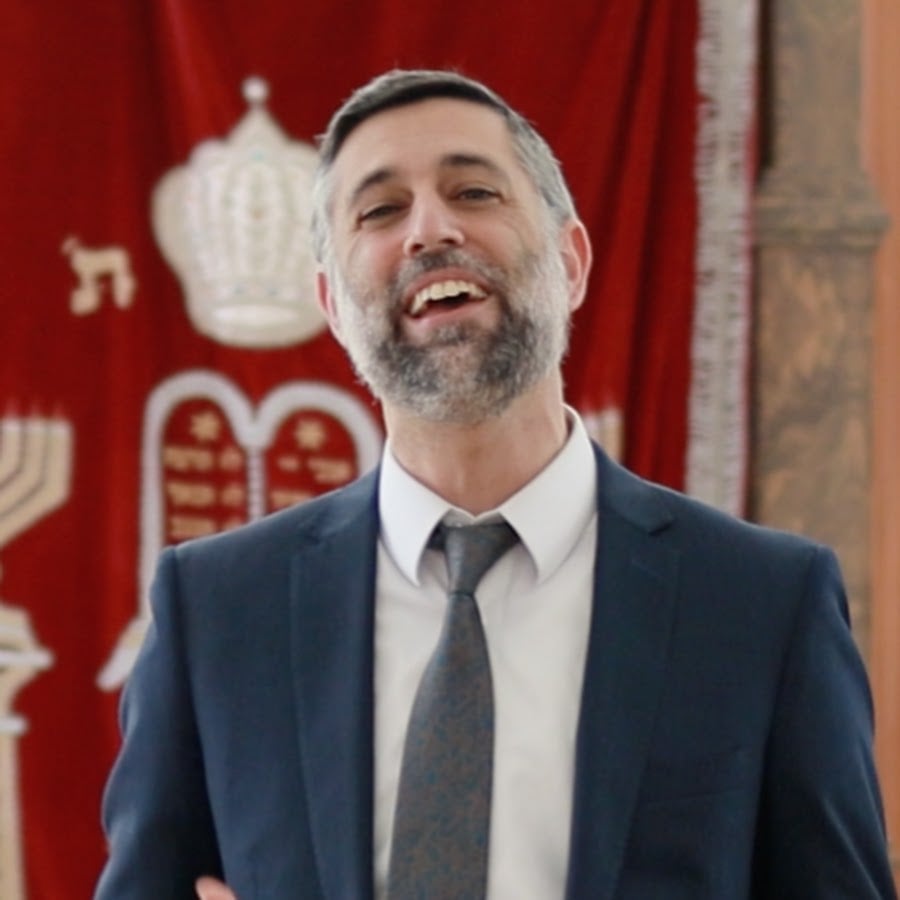
We discuss some deep ideas related to the aravos and Hoshana Raba as it leads into Simchas Torah.
Comments
Transcript
Auto-generated transcript. Not time-synced to the video.
You're listening to the weekly partial
podcast with Ari Goldwag recorded with
Hashem's never ending assistance in
bishel 5787
2026.
This week we have the holiday of
for those in Israel those are both on
the same day which is shabas for those
inits
to Sunday. And I'd like to share with
you a thought today
which is the day that we are mak
we go around with our love of him and
let's ro him seven times and we also
clap
we take five branches of ours and we
bang them on the floor and these are
deep ideas instituted by our sages or
according to some opinions in the
gummora to dorisa
comes from the Torah, this obligation.
And I'd like to share with you a thought
from Shashiva about that. And I'd like
to connect it also to
where we also go around the the uh the
center the center of the of where we
read the Torah. We go around the Beimma
seven times as well, just like we do on
Hosanama. And of course, it corresponds
to the seven times that we went around
when we were coming in to conquer the
land of Israel 3,300 years ago.
And all these things have to do with
something special.
The eighth aspect has to do with the
uniqueness, the transcendental aspect,
the uniqueness of Kalal Israel as the
all-inclusive soul aspect of mankind.
and also himself [snorts] God is his
divine presence which is the
transcendent aspect of reality. Okay. So
that's a lot of words for introduction
but I'd like to read to you from what
says about he says like this
it's a beautiful thing at the very end
of the whole that we do in the the
so at the very end we say
there's a voice that's announcing it's
announcing and it's saying the voice the
announcement is of course it's maser the
redemption
And these days are very connected to
redemption, right? The concept that that
we as we'll see, you know, let me just
read from instead of giving you previews
says after the high holidays,
after we sit in the divine presence
and and what is that divine presence?
It's the shade of the suka, right? The
whole concept of the suka is the it
provides shade
says.
So after we've spent seven days dwelling
in the suka, here we get to the seventh
day,
we get to this day of
and we take the right. What's unique
about the rabies of the four species? We
have the esro of course is perhaps the
most famous. We have the Lulov, the the
long fr, we have the willow branch and
we have the the myrtle branch. Okay. So
each of them has a different
characteristic, a different aspect. The
er has a smell and it has a taste. The
lulv is uh remind me here it has no
taste but it has smell or I don't
remember has taste and no smell. The
myrtle branches have smell and no taste.
But the aras have have no smell and no
taste. Okay? And we take aravas
separately. Five branches of aravas.
They have no taste and no smell.
And those are the ones that are found in
the center of what we are doing on right
at the very end of the prayer. Right?
the the when we get to the ultimate
aspect of the prayer on which is the
point right we have it's a time of din
as we know it's times of judgment times
when hashem is deciding how much rain
we're going to have we're going to pray
about rain tomorrow we're going to start
saying
right the rain is essential for the
crops so how much sustenance we have but
the the aravas
the aravas are there in the center of
it. Right in an arovous, he doesn't
mention this, but arro need a lot of
water. Otherwise, they dry out and die.
You can see my arro from this morning.
They've already uh they've already
gotten pretty dry. If you can see that
in the video, but um so
that's the center of it. The aras are
the center.
So too in a corresponding way, right?
The aras have no taste and no smell. So
a Jubilee
what if you have a person who's not
learned he hasn't studied Torah he
doesn't have too many mitzvah he hasn't
fulfilled a lot of the commandments but
still even that Jewish
he also calls out to Hashem save me
right we live in Israel we have people
who are on different levels of [snorts]
of connection to Hashem we could say but
everyone everyone everyone has a right
to call out and say save us when we're
in a challenge
like we say at the end of which we were
saying during that what's the final
what's the ultimate statement
[snorts] our father our king be gracious
with us and answer us right gracious
means we don't deserve it
we don't have any we don't have any
actions we don't have anything to curry
favor
give us charity, do with us kindness,
and save us.
Okay, so you see that within the prayers
there's an admission and a recognition
that we're not we're not who we wish we
could be. Our relationship with Hashem
is not as the best that it can be.
Sometimes we feel empty. Sometimes we
feel disconnected. But still, we ask
that you save us, Hashem.
We do the same thing on.
So we've been talking about we've been
calling out Hashem save us, Hashem take
care of us, Hashem forgive us, etc.
throughout the whole first 10 days of
start and then on through the holiday of
what happens at the end of a when we're
calling out and asking him for salvation
the very end it says
there's a voice we can hear now we've
gone through this whole process we've
established a relationship with we
admitted that we need to change we need
to be better. Hashm help us. Save us
despite our lacks.
And then we hear the sounds of gul. We
hear the sounds of redemption.
Says,
"Where does that sound come from?
Who's making that sound?"
He says a beautiful thing.
The voice, that sound is our sound, our
voice.
The very fact that we're still here,
we're still around. and we're still
alive. The very fact that I'm here to
speak to you and that you're listening
to this, that says
we can hope for we can hope for
redemption.
We're still, it's the sound of our
request, Hashem, we're still asking you
to save us, redeem us, take care of us.
That is the sound. That is where it's
coming from. It's coming from inside of
us.
which is quite beautiful. I I remember
having an interaction with one of the
Rabbi Pere where I asked him a question
had to do with focusing more on music,
focusing more on Torah and and he was
talking to me for a while.
And after about 25 minutes, he said,
"Usually after about 15 minutes, I can I
can hear that the person has the answer
themselves,
but I've been talking to you for 25 and
I don't hear that you have clarity on
your question." That's what he said to
me. But I want to bring out from that
story that he wanted to get out of me.
He wanted me to find answer within
myself. He didn't want to just give me
advice or give me direction. He wanted
me to find the answer here inside of
myself. And he's saying that's the shot
over here as well. Where is that sound
coming from of gula? Where does it come
from? It comes from us. It's that sound
of us asking Hashem, we don't deserve
it, but save us anyway.
We read that
when we're saying this. So, we pick up
the we pick up these five. I go find a
few that are not as not as dry here.
We'll pick them up. Pick up these aras.
And you have these five in your hand.
And as you're holding these, you're
saying
these represent the fact that I'm notic
I'm not I'm not a perfect person. I'm
far from that. But
still, Hashem,
I'm calling out. I'm here. I'm still
alive.
And I know that there is a chance that
this could be the year that this could
be the moment of
we we take this old this ancient ritual
this ancient
we take it in our hand
and we go around
to be
which in in representative terms terms
it represents the misb the altar where
we would bring the carbonus the center
of the bas mikdash the place where we
would offer our offerings to hashem so
the beimma is that place of course we
place the Torah there we read from the
Torah there because it's our
relationship with hashem it's defined by
the
so now
we go around that spot
it represents the we had 200 years ago.
You haven't forgotten
what was 2,000 years ago. There was a
temple. There was a bas on the Harab on
the temple mount in Jerusalem.
And
and we hear as we do this, as we remind
ourselves, as we return in our minds to
the Bish, to the temple, we hear the
voice which is announcing
we, it's our voice inside of ourselves.
We are still alive.
We have the the tradition. We have the
that which has been handed to us. We
still have it in our hands. We haven't
forgotten it. We continue we continue
continue that that amazing important
tradition
which according to the Gmorra
is it is it is it is it something that
the sages saw from the because it says
ar is two there's two one is for the lul
one is for the misb one is for the
miktosh
but we have this ancient ancient
tradition either it's from the times of
the prophets or it's from the times of
Moshenu
this very fact that we're holding it in
our hands we're going around we're we're
back in the mdash we feel like we're
back in the temple
this sound is what says we have we have
been victorious
and it doesn't have to do with a battle
between Israel and Iran it doesn't have
to do with with a battle
between Israel and anybody. It has to do
only with
the the Jewish people's struggle for
survival throughout the years. We are
still here. We're still keeping the
Tyra. We're still fulfilling these
customs, these ancient traditions from
thousands and thousands of years ago.
We have been victorious. We're still
here. The strength of your salvation has
come.
This is what it takes to cross the
finish line.
Then what do we do? I'm going to show
you. We take the and then we bang bang
bang. We bang them five times. Right?
One of my kids did it so well that some
of these uh leaves are gone. Right? We
take the aravas and we bang them on the
floor. What does this represent?
represents we are the Arabus. We are we
have we might have no taste and we might
have no smell. We don't have the
connection we want. We're not as
spiritual as we'd like to be. We've made
mistakes. We are making mistakes. We're
going to we're human. We're going to
continue to make mistakes. But
even if they try to knock us down, even
if they try to bang us on the floor,
and even if some of the leaves are
falling off,
we will not die
because the the secret of eternity is
inside of us.
He says,
"I once heard a good explanation,
interesting thing. When the Jewish
people would go out to battle, when they
would go out to war, so they would bring
with them, they would bring with them
the Arin Habris, the golden ark with the
cherubim on the top, the angels on top.
And inside of that ark, it was a small
box. It wasn't a big box, but inside of
that box was the original broken tablets
that Mosher Rabenu brought down when he
came down from Mount Si alongside the
second set of tablets that he brought
down
well 80 days later
altogether 120 days from when he went up
until he came down finally.
So the question is why did they bring
that box of all things? Why did they
bring that box along with them when they
went out to war?
This was in order to say to our enemies
to give them to give them pause.
We have something to show you, so to
speak.
We are not afraid of you. We're not
afraid of you. You cannot break us.
are new. We've already been broken.
We've already been broken. The the claw
was 40 days since they received the
Tyra. They heard the ten commandments.
They heard the voice of Hashem speaking
to Misha to them. 40 days later, they
already had made mistakes. They they
broke down. They they made the golden
calf.
And what was the result?
comes down that day with the tablets
which are supposed to be the the wedding
ring so to speak the covenant and he
sees them doing this terrible sin and he
breaks the lis we've already been broken
when he broke those
was broken
so we come out to battle and we say
here ye oh enemies
you can't break us we're already broken
you can't break us were already broken.
Okay,
this is a very nice idea.
It's very appropriate for for my Shiva
to say he was a tall man grew up in
South Ozen Park with a lot of tough guys
around him, non-Jewish, used to try to
beat him up. You stand up against them.
But here it is, we've we've made
mistakes, but we're still here.
says the work of today leading into
the work of a is
it expresses something even more than
that not just that we've we've already
been broken but it expresses
[sighs and gasps]
before anything we say
that we are here we are expecting
redemption because we are here we are
still here despite everything we are
still here. And I think you know we we
walk into simplistra
and it's a especially over the last few
years it's a mixed bag. The day of
October 7th was on simplistra and we
come in and we and we we want to be joy.
Remember the first year after October
7th was very difficult but there's still
talk about it. Some people refer to the
war as the not as the October 7th war
but as the simplister war. So we come in
and and uh we have mixed feelings. On
one hand, we want to be joyous. We want
to dance with the tire. On the other
hand, we we don't forget what happened
so recently and the difficulties that
has gone through. Hey, me and my family,
we've been to we've been to our sealed
rooms many times. Armans, we've heard
the sirens. We've we've been scared. And
but what do we see over and over again?
We're still here. We are still here.
They can try to down an Israeli
airplane, but there's a an incredible
help from heaven that it should not be
allowed to happen.
We are still here. We are broken. We've
been broken, but we're still here. And
as we come into and we are going around,
we're going to dance with the Tyra.
We're dancing around the with the Tyra.
And that's it. That's
the is that which we hold on to. It's
the it's the tree of life. It's that
which we hold on to and we recognize and
we remember and we remind ourselves that
what is it that we run that we go around
with. What is it that that's supposed to
not just be in the synagogue but it's
supposed to go around with us in our
lives connected to our hearts held on to
tightly all the time. It's the Tyra
on the shabba. It's the the lul of
against thea but it's the tyra the tyra
expresses and and manifests our
relationship with hashem and so as we
are dancing or as we are experiencing
that day where there's a this joy in the
connection to in in the relationship
with hashem which is expressed in the on
that day we remind ourselves that this
is what keeps us alive this is what
shows and proves that Hey, I'm not a
perfect person. I'm not I'm far from but
I'm still trying. I'm still seeking. I'm
still running after, dancing with the
Tyra. The Tyra is the center of my life.
This is what I go around with. So, I
want to bless you. This is a bit of a
short one today, but that's what we have
time for today. I want to bless you and
I ask you to bless me. Scripture tell us
that we should be able indeed to
continue on to reme to remember and to
remind ourselves that wherever we are we
are still holding on. We're still we are
still here. That voice is inside of us
and it's calling out
that call is is coming out. It's
announcing the gula is close. The
redemption is near. Our personal and our
national salvation is coming soon. Thank
you so much for listening. a wonderful
Shamas, our wonderful Yantiff.
This podcast was made possible through
the gracious donations of listeners
[music] like you. For more podcasts like
this, please visit www.rigoldwag.com
or [music] search on iTunes Arig
Goldwag.