Preparing video...
0:00 / 0:00
Emor - Speaking With the Dead
17 views
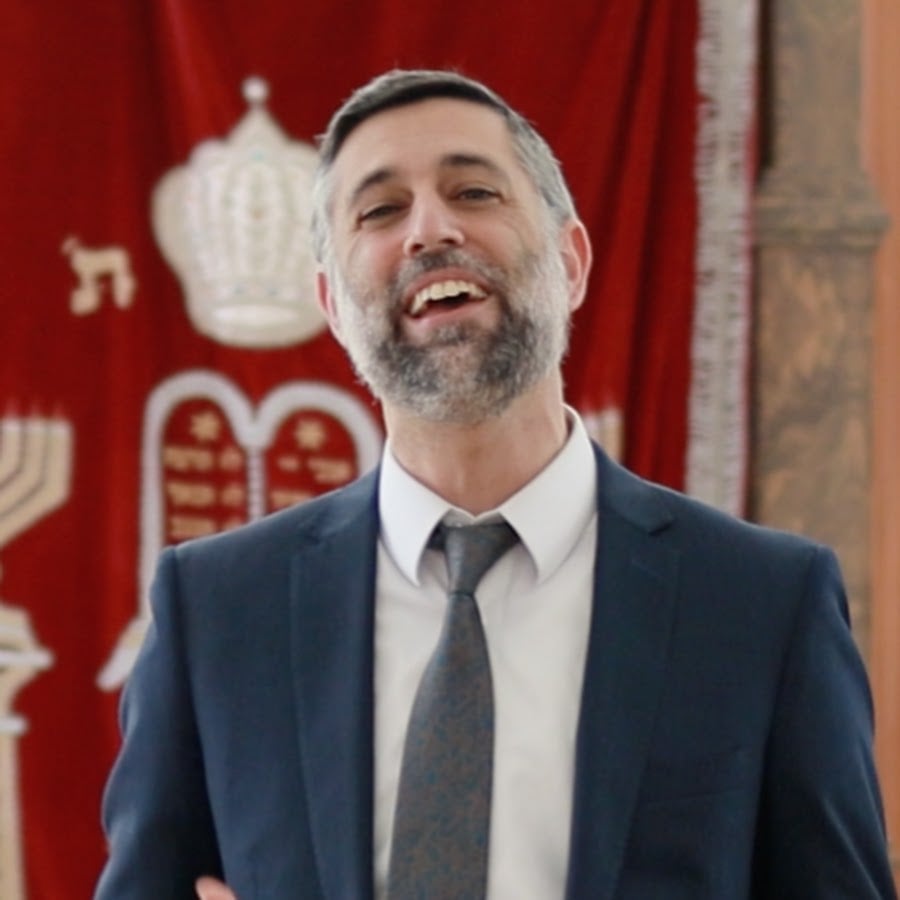
What is the connection between the idea of the prohibition of speaking with the dead and the holiness of the Kohanim-priests? Why did Shaul Hamelech (King Saul) not receive a response from the prophets and the Urim VeTumim? What was the implication of his having disguised himself in regular clothes when he approached the woman and asked her to transgress by bringing up Shmuel Hanavi (Samuel the prophet)? Why was he ultimately killed in the battle with the Plishtim alongside his sons? What are the lessons we can take from this tragic story? Find out in this week's Parsha Podcast.
Categories:Music
Comments
Transcript
Auto-generated transcript. Not time-synced to the video.
You're listening to the weekly partial
podcast with Ari Goldwag. Recorded with
Hashem's never-ending assistance in
Ramat Beit Shemesh, Israel, 5786-2026.
This week's parsha is parshas Emor.
And the beginning of the parsha
has
the concepts that relate to the coin, to
the high to the priests, to the high
priest,
all the different halachas that apply to
him, unique halachas.
Priest is not allowed to marry, for
example, a woman who's divorced.
And
a lot of other halachas, a lot of other
concepts that allow to become impure.
But I'd like to share with you a
beautiful measure
that connects the very first pasuk of
our parsha with the very last pasuk of
last week's parsha.
And it gives us an insight into a very
tragic story, a story which is in
Tanakh, a beautiful story.
And I think it really holds a lot of
different lessons that we can take into
our own lives. So I'd like to read to
you first from the last pasuk of parshas
Kedoshim.
And also the first pasuk of parshas
Emor.
The pasuk says at the end of last week's
parsha, "Ve'isha isha
ki yihyeh vahem ov o yidoni mos yumasu."
Torah says
that there's a prohibition. Any man or
woman
when they're going to be involved in ov
and yidoni. Ov and yidoni
are basically
getting in contact
with spirits, getting in contact with
the dead, those who have moved on from
this realm, and they're in a different
realm. It's possible through certain
negative powers, through certain dark
powers, to access and speak to,
communicate with the dead.
But the Torah says, "Don't do it.
Don't do it." Interestingly, the pasuk
right before says, "You should be holy
unto Hashem.
I have separated you from amongst the
nations.
It's It's true that it's something that
can be done, but don't do it."
If somebody does it, says the pasuk,
"Mos yumasu." They're liable for death.
But even your grandma is some demand
bomb.
They're to be stoned.
>> [snorts]
>> And their blood is on their own heads.
Okay, so
don't have a sayance. Okay, it's it's an
issue of Torah, I said. It's a Torah
prohibition. But at the depth of it is
we're here in this world.
Let's focus on this world and the people
who are alive in this world. Let's not
try to contact those who are in the next
world. Let's let's stay within our own
realm. Let's be clear. Let's be here.
Okay? That's the pasuk of the end of
last week's parsha.
First pasuk of our parsha, "Vayomer
Hashem el Moshe emor el hakohanim bnei
Aharon."
Hashem says to Moshe, "Speak to the
priests, the children of Aaron, v'amarta
alehem l'nefesh lo yitama b'amav." And
tell them that they shouldn't
uh become impure. They're not allowed to
come in contact with the dead.
Those are the psukim
from last week and this week's parsha
that we'll see are connected. It's kind
of a
uh well, you know, at first glance it
doesn't seem like there's any connection
between these psukim. What does
this have to do with that? Maybe a coin
is a priest is on a higher level of
kedusha, of holiness.
Uh
ov and yidoni is about being on a higher
level than the nations of the world.
That could be a pashut pshat. But the
measure tells us that there is a
connection here
in the story of Shaul Hamelach, King
Saul.
Shaul Hamelach's story is a very tragic
story. It's a sad story. Shaul Hamelach
was the first king of the Jewish people.
He's from the tribe of Binyamin, of
Benjamin.
And he was appointed, anointed by Sh- by
Sh- by Shmuel Hanavi. It's hard to get
these names straight cuz one is Shaul
and one is Shmuel. The letters are
almost exactly the same.
Shmuel Hanavi, Samuel the prophet,
anoints King Saul. In English it's a
little easier.
Yeah, to become the king.
And he's enjoined as the first king of
the Jewish people to destroy Amalek, to
to kill out the people of Amalek who are
the mortal enemies of the Jewish people.
Whereas the Jewish people represent all
that is good, Jewish people represent
Hashem's light in the world,
infusing our lives with godliness,
Amalek is the opposite. Amalek infuses
the world with doubt, infuses the world
with happenstance.
The word Amalek is the same as the word
safek, which means doubt.
And so their job is, as the Jewish
people come into the land of Israel,
as they're about to get the Torah, they
come and they
they try to stop us.
And they're always there throughout
history, the ones who try to stop the
Jewish people from reaching our destiny,
which is all about being a light unto
the nations, shining light of Hashem
into the world.
Shaul Hamelach is enjoined. King Saul is
enjoined,
commanded by Shmuel Hanavi, "This is
your job. You want to establish your
kingdom, you want to establish the
kingdom of Hashem in the world, you need
to destroy Amalek." And he does the job.
He kills out all of Amalek except for
one person, Agag, king of Amalek.
And he makes this mistake.
He allows him to live
just long enough to have a child. And
that child has a child has a child who
ends up being Haman Ha'agagi, comes from
this King Agag.
Haman, who's the antagonist of the Purim
story, was a result of Shaul's
family, his misplaced compassion on on
the cruel. Can't have compassion on the
cruel. You have compassion on the cruel,
you end up being cruel to the
compassionate.
Bottom line is, Shaul Hamelach is told
by Shmuel Hanavi, "Because you failed to
destroy Amalek down to the last
the last one,
as a result of that,
you've lost your malchut.
Your children will not be kings."
And the the Tanakh, the the story in
Tanakh continues and tells us how he
ended up getting depressed. And then
they brought David David who was going
to be the next king, King David. He was
a beautiful singer. He sang beautifully.
He would bring Shaul out of his negative
mind states.
But Shaul began to sense that David
was
going to be the next king.
Shmuel had implied it by saying, "I'm
going to the the kingship will transfer
to your friend who's better than you."
Which was a reference to David.
And indeed, Shaul Hamelach goes through
a whole stage of time where he's chasing
after David.
King Saul is chasing after David
to kill him because he considers him a
moreid b'malchut, someone who's
rebelling against the king.
And in so doing, and here's where we get
to the connection to our parsha. In so
doing,
David Hamelach was sequestering himself
in the in a city called Nov.
Nov was a city of Kohanim, of priests.
No vir Kohanim.
And they were protecting him, taking
care of him.
And Shaul realized that they were aiding
and abetting
David, David Hamelach,
who was to be David Hamelach.
And because they were aiding and
abetting him in his mered b'malchut, in
his rebellion against Shaul Hamelach, so
Shaul
felt justified in killing out the entire
city of Nov.
Okay?
So we're on the topic of the priests
now.
But what does it have to do with the
topic of the ov and yidoni,
the the previous parsha?
So
at the end of the story, as
I'd like to actually read to you. I'll
read to you from the Navi. I'd like to
read it to you inside.
This is in Shmuel Aleph, Samuel, First
Samuel,
uh perek chof ches, chapter 28.
It says like this in pasuk aleph,
"U'Shmuel meis."
The the Tanakh tells us, the Navi tells
us that Shmuel had died. Shmuel, Samuel
the prophet, had died.
"Vayism'du lo kol Yisrael vayivku alav
vayikb'ruhu b'Ramah b'iro v'Shaul hisir
es ha'ovos v'es hayidonim meha'aretz."
Now,
the Torah tells us
that Shmuel dies.
And Shaul had gone through a process as
the king, right? Part of the purpose,
part of the job of the king is to make
sure that the Jewish people keep the
Torah.
Make sure that the Torah is being kept,
it's being learned, it's being studied.
Any wrongdoings that the Torah says are
forbidden are not being done.
And Shaul had gone through a process of
weeding out all of the people who were
involved in contact with the dead.
Which I guess was a kind of prevalent
type of practice at that time. People
want to be in contact with their loved
ones.
>> [sighs and gasps]
>> They want to know information maybe from
from the next world, maybe you can find
out stuff about the future.
Torah says, "Don't do that." Shaul
Hamelach had gone and weeded out any
kind of person who was doing those types
of deeds.
Many of them I assume were killed.
But now, what happened and we'll see why
that's important, that information.
"Vayikatzu Plishtim vayavo'u vayachanu
b'Shunem vayikach Shaul es kol Yisrael
vayachanu baGilboa."
As often happens in Jewish history,
the enemies of the Jewish people, which
were at the time the Plishtim of
Philistines, not to be confused with
Palestinians,
the Philistines at that time,
they had come and they wanted to do
battle with the Jewish people.
"Vayar Shaul es machaneh Plishtim vayira
vayechalel el Elokim
So he sees
Shaul Hamelach sees the encampment of
the Philistines. He's very fearful.
And the reason that he's fearful is
because
they seem to be much more powerful than
the Jewish army.
By Shaul Shaul b'Ashem, will I know
Hashem?
Shaul So, as he always did when it came
to battles, as a good Jewish king does,
they usually ask the prophet.
He asked the Urim v'Tumim, the special
breastplate of the Cohen Gadol, of the
high priest, that would light up
with letters and they would get a
communication from Hashem.
He wanted to know what to do. He wanted
to know if he would be successful in
battle.
So, he asked Hashem. He asked the Navi.
He asked the Urim v'Tumim.
He didn't get an answer. Gam achalamot,
gam urim, gam nevi'im.
Not with dreams,
not with the Urim v'Tumim, and not with
the prophets.
I previously had contact with Shmuel,
but Shmuel was dead now.
V'yomer Shaul l'avadav,
Shaul says to his servants, "Bakshu li
ishah ba'alas ov el En Dor v'edah
shabah."
So, Shaul hatched a plan. He's like, "I
I know what I'm going to do.
I'm going to get access to Shmuel. How?
I'm going to find someone who escaped
my decree. My decree was to kill out all
the people who have contact with the
dead.
I'm going to find somebody
who we missed
and I'm going to ask them to bring back
Shmuel haNavi
so that I can ask him what to do and
what's going to be."
So, he says to his servants, "Find me
somebody who knows how to do this
to bring the dead
to bring the dead up so that we can
communicate with her with them." V'yomru
avadav elav, "Hinei ishah ba'alas ov
b'En Dor." And they said to him, "There
is a woman we have found
who escaped our clutches
in En Dor," it's a name of place.
So, now let's let's get the lay of the
land here.
Now, and the Midrash is going to say
this, perhaps we'll see this together.
Connection. Connection.
Oven u'yidoni Cohen.
Oven u'yidoni and Cohen. What's the
connection between the concept of the
priests and the concept of
asking necromancers,
those who have contact with the dead for
information? What's the connection? So,
in this story there's a very powerful
connection.
As we're going to see in the Midrash.
Shaul haMelech, why didn't he get an
answer? Why did Hashem not respond to
him through the Urim v'Tumim?
Why did no Navi, why did no prophet give
him information? Why did he Why did he
end up Why was he
Why was it necessary for him to stoop to
the level of
using a means to contact Shmuel, which
what the which is against the Torah,
which the Torah does does not want?
And the answer is, as the Midrash
explains, because
he had killed out the city of of Nov.
He had killed out the city of Kohanim.
He had wrongfully
taken all of their lives.
And because he had done this great sin,
he lost Hashem's voice. He lost that
connection to Hashem.
And the Urim v'Tumim,
which is the the special breastplate
that that would light up, where did it
rest? It rest on the chest of the Cohen
Gadol, of the high priest. But he had
killed out the priests.
He had diminished his value
for them.
And he had diminished his own spiritual
connection to Hashem. And as a result of
that,
he couldn't get an answer.
And so, as he was holech u'medarder, he
was
continuing to fall into a deeper level
of degradation.
And as a result of that,
he ended up going to the deepest level,
which is
to call
to call Shmuel from the dead to find an
answer for what's going to be.
And he will get an answer. It's not
going to be the answer that he wants.
But aveirah goreret aveirah.
Running after King David, not
recognizing his own mistake,
didn't kill Amalek, didn't finish the
job,
loses his malchut, running after David
who's the next king,
killing out the city of Nov, ends up
bringing him to a place where he
as the next pasuk says, "Vayischapes
Shaul v'yilbash b'gadav acherim."
Shaul haMelech, in order to go there, he
had to
dress in plain clothes. People didn't
have pictures in those days of what the
king looked like, so no one recognize
him if he took off his royal garments.
V'yelechu shnay anashim imo.
So, he he takes off his royal garments
and he wears plain clothes, regular
clothes of
of his subjects.
And it's very appropriate, as the
Midrash says,
that he wore plain clothes because it it
indicated the fact that he was losing
his malchut. He took off his bigdei
malchut, he took off took off his royal
garments because he was going to lose
his royalty.
And it was through this very act,
it was the final straw that broke the
camel's back.
It was this act that caused him to lose
it completely.
So, he went and he took two men with
him.
V'yavo el ishah l'eilah, they came
to the woman who would be able to call
up Shaul from the dead. It was night
time.
V'yomer k'samini na liba'iv v'ha'ali li
ish asher omar eilecha.
He said to her, "I want you to perform
your magic.
I want you to bring up somebody from the
dead, the person I'm going to tell you
about."
Now, this woman knew. She didn't know
that she's facing
Shaul haMelech. She didn't know she's
facing King Saul, but she did know
that
Shaul haMelech had sent out his men to
find anybody who is doing this forbidden
act.
And so, she was suspicious. V'tomer
ha'ishah elav, "Hinei atah yada'ata
asher asah Shaul."
She says, not again not realizing she's
talking to to King Saul,
"You know what Shaul haMelech has done?
He sent out all his people to This is
forbidden. Asher hichrit et ha'ovot v'et
hayidonim me'ha'aretz."
She said, "No one's allowed to do that.
Anyone who did it was killed." V'tomer
ha'ishah
b'nashi, "Lameh atah m'naseh oti?" you
asking me
to to do something
which could get me into hot water, which
could which could end me up
losing my life?"
V'yishava lah Shaul b'Ashem lemor,
And Shaul swore to her in Hashem's name
and said as follows,
"Chai Hashem im lo yikrecha avon badavar
hazeh." He said, "I I swear to you by
God."
Right? So, he's It's very interesting,
the Midrash points this out.
He's
going against Hashem's will by coming to
this woman. But he swears to her in
Hashem's name,
"Nothing will happen to you.
I swear to you, nothing will happen to
you," said Shaul.
V'tomer ha'ishah, "Et mi a'aleh lach?"
V'yomer Shaul, "Ha'ali li
So, the woman
says to him, "Who do you want me to
bring up? Which soul do you want me to
bring?" And she says and and Shaul
haMelech says, "I want you to bring up
Shmuel haNavi, Samuel the prophet."
V'tomer ha'ishah, "Shmuel."
Now, the way that it worked as the as
the Midrash explains, I don't know if
we're going to see the whole Midrash
inside, probably we definitely won't.
Midrash explains that whenever a woman
would do a seance and bring up a soul
like this,
so
the person bringing up the soul sees the
soul, sees the image of the person who's
being brought up.
But the person who's asking
hears his voice.
So, one person
has an image without sound. One person
has a sound without an image.
So,
as soon as she sees Shmuel haNavi,
vatitzak b'kol gadol, she screams.
She screams. She makes a huge sound.
V'tomer ha'ishah el Shaul, "Lameh
hirg'aztani la'alot oti?"
She immediately realizes
that the person who's in front of her is
Shaul haMelech,
King Saul, because
as the Midrash explains,
when usually when a person who was dead
would come up and and be seen by the
person who's bringing up the dead,
so they would come feet first.
Their feet would come up
and then
their head.
But in this case, in honor of Shaul
haMelech, of King Saul,
Shmuel came up head first.
She saw him rise out of the earth head
first.
So, she immediately knew. She had never
seen this before, I I would imagine.
She immediately knew that Shmuel is
coming up
for Shaul haMelech. Or maybe another
p'shat, I'm just thinking now, maybe it
could be
that she didn't know which Shmuel she
was bringing up. As soon as she saw that
it was Shmuel haNavi, she realized,
obviously, this is Shaul.
V'yomer lah haMelech, "Al tir'i ki mah
ish."
So, the king says, "Don't worry. I'm not
going to do anything to you. Just tell
me what you see."
V'tomer ha'ishah el Shaul, "Elohim ani
ro'ah olim min ha'aretz." She says, "I
see God coming up from the land."
Meaning,
"I see a godly person. I see Shmuel
haNavi."
V'yomer lah "Mah to'aro?" He wants to
confirm that it's the right person,
that's the right identity. She says,
"What does she What does he look like?"
V'tomer ha'ishah, "Ish zaken oleh v'hu
oteh me'il." It's an old man who's come
up. He's wearing a cloak. V'yeda Shaul
ki Shmuel hu.
It was classic. Shmuel always wore the
special cloak.
V'yikod Shaul apayim artzah vayishtachu.
And he bows down there. So, Shaul and
Shmuel face off once again.
Shmuel is is
And been raised from the dead
and as the possuk will see says that
it's very traumatic for someone to be
raised up from the dead.
Why did you anger me
to bring me out from Why did you anger
me
to bring me out from the dead? And and
the Medrash explains that
Shmuel when he heard his voice being
called, he thought he was being called
to judgement.
He didn't realize he was being called
back to earth
to engage in a conversation with Shaul.
He thought he was being called to
judgement. And I think it means that
when ultimately
the great the Yom HaDin HaGadol, there's
a great day of judgement when everyone
comes back
and everyone it's decided what their
place will be in this world cuz this
world is where the world to come is.
It's in this world.
They're called up. We're going to all be
called up and we're all going to have to
face off with the reality of
our actions.
So Shmuel would have been nervous.
And Shaul tells him what to push them
and be. So Shaul tells Shmuel the truth.
He says
uh we're we're in a very tight spot.
The Philistines are coming to battle.
Shaul said to him I don't know what to
do.
Hashem has left me. I can't I can't get
an answer about what to do what how
things are going to be. I have had a
dream and I don't know what it means.
I tried with prophets. I tried with
dreams.
Interestingly it doesn't mention that
Shmuel is dead.
I didn't know my essay. I'm calling you
I want to know what to do.
I don't know what Shmuel told me to tell
him and be.
Shmuel says why are you asking me?
Hashem has left me and I don't know what
to do.
Shmuel says
Hashem has removed
his
presence from you because he's placed
his presence on your enemy.
Hashem has done to him
what I told him to do. Hashem has done
to him that which he has that which I
said to you previously.
Hashem has taken it away from you and
given it to to David.
So Shmuel was telling him a very stark
and clear statement. In the previous
time when Shaul had said it, the Medrash
points this out as well.
When Shmuel was still alive
after
Shaul failed to kill Agag
after he failed to destroy Amalek
completely so
Shmuel HaNavi had said to him
Hashem has taken it away from you. He's
given it to your friend who didn't who's
better than you but he didn't specify
that it was David.
He was afraid that that Shaul would kill
him. But obviously now that Shmuel is
dead, he's not afraid that Shaul will
kill him. So he says it explicitly.
Hashem has given that power
the power of kingship, the power of
Siyata Dishmaya, the power of divine
the divine help. He's given it to to
David. It's it's been taken away from
you.
You didn't Shmuel HaNavi says
the ghost of Shmuel HaNavi says to Shaul
HaMelech
you didn't listen to Hashem. You didn't
destroy Amalek.
That's why Hashem
is not responding to you today.
You didn't listen to Hashem and you
didn't listen to the Philistines. Hashem
is going to
the the people of Israel are going to
have a fall in the hands of the
Philistines.
And
tomorrow you and your sons will be with
me.
Which means to say you will die.
But interestingly as the Medrash points
out
you're going to be with me.
You're going to be with me Medrash says.
You're going to be with me in an exalted
place in heaven.
Even though you've made all of these
mistakes, even though you've lost your
Malchut
but through the trials and tribulations
that you're going through and through
your death
you're going to have
a kapara, you're going to have an
atonement and you're going to end up in
a very high place in heaven.
Hashem is going to give over the
Philistines.
>> [sighs and gasps]
>> And
Hashem is going to give over the
the encampment of the people of Israel
into the hands of the Philistines.
There's going to be
a great fall for the Jewish people
unfortunately. Obviously if the Jewish
people's king falls
so it's a great fall for the Jewish
people as well. Right? The king
represents
he's the he's the person he's the human
being who
is all encompassing of the entire
nation. That's what a king is.
He has a Neshama Klalis.
So if Shaul falls, there's a fall for
Klal Yisrael.
So I mean when we read the story so
what we what we hear here is a is an
incredible thing a few incredible
things.
I'm going to mention a few more things
from the Medrash. I don't think that
there's time to read it all inside.
But
the Medrash points out
that these two psukim
these two psukim about the Oiv U'Daini
about
seeking out contact with the dead which
is a
prohibited thing to do
and the possuk of Kohanim
speaking about the Kedusha, the
specialness of the of the priests
these two psukim are placed next to each
other because the Torah is hinting to
something that's going to happen a
thousand years in the future.
Or
>> [snorts]
>> five hundred years in the future.
I should exact timing.
And the Torah is given to Moshe Rabbeinu
and in there is a hint to to something
that's going to happen. It says in the
possuk Ish o Ishah a man or a woman who
will seek out Oiv U'Daini will seek out
contact with the dead.
The Medrash says the Ish and the Ishah
is the Ish, the man is Shaul HaMelech
King Saul and the Ishah is the woman who
brought up the soul of Shmuel HaNavi.
So there's a hint here that why did he
do that? Because he had violated the
holiness of the priests. He had killed
out the city of Nov.
And as we said before
Shaul HaMelech
he made one mistake and that mistake led
to another mistake. First he doesn't
kill Amalek. Then he's chasing after
David. Then he makes another mistake. He
kills out the city of Nov. Then he makes
another mistake which ultimately creates
the potential for his ultimate downfall
because as the Medrash explained
he didn't he he might have lost his
Malchut. His kids are not going to be
the king but
maybe his his Malchut his personal
kingship would continue. Who says it has
to end here?
But it ends here because one aveira
leads to another aveira. One sin leads
to another sin. One fall leads to
another fall.
If a person doesn't catch themselves
so important.
If a person doesn't notice
that they're making a mistake and learn
from the mistake
correct the mistake
that mistake can lead to other mistakes
and deeper and darker mistakes. And and
Shaul HaMelech was a tzaddik. Let's
let's be clear. The way the Torah
describes him, the way the Chazal speak
about him, he was a tzaddik. He made
mistakes and he didn't correct those
mistakes.
He was somebody who had killed out all
the Oiv U'Daini.
He had followed the dictates of the
Torah but he
I would say as pointed out actually by
one of my students yesterday
I would say that
he he made a mistake of leaving over
this one woman that he could go to just
like he made the mistake of leaving over
Agag
that one king who would have a child and
create the problem just the nation of
Amalek would return.
So if we don't nip it in the bud, get it
all the way
if we don't get it all the way, if we
have a mistake that we're making and we
don't do full teshuvah, we allow it to
fester, it gets worse
and it spills out into other areas.
It's so important.
Shaul HaMelech made this mistake and it
cost him his life.
It cost him
it cost him he he was able to get a a
kapara. He was able to get an atonement.
But it cost him
his Malchut, cost him
the ability to have a continuing
kingdom.
And it it cost him that his children
would not would not be the future kings
of the Jewish people. He himself lost
his kingdom. His life was lost.
So it's a very deep lesson.
But within it all
as the Medrash points out, he still even
when he's there in the speaking to this
woman doing this terrible aveira, he
refers he promises her that nothing will
happen to her in the name of Hashem. So
in it all
number one, he is still connected to
Hakadosh Baruch Hu. That's clear.
But at the same time
he doesn't use that connection to make
sure that he stays connected. He still
And and it can a person can fool
themselves.
A person we all can fool ourselves and
think oh I've got this I'm okay in this
area. And it's true I am okay in this
area. But I got to be careful, wary,
watch out for the areas where I'm making
mistakes
and not allow those areas to get worse
but rather to clean them up. To clean
them up so they don't affect any other
place.
I want to bless you and ask you to bless
me. Hashem should help us.
That we should indeed recognize
the places where we're making mistakes.
We should be honest with ourselves.
Hashem should help us to be able to
correct our mistakes.
Hashem should be able to help Hashem
should help us to be able to to fix them
and to rise
higher and higher in our service of
Hashem
and constantly constantly be on the
lookout careful with lovingly
bringing ourselves back into our
relationship with Hashem. Thank you so
much for listening. Have a wonderful
Shabbos.
This podcast was made possible through
the gracious donations of listeners like
you. For more podcasts like this, please
visit www.arigoldwag.com [music]
or search on iTunes [music]
Ari Goldwag.