Preparing video...
0:00 / 0:00
Bitachon 251 - Our Merits Protect Our Children
175 views
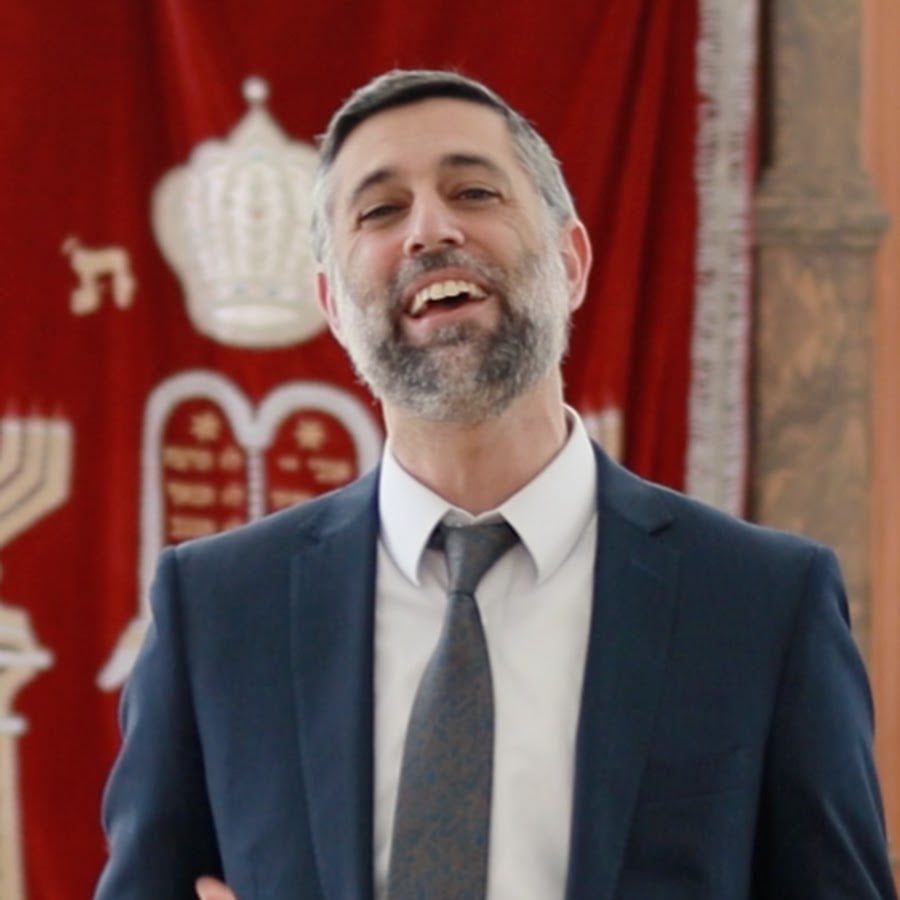
We study together Mishlei perek 14 passuk 26, that speaks of the idea that when we trust in Hashem we are guaranteed to be protected, and this trust also has a profound effect on one's children, as well.
Categories:Music
Comments
Transcript
Auto-generated transcript. Not time-synced to the video.
You're listening to the 251st edition of
the Be Talking podcast.
We're going to study together passing in
Mishlei.
In Proverbs chapter 14 verse 26, "Be
your Hashem
mivtach oiz."
When a person has yiras Hashem,
when a person has awe and reverence of
heaven,
reverence of Hashem,
then he has a powerful
thing that he can trust in. He's He has
a powerful guarantee.
"U'l'vanav yihyeh machseh."
And not only is this true for the person
themselves,
it's also true for the children, for
that person's children.
And here [snorts] we come to a very
powerful
and what would seem to be secondary, but
I don't think it's secondary,
concept that has to do with bitachon,
and it has to do with not only
the impact on ourselves, our personal
lives, as a result of living with
bitachon,
but it has to do with the impact that it
has on our children.
And of course,
it's true in a most simple sense, in a
pashut p'shat sense, because if I'm
working on bitachon, if I'm speaking
about bitachon, if I'm living in a place
where Hashem is real in my life,
so that clearly has an impact on my
children. They hear it spoken about.
They start to see it in me, and they
start to see it in themselves.
But as all of the meforshim explain,
and perhaps what we just said is a
mechanism of it, but
the fact that I am working on my
bitachon, the fact that I am developing
a true relationship with Hashem,
as represented by bitachon, it is an
incredible z'chus for me. It's an
incredible merit for me and my kids.
All of those who are in my vicinity are
affected by it, especially my children.
So, let's see together
some of the ideas that are brought here.
Be'er Avraham Yitzchak Oise.
Rashi says, "Ne'emar be'Avraham, ki ata
yada'ati ki yerei Elokim ata."
Avraham Avinu, Hashem says to him, "I
can now tell
I know now that you fear heaven, that
you revere me."
"U've'ir choleich ki vareich
avarechecha."
Hashem promises as a result
that he will bless him.
And what does blessings really mean?
What are blessings? It means that we see
that everything that we need
is given, is taken is taken care of.
And sometimes a
a
nature that's above nature, in a manner
that's above nature.
"U'vanacha yiyu yiyahu machaseh."
Right? [snorts]
And I'm It doesn't say this explicitly
in Rashi, but I'm extending it, that
Avraham Avinu's promise wasn't just to
him,
but that also his children would be
blessed.
And we are all his children.
"U'vanacha yiyu machaseh." Your
children, as this pasuk says,
Hashem will be a protector, "she'chasui
scavi betzel chusai."
They will have upon whom to rely
because
of the shade,
the protection
of his merit. When a person trusts in
Hashem, so that merit, that
that positive thing that they've done
has an impact not only on themselves,
but on those around them.
He brings here
from
the Sefer Das Chochma U'Mussar.
"Be'avar bo orech ohr ein da'avneisi
levanav." He explains at length the
concept that a father carries the
children.
Right? It's not so hard to understand
this. Let's see his explanation. When it
says midbar is the kind of love
We're going to quote a few of the ideas,
a few of his words.
In this manner, there is a a common
saying.
One father can carry 10 sons.
But 10 sons cannot carry even one
father.
When I come to my
It's a very true statement.
The way that a father carries his sons
Cuz that is the truth that a father
carries his children.
But not so much in the love. In the
simplest sense, right?
A father
he has to be the one to provide. He
carries all of the children. He has to
have a livelihood which is enough to
provide for all of the needs of
his wife, his kids.
How much he gives him is because of
The children get everything that they
have in the merit of the father. If the
father wouldn't be around, they wouldn't
If the father wouldn't be around, they
wouldn't have all of this.
The father gives them everything that
they have because of
The father in his love
makes available to them
their livelihood.
He clothes them. He feeds them.
Beautiful.
And he pours out on them an influx of
compassion. Father has compassion on his
kids.
Father should love and have mercy.
Now, you have to be careful.
Don't think that the father is actually
the one who's carrying his kids, right?
The father is the king.
Right? Heaven forbid to say this cuz
then it just looks like hey, it's my
strength, my power that's doing it.
Right, and that's denying that Hashem is
the one who's actually doing it.
Hashem, God in his great kindness,
gives the father one of the needs for
his children.
But in any event, when we look
in a superficial way, so the father is
the one carrying his kids. So he says
this means to say
really important.
The merits of the father
are that which carries the children. I
can't help but think
that it's the sense of responsibility.
Right? A child, all they're really
concerned about is themselves.
They're selfish, that's normal, that's
human, that's how we're born.
Until we develop and grow and become
greater as an individual.
But the very
act of responsibility of a parent
bringing a child into the world,
that's a commitment to providing for and
taking taking care of that child.
So that itself, that
having a sense of and a commitment to
not being self-centered on the part of
the parent
is a great merit.
It becomes He becomes a channel for
goodness to come through into his kids.
That's what I think is maybe the p'shat
in what it means it's a z'chus.
The parent, through their merits,
the word z'chus means actually
purification, zachus.
Right, zach means pure. So it's a
purification.
When I purify myself, which means to say
I get rid of myself, and I become
other-centered,
so then I merit to be a channel for
Hashem's influx into the world.
Klaus Emes Rabbi Gashmi scheme Gamarnis.
This is not only true in
a person's physical sense in a physical
sense,
but also in spiritual matters. Abner
says upon him,
him in Gashmi and Raxmi. The father
carries the children whether it's in his
physical aspect or in his spiritual
aspect.
And I would say that the children sense
that.
Like yesterday I got on the phone with
my son. He asked me, "What did I learn
about that morning?"
That's a child wants to hear inspiration
from the parent. It's our responsibility
as parents.
And if we're children, we need to know
that we are going to have that
responsibility. We got to fill ourselves
up now cuz we're going to have to give
it over to our kids, to your kids.
Are you going to be Shamayim and about
them schools for him?
When it comes to a person's as well,
I as a parent
based on the calculations of heaven,
I get
merits and life for my children.
And he brings a proof of this from the
opposite.
You'll be ugly how you make up with
cloud.
And if not for the father, the children
would not get anything at all. It's very
interesting.
But I won't be able to tell you about
Mason. Who learns this in Shabbos?
And that's why I made him a base.
That as a result of the sin of
not being Torah focused, of not spending
time studying,
of wasting time that could have been
spent learning,
so little children heaven forbid can
die.
I wish about this of the notion about we
find
that as a result of the sins of a
father,
the children
who are dependent on the father,
meaning spiritually dependent, and
merit-wise dependent on the father,
so the children can be ill-affected,
they can be punished.
It doesn't seem to make sense.
Why would a child be punished for
something the parent has done wrong?
That's not the child. The child didn't
do anything wrong.
And the answer is because the truth is
the father is the one who carries the
children.
And obviously we can
deduce from our sages that the opposite
is also true.
When a father has the merit of Torah
study, so the children also
they
inherit life.
with schusum And they inherit merits.
Because if we can talk about it in a
negative sense,
so the positive sense the positive sense
is always greater. me the toiva maruba
The the measure of something good is
always greater than whatever you see in
the negative sense.
Because that is really the true the true
way that things go.
And the father carries the children. So
if I am properly learning Torah, so then
I'm giving my children life.
And they have an incredible merit and
life
both in spirituality and in physicality
because of the merits of the father.
So this is
if you think about it, it's an
incredible responsibility that each and
every one of us has.
We can't only be concerned about
ourselves and our own roughness.
And it's also something that
is encouraging to know that when you
work on your talking yourself, you might
not see it around you.
You might not see it. Your kids might
not be on that level.
But we need to know that our school is
we're working on this.
It has It's a watershed.
It's a watershed that that allows the
the the spiritual influx to go down to
our kids. Such an important idea.
Okay, that's the dust off of the master.
Let's see some more. The Rabag says in
explaining our possuk. Yishuv Tavo
Yisborach She tell you who you are a
sham.
A person should trust in Hashem's power.
That Hashem will save the person who
fears him.
I need to know that when I revere and
and stand in awe of Hashem and respect
Hashem and try to do Hashem's will,
so then I can trust that Hashem will
take care of me and save me. God living
in
Yesha is the Mogan of Max and them.
The children of that person as well,
Hashem will also protect them.
And he will also be
one to whom they can turn.
This is a view.
In the merit of their father.
And they will be protected from any evil
that might befall them.
That's the Rabag.
The Imrei Emet says,
Bavui Hashem Hashem Mivtacho.
As a result
of the fear of Hashem, Hashem will be
the one in whom we can rely. Mivtacho is
a powerful one to trust in.
Liyore, to the one who fears him. Lemali
beis tzarosav.
To be able to escape
at the time of his difficulty Ulavonav
b'siyata d'Shmaya
shall also be a protector for his
children.
Next blessing says I'm going to explain
this here as well.
I'll just read to you the passage.
The sermon is over.
The fear of Hashem is the source of
life.
To be able to turn away
from any death traps.
Okay?
It's the fear of heaven. It's the
focus on
trying
with all of our heart to do Hashem's
will. That's what protects us from any
kind of danger.
Fear of Hashem
is the source of life to the to the one
who fears.
It will save him from death traps. What
are the death traps? Enough said.
And those are the sins. Okay? So, I
think, you know,
the death traps themselves
are just physical
manifestations
of the spiritual death traps.
Which are
the sins which are turning away from
Hashem.
When we pray
the brocha says in base
that when we diving so
we bow on the word baruch.
Atah and then we straighten up when we
say Hashem's name, Hashem.
Atah is
baruch and Hashem.
Why do we do this? Why do we bow when we
say the word baruch which means blessed?
And why do we stand up straight when we
say the the name of Hashem? It makes you
Korea.
Because when a person bows
more than I ever used to before enough.
Here's something to think about when we
diving. When you bow, baruch atah Adonai
So, [snorts] what you're doing is you're
saying
I I bow to you, Hashem. I have fear of
you, Hashem. I I
I submit myself to you, Hashem.
U'she'za'keif
And when a person stands up, what's that
about?
More I'll be talking she has my boy.
And it's interesting. I I remember
hearing from our Yeshiva Rabbi Perr
he once passed by a group
of Muslims who were praying on the beach
in Far Rockaway. He saw them all down on
all fours.
Which is how they pray. And we do that
obviously on Rosh Hashanah and Kippur.
But
he pointed out that the the tefillah
that we do is the Amidah.
We stand.
Right, our tefillah in front of Hashem
is standing cuz Hashem wants people
not just he wants us to of course to
surrender to him, to completely give
ourselves in, but he wants us to be
somebody. To be human beings, partners
with Hashem.
Proud in a certain sense that we are his
people.
Right, that's the tzurah, the way that
our tefillah looks.
And but here's the an added depth to it
that Rav Yonah says, that when I stand
up after I say baruch atah Adonai, I'm
showing I fear you, Hashem. I bow to
you, Hashem. Hashem, I stand up to show
that I have absolute faith in you,
Hashem. Now that I Now that I'm in a
space of yirah, now that I'm in a in a
space of respect
so then I can have she'eishin ba'kol
inyanav she'yeish lo. I'm absolutely
confident. I stand up straight. I'm
confident that Hashem is going to
do good for me. That Hashem is going to
provide me with my needs. U'zeh talui
ba'zeh.
And this depends on this. Shemi'sha'ar
me'Hashem Yisbaruch u'mitabei'ach bo.
The one who fears Hashem also knows that
he can trust in Hashem. Ki yesh ner
Yiras Hashem mivtacho iz. He He our
pasuk.
With Yiras Hashem, a person feels
that he has a powerful one upon whom to
rely.
Brings here from another place in the in
the Rabbeinu Yonah.
He says that even though generally
speaking, a person who's afraid
it's the opposite feeling from being
confident.
When you're afraid, you don't trust.
It's you're afraid what's going to be.
Yiras Hashem and Yiras Bitachon Liyirah.
But fear of Hashem is different than a
fear of
uh
danger.
The fear of Hashem brings a person to
have a confidence in Hashem.
And not only does that person trust
in a way that
he doesn't expect any negative thing to
befall him, but he feels that he has
strength himself.
He has this powerful confidence.
If you do the bone of tile, you rise up.
This doesn't only help the person
himself, but it helps his kids as well.
Interestingly, he points out that this
is going to help the children, but it's
not at the same level as the parent. The
children also need to work on it. Why?
Because Machseh, the word Mem Ches
Samech Hey, which means a protector.
Hashem is the protector of his kids.
That, as we've pointed out previously,
is a different a lower level than
Bitachon. Bitachon is absolute
confidence.
Machseh is like Hisayon is
I believe he's going to help me. I think
he's going to help me. I I feel he's
going to help me. But it's not that
absolute confidence. So, the parent has
the confidence, the child has
a child also has a certain level of
trust, but it's
and it works for him.
But it's not the same. Kids also have to
work on it.
A person who's righteous
so he goes in his simplicity and his
simple trust of Hashem, praiseworthy are
his children after him.
Right, it's in parshas Noach.
Noach was saved, his children were
saved.
When a person does good, we need to know
that when we are
trying to align ourselves with Hashem's
will, so we
are also gaining a merit for our
children.
Right, the pasuk says Hashem does
kindness to 1,000 generations, lo iseh
me'ah av.
To those who do out of love.
Well, it's thousands. The first one is
thousands. If we do it out of love, we
serve Hashem out of love, right? It's a
higher level than the yirah that we're
talking about here. Talking about fear.
Love is on our level, it it affects
thousands of generations.
But those who keep his mitzvos, which is
a
denoting the aspect of yirah, so it's a
thousand.
To those who do it out of fear.
Right?
Each one according to that which is next
to him.
He brings
that the merit of the parent helps for
the kids.
As our pasuk says, those who fear
Hashem, they are guaranteed and it helps
their children as well.
Brings here from the Gra, two more small
pieces and then we'll be finished. Yiras
Hashem
As a result of a person's fear of
heaven, Hashem promises him
good is going to be done for him.
When Hashem a guarantee,
he's an absolutely powerful guarantor.
And even to his own children,
did not make that promise directly,
they will also be protected.
Lord of hosts will protect them as well.
And finally brings here from the morale,
What does it mean that a person is
fears means that a person recognizes
that is the root.
is the cause and I'm the effect.
The only way that I have any existence
is because of the one giving me
existence.
That's how says in
21 verse 27, that the fear of him
adds years
to a person's life.
But the evil one, a wicked person is
disconnected, so he doesn't have life.
He's disconnected from his source.
So he has short days.
What this means to say is that a person
who has the fear of heaven, the issue
go more because he recognizes that he's
absolutely dependent,
he's just an outcropping of him.
So that person deserves to get existence
from who's the source of his existence.
He says in 21 verse 27,
that's why the fear of gives a person
days.
And also says our verse,
Again, our verse
accentuates this point that a person by
fearing heaven, recognizing that it's
Hashem who is his source of livelihood,
source of all the things that he has.
So, that guarantees that Hashem will
help him.
He will be that powerful
one upon whom he can rely.
It's not only something that helps him,
but it helps his children after him as
well.
And so, because he recognizes
who is the source of his key on,
so then Hashem, who's the source, gives
him
existence.
Not only to him, but to all those. It's
like me to connect to me. It's when you
recognize who your antecedent is, so
then those who come from you,
in a certain sense, they're connected
into you because they come from you. You
recognize who you come from.
Because the root
the the the the trunk of the tree gives
power to the tree.
And that's how the branches also get
their existence from the root itself.
Thank you so much for listening. We'll
see you again next time.