Preparing video...
0:00 / 0:00
Bitachon 247 - Trusting at the End of Days
256 views
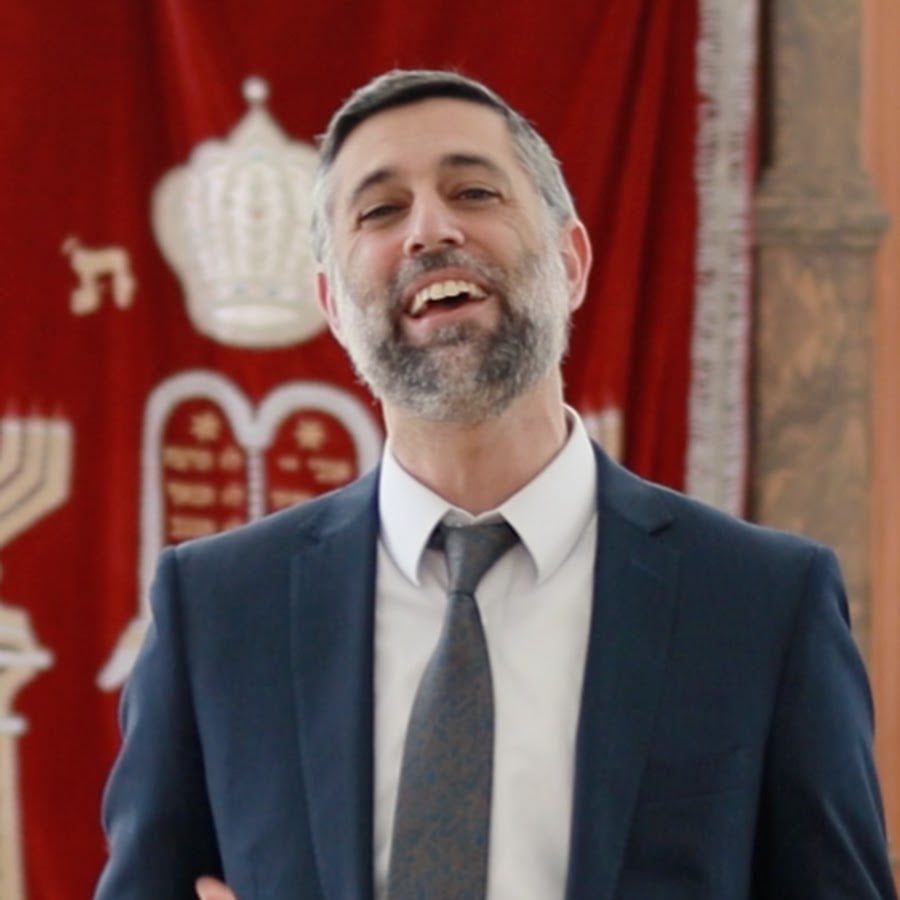
We study together the pesukim in Tzefania perek 3 passuk 1-2, which speak of the Jewish people's special relationship with Hashem and how it can easily be broken if we are not connected to trust in Him. This is especially important as we live in the 'end of days' or the period immediately before the era of Moshiach.
Comments
Transcript
Auto-generated transcript. Not time-synced to the video.
You're listening to the 247th edition of
the podcast and we're going to learn
together the sukima perim
and bay. We're going to focus on bay but
the portion that we bring also bring
olive. So we're going to talk about that
as well. PK says
the PK refers to the fact that
there's a certain fear and there's a
certain redemption
that has to do with the city that's like
a dove.
It's referring to Kal Israel as we'll
see and it's referring to the fact that
we were redeemed and there's been times
of redemption but nevertheless despite
the fact that we saw that redemption
we still as the second Pik said says
we didn't hear the voice we didn't hear
the implications
we didn't take the retribute the rebuke
not retribution but rebuke. We didn't
understand
the the message that was being said to
us
is at least the beginning of this per is
being chastised for not having for not
recognizing the amazing miracles that
Hashem has performed for us.
And as we'll see, in order to merit
redemption,
which really means in order for us to
have a real relationship with Hashem,
for that to be be revealed to the world,
for all the good things to happen. So,
we've got to be in a relationship. We've
got to be speaking, thinking,
living with reality. Living with the
reality that Hashem's in charge of our
lives. And that's as we're going to see
one of the prerequisites for redemption.
He brings here
says like this.
It seems very funny. The word ho means
wo wo e wo which is a negative which is
a negative word but it speaks about the
fact that the Jewish people have a
certain they strike a fear into the
hearts of our enemies.
Woe unto because of the nation who place
their fear upon all of the nations.
Right? Think about, we can think of
current events, the beepers and the
other ways that the people of Israel
have been able to defeat our enemies. It
struck a cord of fear to the hearts of
our enemies.
When is this says the when there was
redemption?
When the Jewish people were redeemed
from Egypt when we walked out of Egypt
and there were signs and wonders.
So the nations of the world were all in
fear and in awe of us
like the buzzing says
the nations heard about it and they were
they were the word means to be in anger
but it means they they were stirred up
the mighty ones of Adam were in they
were nal
They were confused. They were worried.
So the Jewish people in a state of
redemption,
we have a certain we strike a fear in
the c, you know, a cord of fear in the
in our the hearts of our enemies. And
that's caused, excuse me, by Hashem
showing that he's involved with us and
taking care of us.
The Pik refers to Israel as the city of
the dove.
I made
I think what it means is you think of a
dove it's a white it's a white pigeon
right but it stands out from amongst all
the other pigeons it's an albino right
so the Jewish people also we stand out
how do we stand out through our mitzvah
through the commandments that we fulfill
through our good deeds through our
kindness to each
But after all of this praise, so the
Jewish people have gone through
redemption. And we've we've become a
people that other nations are fearful
of. And we are a nation that people
respect for our goodness as well. We've
done lots of good things. But
nevertheless, what's what is the
approach of the Jewish people?
We didn't hear the voice of Hashem. We
didn't hear that our success was from
Hashem. We didn't take the rebuke that
Hashem gave us.
We did not trust in Hashem. We did not
come close to God.
Measure says if you have a a bride that
doesn't listen, right? They make a whole
party for her. She's she's marrying this
this man
and
and she's gone wayward instead of being
committed to the man who is committed to
her. She doesn't listen.
What a foolishness it is, right? When
Hashem singles us out from amongst the
nations, takes us out of Egypt, does
signs and wonders for us, gives us
mitzvah, makes us a unique people, a
special people, and then we're
unfaithful to God. Right? It's a
silliness. It's a a foolishness. If you
think about it, it's our ego. Hey, I
want to do things my way. I'm not
interested in being I want to be my own
person.
Moira
Ruven says in summing up this idea in
the medish that
that there's a language in Greek
or maybe it's saying I'm not sure if
it's saying there's a word in Greek or
if it's saying that the word ya
I think it means Greek.
In any event, the there's a word and the
word implies the fact that
that there's call a calling out
something just calls out. It just besp
speaks
foolishness
says woe woe. says, "Woe unto you for
this foolishness, after all that you
could be after all that Hashem has made
you through all that preparation, all
that yehood, all of that specialness
that Hashem gave to you. For us not to
trust in Hashem, for us not to listen to
Hashem's voice, for us not to take
rebuke, for us not to listen to to just
the reality of things. What a sad thing
that that is."
That's the
brings here.
So first we talk about the gula from now
we're going to talk about the gul from
when the Jewish people came out of the
Babylonian exile
at the time was really our whole entire
nation was captured by the sword brought
out into exile.
So after having that experience, after
the experience of being brought out,
drawn out, brought out into gullis into
exile and having had all of this pain
and hardship and difficulties,
we should have learned our lesson. We
shouldn't have sinned again. We should
have recognized that it was because of
our sins that this happened.
Baba show. So Tfany is saying in
wonderment, how could it be? The Jewish
people had this experience. They had
they experienced a very difficult result
of their sins. And how could it be that
they didn't listen and and realize and
hear Hashem's voice as a result of this?
They didn't hear the voice just says the
voice. It means the voice of Hashem.
Right? These are the mites referring to
commandments that we're supposed to hear
that involve listening.
Right? Mrs. means says that we're
supposed to not do something. We're
supposed to listen and not do something,
right? And we didn't properly do that.
where if it comes to the
refers to the fact that we didn't do the
positive commandments,
we didn't trust in Hashem even though we
saw what had happened.
Not only that, we saw what happened to
the nations who caused us pain, who
oppressed us. They also met destruction.
So despite that we didn't say oh let's
turn to Hashem and trust in Hashem but
rather we trusted in our own strength
what a mistake
we didn't come close to
instead of coming close to and
connecting to Hashem who's the source of
our truth the true source of our power
instead we connected to the Romans and
to other nations
we fell in love with other peoples
that weren't really the ones who would
help us or save us. So that's the
mistakes that we made
brings here from the Shalomi
is complaining and he's saying something
outspoken to the Jewish people that we
didn't trust in Hashem.
If we had trusted in Hashem, all of the
bad things wouldn't have happened. The
destruction of Jerusalem wouldn't have
happened.
So the Pik says, "Wo, the one
who exists in a place of fear." We
explained earlier it means we strike
fear in the hearts of our enemies. And
we were redeemed. The city of Yona, the
city of the dove.
call.
What does it mean to say? Wo wo e what a
terrible thing.
So he says a different shot. Since we're
we're in a state of fear where we're
we're all dirtied by our sins. We're
sullied by our sins
and
where I think here it's it's
understanding it to mean that we are we
feel like we're free. We feel like we're
free. There there's a in in Yiddish the
word is fry which means free but it
means someone who's free from doing that
which the Torah commands. somebody who's
decided they're throwing off the yoke of
heaven.
So, we felt free from the we felt that
we were fearful
and and were not we were not doing that
which we knew was correct.
The second which is the main we're
talking about here is saying that we
felt free or we felt we were sullied.
Why? Because we didn't listen to
Hashem's voice,
right? And we felt free.
And second,
I'm sorry. It's
we were we felt like we were redeemed,
not obligated.
term.
We didn't we didn't have clarity in our
in our basic fundamental beliefs.
It was an aspect of fear
because we did not do that which was
necessary. We did not follow the
dictates of hem. We didn't fulfill the
commandments of hem.
We also didn't trust in hem.
And and the result was we didn't come
close to God. We were afraid of God.
We perhaps we could say we knew we were
doing wrong in the eyes of God and we
felt like Hashem's not going to take
care of us. We can't turn to him. We
can't ask him for help because we're
just not okay.
Says an interesting thing.
in order to get what we need in the
right way. In order to get our needs
from Hashem, so we need to want and we
need to hope. We need to want a
relationship with Hashem. We need to
hope that Hashem will provide us with
our needs. And that's absolutely
essential
for a person who believes
to get the kindness that a person wants,
which is the result of the result of
trusting in Hashem. So a person has to
putting be putting our hope in Hashem.
We have to be believing that Hashem is
going to take care of us.
Didn't do that. We didn't trust ine.
We didn't come close to Hashem. And the
result was that Hashem did not come
close to us.
other way around the
left us and our enemies were able to
have power over us. And if we think
about it when the Jewish people are
disconnected from each other and from
Hashem. So then the result is that our
enemies have power over us. We can see
this in recent history.
He brings here from
right there's two things here. There's
which is VK which is Hashem's name of
mercy but it also denotes the fact
this name denotes the fact that Hashem
brings everything into existence.
Right? So we didn't trust in Hashem as
the creator of the world.
[snorts] Right? It corresponds to the
way that a person thinks, right? The
person thinks with their mind and then
that shine comes down from their mind so
to speak and it affects their limbs and
the limbs start to move, right? My hand
is moving because my mind is commanding
it to move so to speak. There's a called
Hashem brought the world into being. He
created the world with his with his
thought. That's that aspect
correspond to the aspect of not
receiving rebuke
we didn't come close to our God
which means to say
right there's the aspect of the fact
that Hashem just created the world
there's also the fact that Hashem is
intimately involved with the world and
that's denoted by the name
ism
brought everything into existence.
Is all of the powers which means Hashem
is involved intimately in every aspect.
You see all the flowers behind me. So
all those flowers, Hashem is his uh life
force is within them all. Inside of each
and every one of us of us is Hashem's
life force giving us life, giving us a
unique
special ashk. Hashem is watching over
each and every one of us individually.
And so Clal Israel turned away from
these two aspects from the fact that
Hashm created the world from the fact
that Hashem is uniquely involved in
every single one of our lives. So and
that's the muser is we need to remember
Hashem created the world. Hashem's
involved in my life. Hashem is right
here with me in every second.
Finally, he brings from the sha
which is going to I think be the most uh
directly related to us as far as talking
about gula and what it looks like. What
does redemption look like and who merits
to have redemption? Who are the ones
that see in the end the redemption of
Hashem?
a few later
after the one we're we're studying here
says Hashem will leave over in your
midst. So you'll have Cla Israel, but
you'll have individuals within Cal
Israel who are poor and they're
destitute, but they trust in Hashem.
Which is interesting because I think
that part of the reason that we have
trouble trusting in Hashem is because we
have so many ways of taking care of
things ourselves. We think we can do it
ourselves and therefore we trust less in
Hashem. But a person who's poor and
destitute knows that they they can't do
it themselves and so they have more of a
chance of trusting in Hashem.
So that there are going to be these
individuals
who will be the ones left over, who will
be the ones that survive until the end
of days in order to be able to
experience the final redemption of the
Jewish people. It's going to be the
people who trusted in Hashem, who held
on to that trust through thick and thin.
feel a perk. That's what the are talking
about at the beginning of our chapter,
which we just we've been studying until
now, which is the fact that there are
those who didn't trust and therefore
they were destroyed by their enemies.
The thing that was being called to ask
for was the fact that we didn't trust in
Hashem. We didn't have that. We didn't
have that
says in 5 6 and 7
there will be a remnant of the people of
Jacob amongst many nations
and we won't trust in people. I think
that we've learned we can't trust
anybody. The Jewish people no matter
where we go no matter what happens to us
we get rejected. Even in good places we
still get rejected. We can't trust
anybody. That's not a coincidence. is
being done so that we recognize that
fact and turn to Hashem.
The Jewish people that's going to be
left at the end of time is going to be a
nation that's very strong. strong like a
lion
to the point that if you let us loose
as we've seen over the last few years if
you let us loose we can cause great
destruction.
So is going to have that ability
says
is going to be the Jewish people are
going to have this attribute before
Msiah comes
the Jewish people are going to be in
amongst the nations in a situation of
difficulty
they won't be able to depend on anybody
They will only turn and place their
trust in
it's very uh if you look at the puzzle
carefully so you see it says the remnant
of Jacob
doesn't say the house of Jacob or just
Jacob alone it says the remnant of Jacob
right before Mashia comes there's going
to be only a few people who indeed have
this aspect of trusting completely in
Hashem.
Those are the ones who are going to
merit to see the future redemption. We
are the ones guys. We are the ones.
That's what it means. The we quoted here
at the beginning of the section that
there will be a remnant left over and
they will trust in the name of Hashem.
it'll just be a small amount that are
left over. So we have a tremendous
opportunity as those who focus and think
about we have the opportunity to be
amongst those who are called the remnant
of Jacob who will merit soon merit to
see the full redemption. Thank you so
much for listening. See you again next
time.