Preparing video...
0:00 / 0:00
Bimidbar - Hashem's Honor Above Mine
9 views
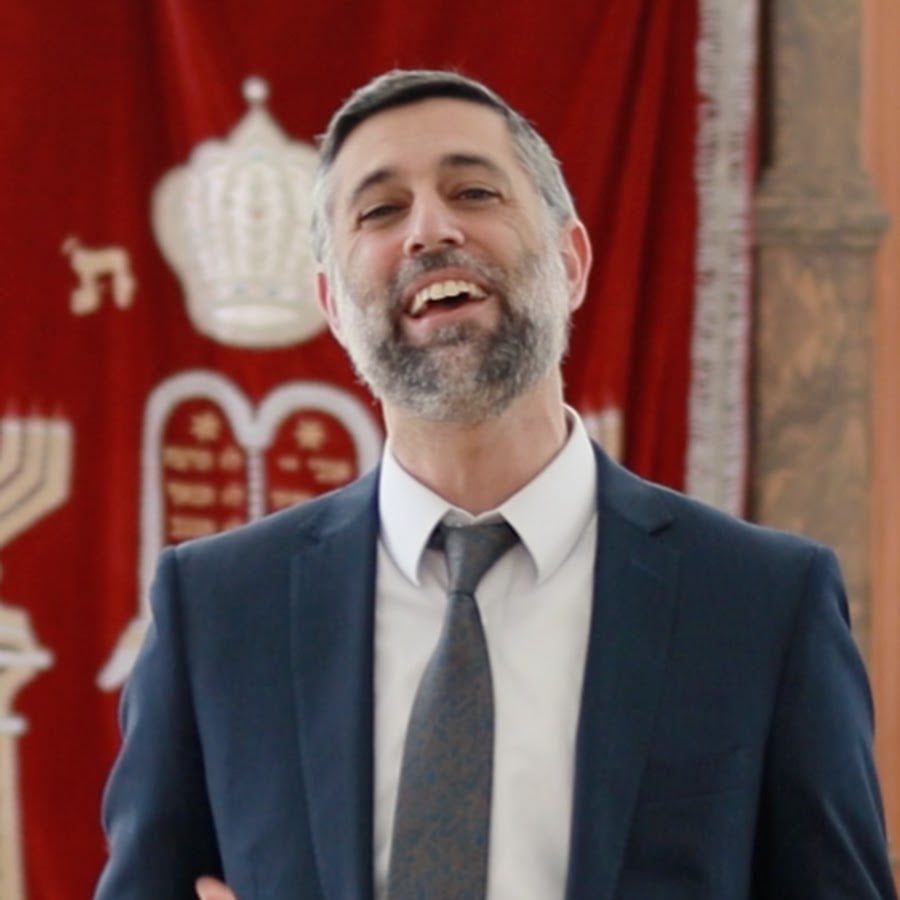
How was Elazar the Kohen able to carry so many items at once - the Oil of the Menorah, the incense ingredients, the flour of the daily offering and the oil of anointing? Why did the unlearned man scream out the kedusha prayer? Why did he then go on to become a great dignitary? What was the underlying theme in the contention between Dovid Hamelech and his wife Michal? Why did Dovid dance and 'crow' in front of the Aron Habris (ark of the convenant), and how was it appropriate for a person of his stature? Find out in this week's Parsha Podcast.
Categories:Music
Comments
Transcript
Auto-generated transcript. Not time-synced to the video.
You're listening to the weekly para
podcast with Ari Goldwag recorded with
Hashem's never ending assistance in
Israel 5786 2026. This week's para is
parid
and towards the end of our para we have
an interesting puk. It's speaking about
the idea of the kaim the different parts
of the mishka and the tabernacle that
were carried by different groups of the
levim of the Levites.
And it says like this.
The high priest at that time was Elazar.
Actually this is before he would become
the high priest. He was destined to be
the high priest. But Elazar the son of
Aaron. So he had a certain job. He was
in charge in the pushup of the puk of
overseeing
the oil which was used for lighting
and the the incense,
the flower offering of the
oil which was used to to
be placed upon the different vessels.
He was in charge of the entire mishka
and everything in it in the holy and its
vessels. That's a pos.
Now I'd like to share with you our
majish. But before I share with you the
majish,
I'd like to point out that the majish is
brought or a similar idea is brought in
the ramban.
So again in the pashup it means that
he's in charge. He oversees. He directs.
He's not actually personally carrying
the amishka the the different the the
oil which was used for lighting the
minora the etc. these these different
things that we mentioned he was just he
would direct things but there's the says
it as well.
Um the is in shabasim
that he would actually personally carry
all of these things. Okay
is carrying and this is a huge amount
says says it's a it's a very large and
difficult thing to carry
the was 365 portions
it wasn't done halfway
the amount of oil that was needed for
The minora was
183 lug.
It's a very large amount.
And as far as the as far as the flower
for the for the tid, we don't know how
many days he needed to carry.
But says the which is what our
we find that Jacobu is described as a
very strong human being. He was able to
single-handedly
uh roll off this this huge stone that
required a number of shepherds or a
whole group of shepherds to be able to
push off. Alaser was also superhumanly
strong.
We find that Mosher Raenu also had
superhuman strength as well as his
brother
finishes off and says those who seek
Hashem will have intense strength. Okay.
So that's the basic gist of what the Pik
is talking about. Pipshot is he oversaw
it. The deeper shot is that he actually
carried it himself with superhuman
strength.
And our medish in speaking about this
idea teaches us an amazing thing.
Brings our
says
when you are in front of a king
don't don't worry about your own honor.
in front of a king. That's not your job.
When you come in in front of a king,
your job is not to impress anyone. Your
job is just to give honor to the king.
So says
if you're in front of a human king and
we find that you need to show a proper
respect and lower yourself.
So if you are in front of before God
himself, you are serving Hashem, you
also have to act with shifus. You need
to act with humility.
We find it says in the
be brazen like a leopard, light as an
eagle,
running like a like a deer and mighty
like a like a lion,
which means to say it might look bad
what you're doing. You're running like a
mad man in order to get to shul on time.
You are uh tough as nails. You're brazen
to do what's right. You act with with
but
you do the things that you need to do
because when it comes to serving Hashem,
there's no such thing as my pride. My
pride is gone.
Okay? And think about it in terms of
Elazar
who's going to be the high priest. He's
let's say he, you know, in the US, he's
carrying the oil himself in one arm, as
we're going to see in the medish, maybe
I'll read it soon. It's really at the
end, but maybe I'll read it first.
Um, but he would carry it in one arm and
another arm and he has stuff. He had
tons of pockets, filling up the pockets.
Is that not That's the honor of a of a
coin of a high priest. That's he's, you
know, he's got oil spilling all over
him. He's got flour everywhere. He looks
like a baker. Is that the honor of of
the guttle?
Elio Elio says, and I think it's
any person who is concerned about making
the honor of heaven greater and in so
doing has to limit his own honor.
What happens is the honor of heaven
becomes greater and his own honor
becomes greater.
And whoever wants to minimize the honor
of heaven for his own honor,
the honor of heaven stays in its place.
You can't really dishonor Hashem,
but the person's honor becomes smaller.
Okay. So that's the foundational is when
it comes to serving Hashem, when it
comes to honoring Hashem,
I give up my own honor and in so doing I
get the greatest honor. So I like to
read to you just the end of this mish.
So it goes on for pages and pages and
pages. Going to just read to you some
snippets and pieces of it. At the very
end of the mish
it says
he's in charge of all these things. He's
in charge of the shame the sham the the
different oils the the
incense. He's in char how does he how
could he carry all these things? That's
a lot of stuff to carry.
This is how he would carry it.
And understand whenever it says
a concept of right and left, he's going
to hold the in his right hand. So these
always have deeper spiritual cabalistic
implications. The right hand is the left
hand is
he held, let's take it for the pushup
shot here. He held the oil which was lit
on a minor in his right hand.
He held in his left hand the incense
and the of the tid
the flower for the for the constant
offering was hung around his neck.
Okay.
I'm not sure what that's referring to
exactly, but how is it? How how did he
have it?
He had tons of pockets as I'm for
explain here. He had some kind of small
garment that had lots of pockets and he
was able to put it in his pockets. Okay.
Alim, he was like a a a servant in front
of his master. There's no personal pride
when it comes to serving Hashem. If you
have flour popping out here, you have
incense popping out there, you have oil,
every arm is full.
You carry it all.
You carry it all. It's all of it is
hashem. You carry it all. I would think
about it conceptually as the manora is
the light. Of course, that's the tyra.
The incense is kapara right in the gut's
a she would bring in the kapar means
he's concerned about the Jewish people's
atonement
the constant offering the mka the flower
it's the bread of the Jewish people
the true leader of the Jewish people is
concerned about everybody everything all
the different aspects of and service of
hashem infused is every aspect of a
person's day and a person's life.
There's no place that's devoid of an
opportunity to serve Hashem. And the
kind carries it all with pride. He
carries it all with pride. That's what
it means to be a kangar to be a high
priest.
I carry all of the different aspects of
our hashem. It's the Tyra. It's the
kapara. It's the daily service. It's the
bread of the Jewish people.
I carry it all.
There's no there's no there's nothing
that's too small for the coal to carry.
Okay, that's the basic concept.
Um he brings here a story.
There was a guy who
he was sad. He was he regretted the fact
that in his youth he hadn't learned how
to learn Torah. He hadn't studied. He
hadn't had an opportunity to go over
that which he studied.
This guy was standing one time in
they got to
and this guy who didn't know anything,
he got up and he said very loudly,
"Holy, holy, holy is the is Hashem the
Lord of hosts.
So he did it in such a way that people
were a little perhaps astonished.
They came over to him after and said him
why did you why did you say it so loud?
He says, "I I wasn't someone who merited
to study,
but when I get to sh at least I can say
I can say God is holy. I can honor
Hashem with what I know how to say. I
know how to say."
So I said it with all of my heart.
shall I
let my soul return to me. He felt
a sense of satisfaction spiritually from
having that opportunity. Which by the
way really means to say at its depth
that he recognized that no matter where
a person is, they can serve Hashem where
they are. A person didn't merit, of
course, we should try to learn. Of
course, we should we got to know stuff.
But if a person is in a situation where
he wasn't able to, it's it's not it's
not impossible for him to serve Hashem
from where he is.
The year didn't even end. That year
didn't complete. That same year it
happened
that he went from Babylonia to the land
of Israel. He he made aliyah.
He was made into a a significant officer
by the the Caesar.
He was in charge of all of the forts of
the land of Israel.
They gave him a place and he was he
built a city and he lived there.
He was somebody who didn't have to pay
any taxes says the
but maybe it also means it's a it could
be a language of
oh maybe not I'll skip that just go with
the here okay
so we learn from here that
he like, think about it. The guy doesn't
know anything. He could just walk into
school and be quiet.
In a certain sense, he embarrassed
himself because he did what he felt was
right in in serving Hashem and honoring
Hashem in the best way that he could.
And so, we see that those who stand up
for their own honor, the I didn't read
it, but there's another story of those
who didn't stand up for Hashem's honor
and they were embarrassed. Those who
do stand up for Hashem's honor, they are
praised and all good things come.
It says the
who honor me, Hashem says I will honor
and those who do not honor me, those who
embarrass me as it were.
So they will they will lose their honor.
Another
maj goes in at length and speaks of
we find a similar concept by King David.
Now a few weeks ago actually we read
this part. I'm going to read to you some
of it inside. We read it in the ha and I
was called up to read it actually and I
was very moved by the story.
King David.
So maybe we'll just say it outside
instead of reading it in the in the
measure in the
in the Nvi. But basically Melik
is bringing the Arin back. The Arin was
captured.
The ark of the covenant was captured by
the pushon by the enemies of the Jewish
people, the Philistines. And they saw
that it as a result of it being in their
presence, it was causing massive
destruction. People were dying.
So they sent back
the aron
to first to bamesh actually to here
didn't work out so well they didn't show
a proper honor and then it was sent to
curios which is telstone today they sent
it to curios actually if you go into
telstone which I do actually I teach
there on Thursdays
so when you drive into the kisa of
telstone there's like a model it's not
doesn't look really like the the krum
don't look like kuim. There's a model of
the ark of the covenant because there in
kerasim it stayed and it they they
honored the arum. They showed it proper.
And now David wants to bring back the
arum from curios
from that area to its rightful place,
its rightful home.
And at that time there was no right
before he would be built to his place in
the
we see throughout the story with
he does everything that he can to show
honor to the he goes out of his way and
he does it in a way which at times
looks like He's embarrassing himself,
but he's really showing honor to the
Auron. And at the end of the story, so
he's dancing and he's career. We'll see
what that means. He makes these kind of
sounds like a bird maybe.
And he's and he and he dances and he
does it in a way which
his wife felt was not befitting to a
king. Mikal who was the daughter of Shaw
felt it wasn't befitting to the king
and
as I read it personally as I read this a
few weeks ago I was very moved by it I
was like uh I was I was touched that
David King David king of the Jewish
people
would show such deep
love
for and for the Aron and for the for the
return of the urin to its proper place
such that he would do something which
people could see it and say that's not
appropriate for a king but he didn't
care he did what he felt was right he
did he showed the ultimate respect for
the ar even though at the at the expense
of his own respect and his wife didn't
think it was correct cuz she had learned
in her father's home in King Scholes
home that
sometimes it's important that the king
not sometimes of course a king has to
have a certain self-respect every person
has to have a certain self-respect
but Mikal and the Msur that she had from
was unfortunately sometimes that one's
self-respect would would supersede this
the respect of Hashem and David
understood I'd like to see more about
this we still have some time but David
understood that the respect of Hashem
supersedes one's own respect.
So there's a few different uh themes
within the story and one of them is that
the Pik says that David didn't just go
by himself.
He brought it from the house of to bring
it to Jerusalem.
He got together 30,000
young men.
He said, "I'm not going to bring the
back to its place quietly. We have to
make fanfare, full fanfare."
and
he took counsel with many great wise
people.
He got together. He he asked what he
should do and everyone agreed.
And it's important by the way. This is a
very deep thing in serving Hashem. When
we're serving Hashem,
we might have an idea. We got to check
out make sure the idea is correct. You
got to ask others. You got to ask other
people who their whole life is serving
Hashem. But he's he discussed it and he
came to the conclusion that yes we
should in involve tens of thousands of
people if not more. And the message goes
on to bring how they came from all over.
They came from Judah. They came from all
over the land of Israel. tens of
thousands and they came to escort
the Auron. And there was a mistake that
was made that Usuza
tried to stick out his hand to carry the
AR because it looked like it was going
to fall off of the wagon. And it was on
a wagon. And that was a mistake that
King David had made that he put it on a
wagon instead of
it's supposed to be carried by the
Levim, the Levites, as we find in our
para.
It's a it's a simple mistake how he made
such a mistake. The Medish explains. I'd
like to just touch on it for a moment.
Says they put it onto a wagon.
They didn't carry it according to the
way the Torah says to carry.
It's supposed to be carried by the
bahas. It's supposed to be carried by
the kohan by the the
why did he forget this? It's something
everybody knows
and this is an important as well. an
important foundational idea
referred to the terra as a song, right?
And the problem with him calling it a
song was that
says look the says it's so easy to lose
the Tyra.
You have to have your full heart in the
Tyra. You have to always be involved in
the Tyra. When you call the Tyra a song,
it means to say it's something that I
just like just rolls off my lips. What
is a song? A song, you know, you you're
just walking along and you're humming a
tune, not even thinking about it. The
terra is not something that you just do
and you don't think about it. It's
something that you have to constantly
uh be reinforcing within yourself deeper
and deeper.
So you're
calling it a song.
You're going to make a mistake that even
the kids know. Little kids know this
because they've said it over and over
again. And the children know by heart
and you're going to forget this simple
thing that it's supposed to be carried
by the
caused a mistake caused us to be killed.
Was very upset by that. He ended up
putting it in a different place in the
base
until it was time to bring it to the to
but there is a lack of respect. Human
beings have to be the ones carrying it
not a not a wagon.
You don't have a you don't have a not
the human being carrying something is is
a respect. You know I was discussing
today with my daughter about AI music.
There's something or AI art.
There's something about the human being
doing it. There's something about the
person changing the music comes through
me. I developed it myself. Hashem put it
into my heart. Person creates art. They
developed it themselves. It's it's a
gift from aeshu when it's something
that's mechanical
just a kind of
combination of all of the art that
exists in the world that's lacking in
the in the power that it has on the
person.
The z is just a song that comes out
that's just dam the terra is not like
that. The terra is something that has to
be processed through the human being.
Just the AI can also answer a question,
right? You is going to quote you from
here and there and everywhere. But
there's something about the human being
processing it, learning it, change that
changes the person.
That's what the Tyra is. And when we
don't have that recognition, that's the
human being who needs to carry the the
Ain,
not a wagon, not something mechanical.
I have to do it. this got to change me.
That's the lesson that was lost and
Usuza lost his life because of that. and
David was uh very disturbed by that
says not.
Okay.
So what happens?
So David brings it in and the says
as we said we're gonna talk about this
which means to like a tarnle a uh a
chicken a rooster makes these noises
right so he was making noises he was
making funny noises
says
come and see how much
embarrass himself in In order to honor
Hashem,
he should have been walking like a king
in his royal garments, respectful,
marching,
showing honor quietly. That's not what
he did.
He wore beautiful clothes of course in
honor of the
he was he was like making he was making
in front of the
okay he was says the like this
his wife sees him being
M saw it and
she felt embarrassed for him.
He was clapping. He was dancing. His
feet were up in the air.
It was like sounds of bells. Maybe
that's not exactly clear exactly what
they were, but they were these golden
bells.
And he was saying kir what is care says
he was saying
he was just like like just singing
joyfully.
Maybe he just did that. He was just
clapping. He was just singing.
He was kicking up his feet in the air.
It says
it says that he was dancing and and and
joking
just making
bottom line.
Bottom line, that's what he says to her
when she says to him, "That's not the
proper honor. It's not the proper
honor." He says, "No, this is the
honor." And he says, "That's the
difference between my approach and the
approach of your father's house.
Your father's house were more concerned
and their own honor superseded the honor
of Hashem.
But I don't do that.
My goal is to honor Hashem more than my
own self. I'll do whatever it takes.
Even if it looks like something that's
not honorable for me, that's the
greatest honor. The one who honors
Hashem gives up his own honor. He is
truly honored. I want to bless you. I
ask you to bless me. Hashem should help
us to recognize this thing to try our
best to serve Hashem in whatever way we
need to
run to the mitzvah. Be brazen if needed.
Hashem should help us to do that to to
indeed get the real honor which is when
we honor Hashem. Thank you so much for
listening. Have an amazing Shabas.
This podcast was made possible through
the gracious donations of listeners like
you. For more podcasts like this, please
visit www.argoldwag.com
or search on iTunes Ari Goldwag.