0:00 / 0:00
A Refocused Routine: Reflections on Modern Day Miracles - Rav Assaf Bednarsh
1,186 views
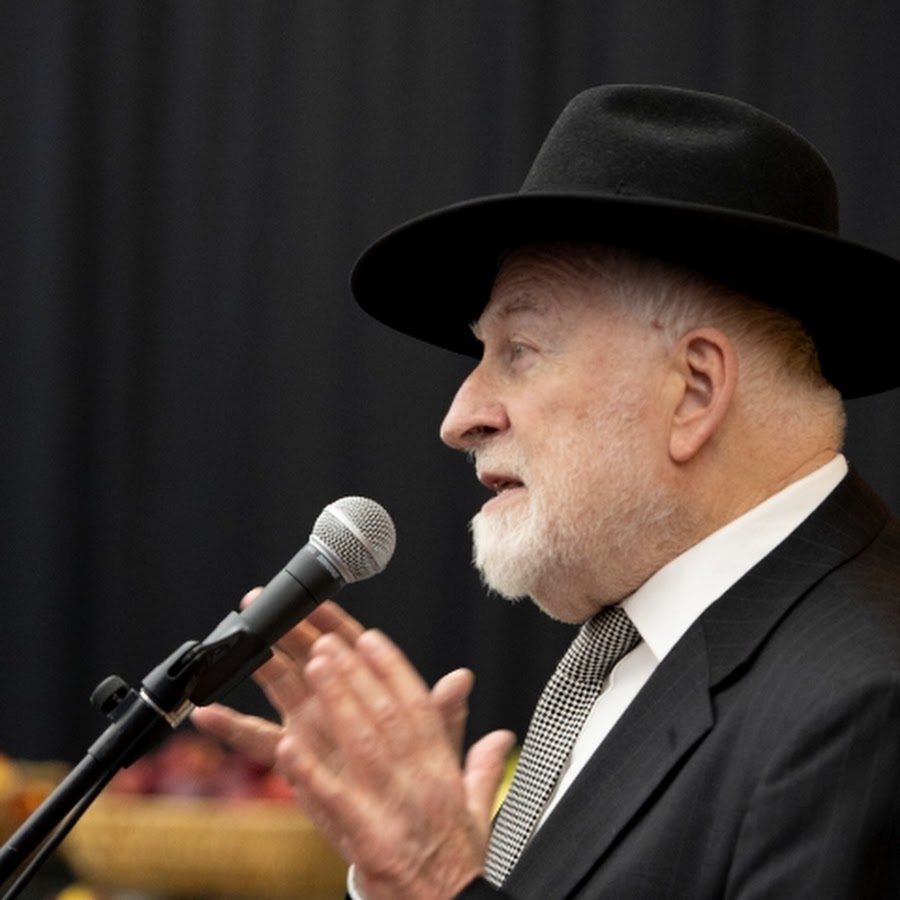
https://www.yutorah.org/lectures/1165206/A-Refocused-Routine:-Reflections-on-Modern-Day-Miracles
Categories:
Torah
Comments(0)
Transcript
Auto-generated transcript. Not time-synced to the video.
Two years ago,
I stood in exactly this place at exactly
this time of the week to talk about an
aced surah that Klaus found itself in.
An aed sora we had not experienced for
decades and decades.
Two years later,
I stand here again
15 days after the body of the last
hostage Ron Gilli was returned to Kev
Israel
after a gula Shaen Kamu that Claus has
not experienced for decades and decades.
There are less hostages in Gaza today
than there were before October 7th, than
there were three years ago, four years
ago, five years ago. There were four
hostages, two alive, two dead for years
until October 7th. Now, not only are all
the hostages from October 7th back, but
they're back as well. Zero left.
Raosi,
we have seen in the last two years Niss
that are mamish no less than the Niss of
Kanek or Purim. I know we don't have a
about them. That's because of our
ladrega not because of the ladre of
Hashem's Nissim
who threatened us in Israel. Hamas is
decimated.
Is a goce hanging on for dear life.
Assad and Syria, the whole regime is
gone.
Iran, they're doing their best. Some
weeks it looks like they'll continue to
exist. Some weeks it looks like they
won't. But their nuclear ambitions were
bombed to smitherines.
How did this happen?
We're about to lane this week para
skullim which is the harbinger of pim.
What's pim all about?
There's a safer in Tanakh that doesn't
have Hashem's name in it called
McGillisester.
Hashem's name is not written
with black ink anywhere in the migilla,
but it doesn't need to be because
Hashem's name is flashing neon lights
and screaming to us from between the
lines of every perk in the migill,
right? The Jews beat their enemies. How
did the Jews beat their enemies? Right?
Well, Vashi happened to annoy Akash
Veos. He happened to pick Esther as the
new queen. Morai happened to overhear
big son and Teresh.
When Hmon was standing outside Akashir's
chamber, the safer acrony
of Morai,
if you believe that's coincidence,
you're not only a religious, you're a
fool. You're denying reality.
McGillis Esther tells us that
there are nine flows that might not
break the laws of physics
but that are so crazy
that you have to be
noticorous. You have to be a fool to not
see theem.
What happened to us in the last two?
What happened to amus in the last two
years? It's mamish the same story.
Russia invaded Ukraine. We're still not
sure exactly why. Lost Mish a million
troops or something. And then what
happened? Well, Israel always had to be
a little afraid of Syria because Russia
was backing them up. All of a sudden,
Russia didn't have one bullet to spare.
And there was a rebellion in Syria.
Assad fled with his tail between his
legs. And Sahal bombed every weapon
left, took over the Kmon, and there was
no one left to say boob.
Is that coincidence?
The beepers? Really? Just cuz you're
clever, someone's going to buy the
beepers with the bombs inside them. You
set them off and and and kill and put
out of commission all their top
soldiers. That's not coincidence.
Iran
Okay, Sah didn't have the bombers to get
those nuclear bunkers. Still not sure
exactly what happened, but a lot
happened there. What happened? Okay,
this guy named Trump. Trump decided to
send the bombers. Why? We're not sure he
decided. I'm not here to talk about
President Trump. It's not politics. It's
not about President Trump. It's about
the last time in the history of the
United States a president served, lost
the next election, then was reelected to
a non-consecutive term was 93, not 1993.
1893. From 1893
to 2024, it didn't happen. Okay? It
happened. Why? He won. He lost. He won.
He was back again. Then all of a sudden,
we see why. because he had to be around
in a 12-day war
for Israel to schmice Iran when they
just needed a little makabatish and you
needed the right person in the right
place at the right time and all of
history worked out.
I don't pretend to know all the reasons
Hashem runs the world the way he does.
But I know how to see the odd Hashem
when
it's screaming out from between the
lines of McGillis history.
I don't know what the history books will
write about all of these events.
I don't know what the history books
wrote about Hammon. They probably wrote
the Jews got lucky. But I know what the
Amuna history books will write about it.
They will say, "Whoa, we have seen in
our own lifetime
that Hashem runs the world."
Kazal tell us in Sanhedrin that when he
was saved from the army of
Hashem almost made a messiah
and
except that he didn't say
he didn't praise Hashem
he said look at the destruction he
destroyed every city but you shall
He the Assyrians exiled so many of our
brothers in the Asservatim.
And he didn't say Shira. He didn't say
Hashem. What an unbelievable nace.
It's our to say Shira this year. Hosana.
The second yard site of everything that
happened on Simra two years ago.
Hosanna Rabba is a very powerful file
every year thinking where do I want to
be this year for Oshana Rabba you know
you're allowed to drive I can pick
anywhere in the world where do I want
that feel to be and this year it was a
no-brainer pack the family into the car
the seek and daving at the with
thousands of my fellow Jews at the site
of the Nova festival where it all
started where all the people were killed
and taken hostage
And in the middle of Hollow,
you know, people are getting all kinds
of beeps and news flashes on their
phones. And all of a sudden, there's
helicopters flying overhead. Put two and
two together.
When we went to sleep the night before,
we didn't know this would happen.
Hosana, the middle of Hallel helicopters
are flying overhead. Maybe that's the
helicopter that's fing all the hostages
who were finally freed after two years
on Oshana Raba morning. That halal was a
Shira. We really say we really meant it
when we said
I was at the hotel last week. Last
Thursday I flew here
and Wednesday I went to Min at the Kotel
to take my leave from the before going
to
whenever you're at the hotel you know M
is okay sheralos someone in the family
who's sick sheramalos for need this you
know an extra cap for a Talmud who's
having trouble finding a shalm having
trouble uh having having children
and I say to myself. But it's not only
that. I've lived through.
How about an extra halaluca? How about
an extra mismod for all the amazing
things that I've seen for
that I saw with my own eyes?
Is everything perfect now? No. Is Amish
perfect? No. Is Eritrol perfect? No. Are
all our enemies completely disappeared?
No. Do our soldiers still need to serve?
Yes. Although it's very different from
what it used to be. Everything is not
perfect. After Purim, everything wasn't
perfect.
Say after Kaneka,
everything wasn't perfect. The war raged
on for years.
But Kazal knew
even when everything wasn't perfect how
to see the and say hal and shashem
thank you for the infinite flows.
Even in the hollow we say
there's always more to ask for but that
doesn't stop us from saying
hashem
that was an amazing Yeshua.
We
are not going to forget the Nissan we
saw. We're not going to let the world
say it was stam. We're going to sing
Shira.
We're going to praise Hashem.
If I don't see myself
when I am 70 telling my grandchildren,
you should know I live through Nissim. I
saw the
if I don't see myself that way
then it's not because Hashem didn't do
the flow in front of our eyes it's
because I forgot to open my eyes and I
need to sing Shira
but I think the navamina of what we've
seen over the last two years is not only
for the cl is for the pr as well
we're Jews what's What's the job of a
Jew? The job of a Jew is to be a Jew. To
be a Yehudi. We're called Yehudim
because of Yehuda.
Because we're Mod to Hashem.
Hostages came out of captivity in Gaza
and told us what they experienced.
Everyone had a different experience, but
so many of them said, "I felt Hashem
with me.
I became closer to Hashem in the tunnels
of Gaza than I ever was beforehand.
I Cohen,
who
I'm not here to judge anyone's
religiosity, he wasn't a yeshiva bucker.
He was kidnapped
from from a music festival on Shabas.
He said he felt in Gaza like every day
was yum kiper. Every day was yum kipper
and you on yum kipper you can't turn on
the lights. He didn't have a light to
turn on. He was in the dark. On yum
kiper you can't eat. He didn't have food
to eat. Every day was yum kipper. And he
said so what are you doing yum kipper?
You dive into hem and you domin.
What was the mas of his nephesh? He told
us when he came out, he said, "I did and
decided that when Hashem saves me, I'm
gonna say miseroda every day to thank
him."
He said they give him water to drink
sometimes.
Rabos, I forget the copapods. He could
see the worms in the water. Do I drink
the water? And who knows what disease
I'll get, but I don't. I'll die of
thirst. You have to drink the water. He
said, 'When I come out, when I have a
cup of water to drink, I'm going to say
thank you, Hashem. I'm going to
appreciate it.
Hashem, all of us, we we're free our
whole lives. We're comfortable.
We were never imprisoned. We were never
captured. So, does that mean I owe
Hashem less Hakaratov
or more?
Obviously, more. I've been free my whole
life. We've never had to worry about
water to drink. So that means I thank
Hashem less or I think Hashem more
obviously more. Omar Shmto
well-known hostage who goes around now
talking about the rrookness he acquired
in Gaza says he got up every morning in
Gaza and said, "Thank you, Hashem. Thank
you that I'm alive, that I'm breathing.
Thank you for whatever food I have.
Thank you for whatever I have.
I get up every morning I say Modani. We
all say Modani. So should we say Modani
with less than him
or Modani with more than him? Who got
more from Hashem?
We deserve so much more.
But it's hard. Of course, human
psychology is that we take what we have
for granted. They didn't have it. They
stopped taking it for granted.
We're human beings. We naturally take
things for granted. But just because
it's psychology doesn't make it right.
Says in
everyone has every day. Everyone has
every day.
If nothing happens,
I'm not injured and I'm not attacked and
I'm not captured and I'm not imprisoned
and I'm not sick.
That's cuz Hashem's looking out for me.
That's a matana.
How do we overcome the weakness of human
psychology?
So what does Hashem want from us?
says explains I'll take
doesn't only mean I'm at 96 so how do I
cop another four
means a 100 times a day means whenever I
can to open my eyes and say what did
Hashem do for me that I could take for
granted but I want to appreciate Hashem
I want to appreciate instead
when can I open my eyes and say thank
Thank you, Hashem. That was amazing.
Instead of just saying, "Oh, it's normal
life."
We take so much for granted.
Every morning we say,
"You free the imprisoned."
What does that mean? Come on. No one's
imprisoned.
People are. And they're freed. And we're
even b we got even more who were never
imprisoned in the first place. Shazi.
Oh. We have shoes. Everyone has shoes.
Everyone doesn't. There are a lot of
people in the world who can't afford
shoes. And we can afford a lot more than
that. Every single we say when I have a
drink of water. Forget about uh Dubai
chocolate. A drink of water.
There are people who don't have a drink
of water. Modi.
There are people who don't wake up in
the morning. Every we every single braha
that we run through. And I know why we
run through because we take it for
granted because come on everyone can
walk okay till they're you see that many
people can't and if I can that's a
tremendous
Rashi says in the beginning it's a
cryptic comment that the have to explain
says in mikurim
there are two passages twoim that the
vikur has to say. The first is he got
told that I came to the land. And then
the second is like goes through all of
Jewish history going all the way back to
the
Rashi says he got to
you're not an ingrate. What does this
mean? Everything we say is about
appreciating Hashem. Why does Rashi
comment specifically here and
So they explain the second that the says
he's talking about things that happened
thousands of years ago. That's not
everyone knows what happened thousands
of years ago. Not everyone remembers
what happened thousands of years ago.
You have to be hashem I remember what
happened thousands of years ago. Rashi
doesn't need to explain why we say that.
It's important to remember things that
happened a long time ago. But the first
he got
I told you I'm in the land. What do you
mean? The guy's standing.
He's in the land. It's like saying I
have a tremendous skish for you. I'm in
gluck. I if I'm standing in Gluck,
what's the purpose of saying something
that's so obvious that it doesn't need
to be said? And that's exactly the amus
of Rashi.
There is a reason to say something
that's so obvious that it doesn't need
to be said. Because when something's so
obvious, you start taking it for
granted. When the Torah commands us, our
our
when they bring say I'm standing in the
land, Hashem, I know you brought me to
the land. It's not a
The is that instead of taking it for
granted,
I notice that it's a Theish is that I
notice things that everyone else takes
for granted. The is that if I have a
house to live in,
I say, "Hashem, thanks for giving me a
house to live in." Uh, isn't it posit?
It's so pushet that you need to remember
that it's not posit that not everyone
has a house to live in. That it comes
from someplace and it comes from Hashem.
Another hostage
Sasha Trupnav
was interviewed after they let him out
said, "Okay, what do you want to tell
us?" He says, "I want to tell people to
thank Hashem for what they have. That's
what I want to tell Ravosi. Our brothers
spent 500, 600, 700 days in Mameish
Geanim
and they came out to tell us one thing
to tell us you know Taka you don't have
everything you ever wanted and you never
will
you don't have everything your neighbor
has and you never will there'll always
be someone with more
but they spent 700 days in gehenn to
come out and tell us we have so much
we just forget to appreciate it. We just
have to open our eyes to the tremendous
everything we have. We just have to stop
a hundred times a day and say, "Hashem,
it's amazing what you've given me."
It's not so easy. It's not so easy to
notice the
Okay, start with once a day. When I say,
we all say 20 times a day. Say hashem
and stop. Say mishem
like thank you heashem. If I have a job,
thank you. I have a job. I don't take it
for granted. If I have a family, thank
you. I have a family. If I have a home,
thank you. I have a home. If I can learn
right here in this space medish, thank
you Hashem for giving me this amazing
place. One extra that we used to say
without to stop and say, "Not everyone
has this. Hashem gave it to me. I really
owe Hashem a debt of gratitude. Hashem,
not just I need this and I need that,
but I appreciate all the things that
maybe yesterday I neglected to
appreciate and someone had to remind me
that they're not so pushet and not
everyone has them and I need to
appreciate them. And you know what?
Maybe if I go to Hashem and in addition
to saying I could use some extra this
and that say I appreciate the amazing
things you've given me. Hashem can look
back and say well if what I gave you so
far you appreciate so well then it's for
sure could die to give you only more and
more. If we could just work on
appreciating
everything that we have will find not
only the psychological rich riches of
But the treasure of seeing Hashem one
extra time a day and feeling Hashem's
presence one one more time a day and
really becoming the kind of people who
feel Hashem in their lives who feel
Hashem standing right there more and
more and more and eventually all day
long if we see the Hashem in our lives
we see the
Hashem did for us in these historical
moments.
If we take the inspiration of the
historical moment down to every pr that
we encounter day by day then with our
with our shira
will be z for even greater and greater
gula vhua for the kl and for the prat
and for bs gold bhira vu