0:00 / 0:00
Rabbi YY & Nissim Black: From Islam, to Christianity, to Judaism
30,488 views
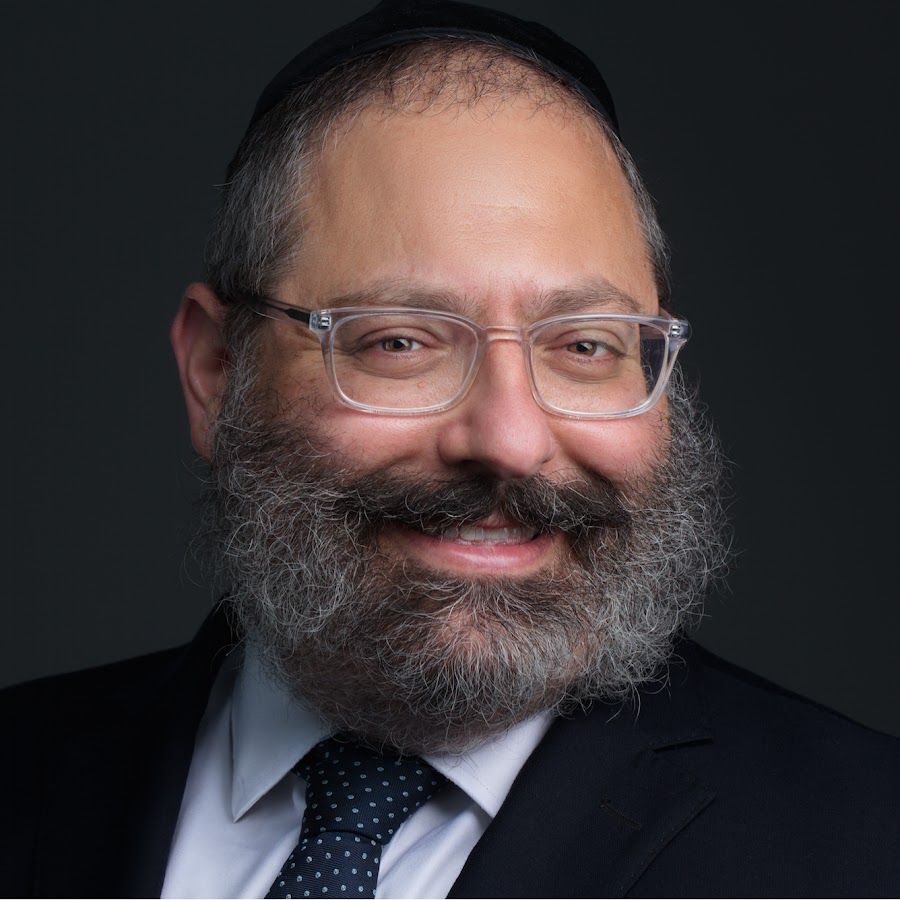
Finding a Personal G-d; the Power of Music; Anxiety & Pain; Jews and Blacks; Becoming a Singer or Speaker; Changing the World Rabbi YY in conversation with Nissim Black, moderated by Moshe Frank. To sponsor or dedicate an upcoming class click here: https://www.theyeshiva.net/donate To watch more classes & to read Rabbi YY's articles visit: https://www.theyeshiva.net Follow Rabbi YY Jacobson: Youtube: https://www.youtube.com/c/RabbiYYJacobson Facebook: https://www.facebook.com/TheYeshiva Instagram: https://www.instagram.com/yyjacobson Twitter: https://twitter.com/YYJacobson Linkedin: https://www.linkedin.com/in/yyjacobson/ Telegram: https://t.me/RabbiYY
Featuring:
Nissim Black
Comments(0)
Transcript
Auto-generated transcript. Not time-synced to the video.
The Yeshiva.net
Rabbi, just before we start, I would
like to make a
confession to to you. Uh
I've been listening to Rabbi YY for
years, years, years, years. Maybe oh
yeah, almost like 10 years or something
like that. I used to even listen to your
sheerim on Shabbos when I could listen
to them on Shabbos. You should know
that.
And you gave me a lot of chizuk, a lot
of chizuk. So, baruch Hashem.
So, thank you so much.
That means a lot to the neshama.
That means
I'm just a key just a key in where he's
talking about the social um gravity you
have to break through. Okay.
So, that that was the topic.
And if I may say, Rabbi Jacobson is
someone who grew up in the Crown Heights
ghetto, if I may say,
and who really uh
Speak for yourself. Speak for yourself.
I did not grow up in the ghetto.
I grew up in a very, very open
environment and a very non-judgmental
environment.
If you knew my home growing up, I did
not grow up in a ghetto.
But most people in Crown Heights, if
they didn't grow up in the son of a
journalist's house, was pretty you know,
you knew Chabad. You when growing up in
Flatbush, people
I have I beg to differ with you. I beg
to differ. We grew up in the presence of
one of the most expansive personalities
in Jewish history.
So, I really beg to differ with you.
Completely.
Okay.
So, growing up
Maybe maybe not everybody listened to
him
or but he was a person whose ambition
day and night was really
to transform all of humanity and create
a revolution in the world of goodness
and kindness and higher consciousness.
That's if if if that's called a ghetto,
what's not called a ghetto?
But you I'm sure you've heard this time
and again people say people Chabad they
don't never heard of the Rosh Yeshivas
in Telz, they don't know their names,
they never recognize or heard of other
Rebbes in Bnei Brak or Williamsburg or
other great people. So obviously Rabbi
Jacobson is someone when you hear him
speak and his knowledge and his reach is
definitely cross all boundaries in a
similar way that if I may say this I'm
also really across many boundaries if I
may
draw those those connection here between
the two
stars we have on our interview here
today.
Yeah, but today I did get a compliment
that I didn't get I don't think I ever
got somebody who listen was listening to
me a logically on Shabbos.
And was inspired was inspired towards
Yiddishkeit.
Thank you. I'm going to I'm going to
never forget the Shiur. I still I still
I still have it. I haven't listened to
it in a while but it was an oasis of
calm. I don't know if you you've given a
lot of Shiurim, you know, you have a lot
up there so but I remember the Shiur and
it was
very very powerful, very very powerful.
An oasis of calm? You mean creating a
Shiur?
It was an an
I don't know who you know, I don't know
if you were in charge of putting it in
the in the feed on on chabad.org back
then but it they they named it an oasis
of calm and it was a Shiur you was
giving and you talked about the Yish
Kiev over there. It it it was shortly
after 9/11. You gave a story from 9/11
when the building was collapsing and the
two guys that walked into the bar with
the Jack Daniels,
you know, and then his friend you know,
I I remember the
You even remember the jokes, listen.
Yeah, I remember the jokes. The jokes
were hilarious.
Okay, wow, that's a long time ago.
Yeah, it was a long time ago. That's how
much of an imprint it made on with
But that's 20 years ago.
Yeah, yeah. Oh, wow, was it? No way.
Oh, no.
That's 2008.
Okay.
You heard it you heard it 10 years ago,
okay. No, it said after
it.
I hear.
Oh, yeah, right, right, right.
So, here's my question to you.
It's very obvious to when the when I
ever I hear you talking when we met in
the past, you came to my shul in Monsey,
remember Shabbos?
Right, right.
Fine.
I always see how personal and intimate
relationship with God you have.
Right.
What can you tell? Many people grew up
with Yiddishkeit. They grew up from
religious homes, Orthodox homes, or
whatever types of homes.
They read the Tanakh, they read the
parashah, they know all the stories.
Adam, Chava, Noach, Avraham, Yitzchak,
David, Shaul, they know it all.
Mhm.
They even learn every day a blood Gemara
or many other things.
But if you ask them, "Did you ever
experience a personal relationship with
God?" they don't know what you're
talking about.
Right.
be your advice
to all of these beautiful and holy
people? How can they find
a real personal relationship with
Hashem?
I think the the the biggest things that
was the for me um was the tefillah part.
The tefillah part he both did and he
both did. Really contemplating
everything I was learning because
there's one way you can you can read
through a lot of the material you just
described and and you you either read it
like a book or you read it because you
have to or you read it because you you
or you read it and you're told that
nothing ever is what it is. Right? And
that's one of the biggest problems,
right? Nothing ever really happens to
some degree. And what I mean by that is
is that um
whether or not it happened, whether or
not the pashat is the pashat people are
always trying to find learn out some
lesson. I tell you I was sitting with
the with the someone and we started
reading. We were talking about Nach and
a lot of the boys that been in Yeshiva
that they didn't learn Nach so much. So,
I was talking to him about a story of
when Eliyahu Hanavi when he was called
up. So, we opened up Tanakh and we're
reading it and Adam and Elohim
and he's and he goes over there, "Okay,
but what is it trying to teach me?" I
said, "It's just trying to teach you
that did look at the power of Hashem."
Like when I seen it, I see what the
power of Hashem was, you know?
And and and you know, even reading
Nehemiah Ezra and I and I read Nehemiah,
you know, after such sorrow he was in
after he heard what was going on in
Yerushalayim and and and and decided to
go back. What did he do? He went out and
he cried to Hashem in the courtyard. And
I was looking at when I read the
stories, I'm seeing like how much the
person depended on Hashem. And so, for
me, I was able to grow from that and
realize that hold on that if I depend on
Hashem, there's a certain level of
relationship and the expectation that I
can have from Hashem that I'm going to
be able to get if I invest my time and
my my my devotion towards Hashem. So, I
think that that's the biggest thing to
sort of like getting new eyes, looking
at everything brand new. That let let me
let me just read this and never hear
like, "Okay, but this what am I trying
to learn out from it?" Like let me look
for Hashem over there. I'm looking for
Hashem over there.
Amazing. What was the moment I mean, you
grew up as a Sunni Muslim, then you
become Christian.
Right.
And then one day you decide to become a
Jew.
What's the moment? I don't know what's
the probably was an evolution, but can
you point a moment or something you read
or something you felt or or something in
the time
or some life experience that really
clinched it for you?
I think the thing for me was it was the
overall experience of
after I got into a horrible situation
with another rapper. It was a killer be
killed situation. My life was like, you
know, on the line and I started praying.
Because I had the familiarity with the
Christianity and so on so I started
praying.
I got out of that situation and I stayed
home and I kept praying. I was thanking
God at that point and I realized for
myself that if I continue in that same
life, then the next time it could be the
real thing. So, what I decided to do was
continue praying.
Then I decided to pick up the Bible
again. Now, when I was younger I had a
lot of questions and I wanted to know a
lot because I just didn't I didn't
understand everything. It wasn't like I
grew up in church and and went to Sunday
school and all the other stuff. So, when
I was I also came into that Christianity
realm 14 13 14 years old. So, I I had a
lot of questions. Not a lot of people
had a lot of answers. They're not so big
on numbers over there. So, then not
everybody had answers, but you know,
whatever. So, I tried to to
spin by myself. I tried to look up the
answers. Of course, obviously that's how
I came to
chabad.org and Yoshiam and Rabbi Mendel
Kaplan and a few other, you know, people
that were really like inspiring me on on
Chabad. I think it was this.
I got to a place where I said to to God,
I only want to know your character. I
ruled out Islam. I was sitting with all
three books. I had the Quran, I had a
few versions of the Christian Bible, I
had a JPS Tanakh and maybe a Chumash and
I was going through these different
texts 8 hours I was really trying to to
get it and I nailed it down because the
the the the the the story inside the
Tanakh everybody was messing up, you
know? It was just like the story of
everybody screwing up over and over and
over again, right? But Hashem's
unwavering love and I would have had to
believe from the other two that God can
change his mind at any point, right? He
could change the whole entire script and
I didn't feel that that was a stable
stable thing for me. I set it to not on
a table and I said, "God, I'm going to
read through this and I'm only going to
look for your character. I want to know
what you love. I want to know what you
hate. I want to know what you And along
with that, I started fasting. I was
going 3 days without food. Not because I
I didn't read any books on tzadikim
except for the ones I've read inside the
book. When they had sorrows and they
wanted to shiv they started fasting and
they started playing so I just did what
was inside the book and that that was
it. And the sensitivity
to to to ruchniyus and spirituality was
so strong. It was so thick that I felt
like Hashem was mamesh holding my hand
through the whole entire process. And
what I noticed was as the love that
Hashem had for the Jewish people was
beyond and I started to feel jealous. I
started to get very jealous. And I was
saying that how could it be that these
guys keep messing up and Hashem keeps
saying that I'm going to take you back
and no matter what you do I'm still
going to take you back. And so I came to
a very weird conclusion. I say it's
weird only because on one level it
sounds like heresy but I'm not really
saying what I'm saying but I'm saying
what I'm saying and I think the rabbi
will understand. I came to a conclusion
that if there is no Jewish people then
there's no Hashem. That was my take on
it back then. Why?
Because
the whole entire integrity of all that I
was spending a lot of time on obviously
on eschatology and what's going to
happen in the end whatever. Hashem's
whole entire integrity was on the fact
that there has to be a Jewish people.
There has to be a Jewish land. There
would have to be a Jewish king. And the
fact that there were still Jewish people
in the world after I started learning
Jewish history. Now mind you I grew up
in the hood. I knew nothing about the
Holocaust. I didn't know anything about
Jewish history. I'm learning everything
on my own.
And it just didn't make sense and it
only can reveal that there has to be a
God because there's Jewish people. So
that's the that's the So that was like
the biggest thing for me. And when it
out to whoever made this video.
We started keeping biblical kosher.
We started
after that we started doing like, you
know, keeping the Sabbath. We didn't
know what that was. I just like stopped
doing the dishes on Saturday. Whatever
the case was, I called it Sabbath. And I
was on chabad.org and there was a video.
There was a video
about Sabbath, a day of rest. It's a
20-minute documentary done by I think
the Rohr family in Florida. I don't know
who they are, but shout out to them. I
seen this video and I probably I was 20
minutes, I probably cried for 18 minutes
of the video.
With such yearning and kissufim for
Sabbath and it was just a crazy It was a
crazy
experience. So, all those things like
trickled into me wanting to convert.
Sorry, I talked too long, Rabbi. I have
Rabbi syndrome. You can You can ask me
No, no, no. It's It's amazing.
I'll tell you you called it heresy, but
the Sifrei,
which is one of the earliest earliest
rabbinic texts in Judaism,
on parsha Devarim, says, and literally I
quote,
God says,
"When you are my people, I am God. When
you're not my people, I am not God."
That's a direct quote from the Sifrei,
which predates the Mishna and the
Gemara.
Wow, wow, wow, wow, wow, wow.
I was I was onto something.
Amazing.
Rabbi Jacobson,
bachurim people in from yeshivas are
always talked and educated not to listen
to non-Jewish music. Could you elaborate
what's the better what's the What does
it mean non-Jewish music? What's wrong
with non-Jewish music? What's considered
Jewish music? And since Nitsonz here, I
thought it'd be an appropriate question.
Well, I think there's two
someone else said, if I may, Rabbi
Jacobson, someone who really welcomes
music in his farbrengen this year think
it's a very a kind of a kind
pertinent question if I may say.
Yes, no question.
I think there's a few components here.
Very briefly I would say
and I probably miss him could for bring
on this much better than I
that music has a tremendous impact on
people.
Like the altar
the Balatanya said that words are the
pen of the mind
and music is the pen of the soul.
And the author of the music, the
composer
the writer of the lyrics really puts his
or her soul an imprint of them is in
their music.
You can feel Nissam's neshama
in his music.
You can feel people's presence.
Their art, their creativity, their
passion, their convictions, their
values, their umph, their gusto,
sometimes their nuclear energy.
And it it it hits you in the spot, you
know, it penetrates.
And that's why we're just very very
sensitive. We are all sensitive people.
The music we hear, the types of lyrics,
the content
as well as the nature of the composers,
it has a very powerful effect on those
who listen to them especially when
you're young and you're being formed and
your identity is being formed. You know,
a lot of the content of music
in the last half century
is really based on the notion
that there's no inhibitions in life.
The more violent, the more crazy, the
more meshuga, the more insane,
the better.
It's really based on the idea of
enticing the most primal and basic urges
in people
and giving them carte blanche, full
full, not only the right but the duty
to not recognize
any boundaries whatsoever.
And it created a whole a whole culture.
So that's why
people who are sensitive
to
our purpose in life
of creating a world that is moral and
ethical and good are extremely sensitive
to the nature of music, both the
content, the messages that are being
conveyed,
the style,
the art, and also the composer.
Now, within that itself, there's so many
gradations and so many levels.
You know, you have a niggun like the
Alter Rebbe's niggun, like Reb Aaron of
Karlin, like some of the great tzaddikim
and the great masters.
You know, Jewish music through and
through, you could sense right away the
spirituality, the holiness. You know,
you sing a niggun like like even
Tzama
Nafshi. The words
are from Tehillim. The tune comes from
the Alter Rebbe.
Keili
Ata Vi'odecha. Again, words from
Tehillim.
So you know, that's one genre of music.
Then you have different genres of music,
and it's different levels of
sensitivity. Some people who are very
sensitive right away notice,
you know, what we're talking about. But
that's the general approach.
And I think it's important for all of us
to realize this, to realize the impact
on our lives, on our conscious, and on
our unconscious.
So you're saying it's the composer, and
would you say the genre also has a
spiritual element and effect?
I think the genre I think all aspects I
think the genre has an effect. I think
of course the lyrics, the message has an
effect. And I think the composer has an
effect. I think sometimes it's
conscious, and sometimes it's just
organic by osmosis, it just
it it into us, and I think we have to be
aware just like what we call you eat.
Sensitive people know that I am what I
eat and before I take in physical food,
I have to know that it's going to become
part of my bloodstream.
Music in a way is deeper because it
becomes part of my soul stream.
So, is it a barrier to listen to to
other music or it's not recommended?
What would you say Rabbi Jacobson?
The word of barrier is a very strong
word. The word sin is a strong sin. So,
everybody should consult their a
competent uh Orthodox Rabbi and a
confidant that they trust. But generally
speaking,
there's certainly songs that I would say
that to listen to them
is morally destructive. They have
messages that are are destructive
messages.
And then I would say there are songs
that are literally they inspire your
soul
towards a deeper relationship with God.
And then there are songs, I think, you
know, in the middle.
And it really depends on on where you
are in life and what it does for you.
But generally speaking, as Jews, our
mission statement is that what we do and
what we engage in, every move,
every word I say and every song I listen
to can either bring me closer to truth
or further from truth.
And in life, our goal is to every moment
to try to become closer to truth, more
truth, more awareness, more goodness,
more love, more light, more depth.
Jesse, you want to chime in on that
about music reflecting culture and
impact on a person?
Absolutely. I would agree with the Rabbi
100%. Um I think that the the the
biggest thing is is is the the impact of
of the individual.
And then I think afterwards, I would say
the lyrics.
The reason why I'm saying this uh um
Rebbe Nachman talks about this in
Likutei Moharan and Torah Gemul about
the the effects of of of the listening
to a person who's not such a good person
and what type of an effect that it have
on you. Now, when you hear this whole
entire Torah, he goes very very uh deep
into and how much it can cause a person
uh to be neutral and how it could uh
damage a person's avodas Hashem. Then he
gives a tikkun on how to fix if you
happen to hear such a person and you
don't know. Now, when you read the the
backstory on this Torah and why he gave
it, you would think that he was talking
about, you know, the the the latest
Eminem album or something like that. He
wasn't uh actually talking about that.
He was talking about a chazzan who
happened to be uh the the neighborhood
chazzan who happened to be involved with
another person's wife on on the side and
and and no matter how beautiful the
words were and how much he may have been
accepted, the music was being neutral to
a person, he said, because by listening
to a person like that who was unclean uh
was damaging to a person's avodas Hashem
or coming closer to Hashem or coming
closer to the truth. So, I definitely
think so. For a long time, I thought
also too for myself that, you know, I'm
less of a stickler obviously on genre,
right? Because I only came from the
music. My mother did hip-hop, my father
did hip-hop, and this was the way that I
knew how to communicate with the world.
So, I remember
having a thought about this and uh uh to
say I never thought and went back and
forth on it would be a lie. Left music
altogether because I couldn't figure out
how to make these two things work. I
felt that it didn't work. Finally, I
came back to music as a host before
there, but I I I would take uh much
longer to even talk about that. And then
I got to a place I was sitting at my
Shabbos table
a few years ago and I used to host a lot
of bachmann Shabbos. I used to have a
lot of bachmann Shabbos, like maybe 30,
40 boys every Friday night when I was in
New Rochelle, and they had a big suit
up. It was like
I miss it. I miss it. In Bayit Shemesh
there's many covers walking around, but
over there, you know, you got everybody
there. The mayor, I was right by Brisk.
I I was at a I had a lot of boys.
But there was one particular friend,
Mordechai ben Avraham, shout out to him,
who stood up and embarrassed me. What he
stood up to embarrass me for? He goes,
"Nissim, and
immediately when he says Nissim, I'm
ready to sink into my seat cuz I'm here
to be with the chevra. I'm not here to
to make a a show.
He said to me and said to everybody
else, he said that the Kodesh Baruch
created rap music just for Nissim to do
what he's doing with it right now.
It made me think of something in Kokhav
Or. Kokhav Or is is a book written by
Avraham ben Reb Nachman, or Avraham
cousin, who's the son of the son of the
Chernobyler Reb, who was a talmid of Reb
Nachman.
Uh Reb Nachman Reb Twersky, he says like
this.
He says that he was speaking about the
air balloon. He said that just like with
any new creation that comes into the
world, the whole reason why Hashem
allowed for it to be brought into the
world was only for the sake of kedusha.
But there's a klal that the klipa gets
it first. The klipa also gets it first,
right? Uh look at the internet. Chabad
was there first. But it's for the sake
of kedusha, and had it not been there, I
wouldn't have probably came to
Yiddishkeit if I didn't have Chabad at
all.
But it's a But we know that the klipa
mamash gets it first, right? And they're
doing every single thing that they could
do with it possibly, but the actual
purpose for it was for the sake of
kedusha. And so, he was talking about
the air balloon 100 years ago, and he
said that eventually you'll see people
traveling from wherever they need to be
in the world by the air, right? He was
predicting it calling it already. And
this is what he was talking about new
creation. So, I'm I'm And because I
understood that there's a lot of other
in jammas I don't really understand, and
it would be very very hard for me to say
that I would know how to be elevated or
lifted from it. But and in terms of what
I do know, I do feel like genre is not
as important as a person that is momish
working on themselves, that's a clean
person, that's saying clean clean
things. I think that that's much more of
the
of the but I'm not disagreeing with the
rabbi. I'm just adding my two cents.
1000% not disagreeing with the Rabbi YY.
So, don't take it that way, please.
Can we expect to have a more traditional
Jewish album coming out in the future in
the future or is it sticking to the rap?
No, I mean, you know, I'm I I do I do
what my heart feels and what I feel like
is is is stirring inside my neshama, you
know? Few years ago I I thought to just
like start making like niggunim and
stuff like that and I had to really come
to like, you know, like
I don't know if that's what Hashem put
my neshama into the world to do. I don't
feel like it's my, you know, start
singing probably about nig- niggunim,
you know? That's not really my
No, I love Carlebach and I listen to it.
You would think like I'm just riding
around listening to rap music. I haven't
been a real listener of rap in years,
several years, several years because
it's not so much to listen to, you know?
So,
I think that the the the thing for me is
I and I listen to mostly and I'm not a
big listener of of all the modern stuff
as much either as so much I I like
listening like Carlebach. I listen to
Carlebach, Yossele Rosenblatt, do
not love. So, I do have a lot of like
type of when I listening to music. I
don't always listen to music all day
long, but
I don't know if that's really in my I
just did a song with I'm working on a
song with Zusha that I'm really happy
about. So, that's really a little bit
different out of my lane, but I'm one
I'd rather do more collaborations that
challenge me cuz I'm all about being
challenged, you know? So, you know, I'm
I'm not saying really no, I'm just
really saying that I don't really
foresee that doing a traditional thing
is really my thing.
Got you. All right, Jacobson. If I'm a
a question regarding the general seems
like you open the Chumash
they they talk and discuss about Garen
this and special Halachas and cool cool
cool.
Was there once a a point or time that
you decide was more into
uh missionizing to bring people to
to become Jewish or that was never a
thing or just by the way like Garen the
Torah keeps on mentioning how you have
to treat Garen in a certain way, special
way. It seems to be a special treatment.
Was there this ever this Kiruv movement
of Garen? Did it ever exist in history?
Yes, no, and why did it change or
anything happen?
Right. Good question. So, historically
the word different points when various
Jewish leaders were into it.
But, traditionally Halachically it was
criticized.
And that's why the Chazal formulated in
Halachic Shulchan Aruch and in many
Masechta Yevamos and in Rambam
that we do not seek
uh to proselytize.
And if you read through the Chumash, you
read through the Tanakh
you read through the basics of our
belief, the idea that there's no
salvation outside of the church.
The idea that to be a good person you
have to be a Jew and accept Judaism is
ultimately foreign to Judaism.
That's why the Halacha formulated in the
Rambam from Tosefta is Chasidei Umos
HaOlam.
Yesh lahem chelek l'Olam Haba.
You know, the good people among the
gentiles have a portion in the world to
come.
And in many ways that was one of the
revolutions of Judaism. The revolution
of Judaism is that we all have one God
even if we don't share
the same religion.
And you don't have to be Jewish
and accept Yiddishkeit and the 613
Mitzvahs to be a good person. You could
live up to your potential and your
perfection of becoming a Jew.
And that's a very important idea. So,
there were movements, there were
situations, famously during the Second
Temple,
and other times, but ultimately,
the
it was it was criticized. It was not
seen as an ideal to force,
compel, and even really push and nudge,
you know, non-Jews then or today to
become Jewish. And there's a fundamental
reason for it.
Because every person
has their unique
genre and their unique contribution and
their unique music that they bring to
the world.
In fact, as Reb Nachman says in Likutei
Moharan,
every single creation has its own
niggun.
An insect, a reptile, a fish, a mammal,
a bird,
and uh certainly a person,
every creature, every living organism,
and really every piece of matter, even
that which is not organic, sings its own
song, it has its own niggun.
Right? The Baal Shem Tov said Har Yuh La
Shem Kol Ha'aretz is the acronym of
Halakha.
Halakha is really tuning into the music.
The universe is a symphony.
Everything has its own niggun.
So, therefore, the Jew and the non-Jew
as well.
Cuz there is an idea of Sheva Shev'im
B'nei Noach and Noachide, yeah.
And mitzvot B'nei Noach.
So, in that case,
Maimonides writes in the Laws of Kings
that Moshe Rabbenu instructed the Jewish
people that it's their obligation
to ultimately change the world in a
positive way,
that you meant humanity should observe
the seven Noachide laws, which is the
basis of a moral and civil and ethical
society.
Rabbenu Ovadia Sforno, the 15th century
Italian Renaissance man and great
physician and rabbi, commentator on the
Chumash, writes, "When Hashem told the
Jews by Sinai, you will be a kingdom of
princesses. Mamlachet Kohanim v'Goy
Kadosh, a holy nation. So, what does it
mean?
It means that your job is to be
ambassadors, divine ambassadors, to
change the world.
But, the fact is that most of our
history we couldn't even dream of this.
Cuz we were on the defensive.
We were always on the defensive. The
most we can hope for is that our
non-Jewish neighbors would allow us just
to live as Jews. Imagine if Jews would
come and say, "You know, we have a
mission to influence the rest of
humanity." Really?
We were barely we could barely breathe
as Jews. Today is one of those unique
moments in history
when God in his grace has given the
Jewish people an opportunity to become
part of the moral conversation of
mankind.
And people are yearning for it. They're
longing for it. From my journeys and
experiences, I'm sure Nesanel could talk
about this much more
after obvious reasons, I have found that
the world respects Jews who respect
Judaism. They are embarrassed by
are embarrassed by Judaism. When Jews
bring to the conversation of mankind
the ethical values
spiritual consciousness that Torah tries
to inculcate in us people from all walks
of life and all persuasions, non-Jews
from various tribes and religions and
faiths and countries and demographics
and nations really look up to it. They
they they soak they take it in with such
a thirst and such a yearning. Yeah, I
said I have found wherever I went
Right. I would definitely I would chime
in on that, Rabbi. I'm sorry. I don't
want to I just wanted to say I really
definitely agree with that. A lot of
people don't know that. And I think some
of it is that since I I've had the the
Islam background, the Christian
background, and all that, I've been able
to see very very sincere people who are
not Jewish, also, too. And I there's a
there's a lot of times, you know, I've
been places and I've heard people say
that oh, like the and the
are like this and that and I say and I
used to say you know, to people I would
run from Hashem, right? Just like Yona
did if he told me to go take a missive
like Yisharim inside of a church and you
would see what these people would do
with a with a missive like Yisharim and
how much they would wail over it and
really try to how much of a kiddush and
how much they were honored with, you
know, I've seen it so many different
times with different ethical books that
you know, ends up in a in a in a handful
of Christians and you
it's a busha to to to us. So, it is a
right now I was going to say that it is
a major yearning right now during this
time that people want the not only just
the just the ethical we don't understand
the richness so and we don't understand
the the richness of what we have that
could contribute to humanity. It's a
it's a it's a whole 'nother story
completely.
So
It was a great Jewish writer. She is
Cynthia Ozick. So, she once wrote in a
column a very beautiful insight.
She said, you know, that there are Jews
who are very self-hating. They're very
embarrassed. It's like they don't want
to stand out as Jews. They like to duck
and maintain a very low profile.
She gave an example of a shofar.
She said, imagine you try to blow from
the wide side of the shofar.
Right.
What's going to come out?
Gornisht. Bubkes.
Right.
When you blow narrow side of the shofar,
ah
The Jews that we're not national.
I'm not particular. I'm not parochial.
And she says there's no voice that comes
out. There's nothing distinct that you
have to offer to humanity. When a Jew is
rooted in Yiddishkeit,
when you're breathing Torah, when you're
living with Hashem, when your soul is on
fire,
and your mama should trench in a stickle
Gemara,
in a stickle Rambam in a Chumash, yeah?
Look at the maran like
is
and your mama should you filled with
Yiddishkeit,
the halakha and the spirituality and the
godliness and then you blow the shofar
from the narrow side. Ah,
Right.
voice comes out the wide broad side
resonates far and wide. So the more
Jewish you are, the more universalist
you can be. I think that's one of the
most counterintuitive
and important lessons of our generation.
The more narrow you are,
the more broad you are. I don't mean
narrow from a place of insecurity.
Narrow in this sense, the more uh
committed you are to your own essence,
the more in tune you are with your own
message and your own individual song,
Mhm.
more people can hear your song and will
be inspired by your song. Let's ask this
one. If you start mimicking other
singers, who's going to be interested in
you, right? You start mimicking
Right.
other people. But when you speak
Right.
some uh
everybody wants to hear you, even people
who don't come from your culture.
The truth is hard not to come from your
culture in this sense cuz your culture
somehow uh
You you you
Right.
culture's. You know what the Gemara says
about Esther, right? It's
top The Gemara says in tractate
Megillah, what was Esther's appeal?
It says Vayehi He Esther noses chen bene
kol raya. Whoever saw like this. Mama
says, "Why?"
So the Talmud says every nation felt
that she was one of theirs.
Wow. Wow. Wow. Wow. Wow.
All right. In other words, she spoke a
language that was so universal
that everybody took credit for her.
Now that's an that's an ama- amazing
amazing idea. Amazing idea. When you
touch a certain place in people
what is it? Oh, this is mine. This is
mine.
He's mine.
Right. Right. Right.
He's mine. And that that's really uh
that's that's really I think the calling
of a Jew in many ways, you know?
Right. Absolutely.
the more the more broad you can be. I
was I was thinking about something this
time. I think it'll be helpful for
people. Reminds me with your permission.
You know, you have shared in the past
about the difficult childhood you had.
You were involved in gangs for years.
Sometimes life gang. Right? You were
involved with gangsters, grew up with
drugs.
Right? I think you said both your
parents and your step father
Right.
were selling and dealing and and you
were dealing.
Mhm.
Your mother died I think very young,
right?
From an overdose, yeah.
From an overdose. Your parents separated
when you were 2 years old.
Right.
Today they call it in America difficult
life.
Mhm.
Many people who would go through what
you do would either become very
atheistic. They would get very angry at
God. They would not turn to God at all.
They would say this is a sick world.
It's a They would become cynical,
bitter.
Or generally they would be they would
see themselves many people as victims of
a horrible upbringing and they would
justify to them whatever path they take
in life.
What can you tell people
who have lost their innocence at such a
young age,
grew up in a family that was very very
Their own mother, their father left them
when they were two, their mother died
from an overdose.
What do you tell people? How is it that
you instead of becoming a cynical,
bitter, angry, dysfunctional,
victimized person,
you actually
have discovered a whole new relationship
with God. You're filled with joy and
with a sense of promise and positivity.
What Why? What did that for you?
Rabbi, you know, it's a question that I
have for myself all the time. How did it
happen? You know, and I think part of it
is like this, you know, and uh
in in in Torah Zion of Likutei Moharan,
there's a piece of nothing makes out
into little into parentheses. And he
talks about a person being a mommy, that
a person
if they're left untouched
and they're not brought any uh
philosophical ideas outside of of of,
you know, of of what's natural to the
human, right? They're automatically
still just a mommy. They just believe in
Hashem. And And even in the olden days
when people didn't when when there was a
lot of avodah zarah amongst the nations
and there was a lot of idol worship or
whatever, they still believed that there
was something. They didn't ever just not
believe that there was a a nothing,
right? That's a human untouched. It
takes much more hokmas and and sivuvim
and going back and forth and to for a
person to get there.
Thank God there was no lumbas around me.
That was That was a good part. There was
no any of that around me, so
my my brain never thought. My whole
thoughts all the time was
even though it was a place for a weaker
mumana, okay, God, why?
God, why? Why Why do I only have my
mother for 19 years? And I know, you
know, this one over here, he's had his
mother for 50 years or 60 years or
whatever, you know, and they had a
longer relationship. But at the end of
it all, since I was a kid, I always
believed that there there was a God. And
I think that it's a natural natural
thing. It wasn't something We didn't go
to church, you know what I'm saying?
None of that was going on. But you just
believe because it's natural to the
human to believe because Hashem placed
it inside the person. It's only after a
while that it starts to getting ripped
out. You go to this school, you know,
but Hashem also didn't go to college.
That probably also would have took it
out, you know what I mean? You know,
thank God that I was I was I was saved
that I was just didn't have to be
bothered by anything. So, it it left me
opportunity for when Hashem opened it a
little bit, I was able to choose to run
or to not run. And I feel like as soon
as it was open, I ran. I always tell
people like, you know, it was for years
I didn't talk to a lot of my family and
and Baruch Hashem I have a relationship
with a lot of people now that, you know,
that I I, you know, we've been on hiatus
for a while. But it's one of those
things where I didn't run from anything.
I was running to something. And and and
and everything else that was back there,
I just couldn't even think about it cuz
I knew what I wanted so bad, right? And
so, I think that that's the biggest
thing also. And I'm not a extra super
motivated type of guy, neither. It
wasn't like this just like, "Oh, that's
just your personality." But that that
the the God piece and wanting to be
closer, that was something that was in
me from the time I was a kid doing stuff
I didn't know. I morally felt that
things were not right, you know what I
mean? You know, and I feel like I
great Jewish poet in Spain.
His name was Rabbi Ibn Gabirol.
And he has a beautiful long poem and he
writes there a line about God. He says,
"I run away from you towards you."
That's amazing. Amazing. And I thought,
you know what? I I was thinking about
this. I was sitting with with one of my
rabbis
a while ago and and I asked him. I said,
"How is it fair
that Hashem would go and and kick out
and destroy all of these these nations,
right?
Before befo- before us and they didn't
have a Torah. How did they know that
they weren't supposed to pass the kids
to the fire? How did they know him or
whatever? And he said, "Because Hashem
created a man with a certain Yashrus."
There's a certain Yashrus that a person
has and they're born with. And they
already know that there's this emes
inside of them. It's only that after a
while we build a callus by trying to
ignore ignore Hashem. And and I feel
like, you know, I since I never had
those moments, I was able to maintain
that sensitivity somehow. I don't know
through all the mix of everything. I
wish I had a better answer. But uh I
feel like Hashem was able to to to keep
me.
Correct me if I'm wrong because I I
don't know I just know this from
anecdotal data from my experiences. In
all my travels, I've always seen in the
black African-American community a
unique of deep spirituality.
Absolutely.
natural love for God. I'm telling you
Absolutely.
I I don't have the opportunity often as
often as I would like, but the few times
I was invited to speak to
African-American communities and crowds,
I'm telling you feedback. The passion
It was it was I I was asking myself
like, "I'm in the wrong audiences."
Listen to speeches. Listen, you know,
you just listen to speeches. They're all
sitting like this.
Picking you apart.
Huh?
Picking you apart.
Picking
You psychoanalyzing you. Already
criticizing you. They already know what
you said already. This I heard. This I
know. This this The best you is at the
end. Koyach. Shkoyach. Right?
I speak to the blacks, "Am achai. YEAH,
REBBE. YEAH."
AMEN.
After
You're getting the Hallelukahs.
Right.
You're getting Yeah, yeah, yeah, you're
right. You're right. You're right.
You know, there's so much there's so I I
always felt, you know, people are
talking a lot about, you know, the
relations of blacks
and so forth. What I really feel is if
we get rid of all the politic
Right.
toxicity
and
you know, getting caught up in certain,
you know, unfortunate and difficult
situations, we get to the core of
things. The Jewish community and the
black community
could create a spiritual revolution.
I'm with you. I believe it. I believe
it. I definitely believe it.
You know, I I always say that also, too.
You know, it's like a lot of it, you
know, discussing with, you know, I've
had built some relationship with a lot
of Christian artists, like contemporary
artists and stuff like that. And people
have asked me about it. I'm just like
right now, this war against God is so
strong, right? The whole world of of of
anybody that believes in God needs to be
unified to fight against everything
that's trying to snuff out God from the
world, right? And that's one of the
biggest things I right now is like you
know, there's been a whole
talk over this past year about who's an
ally, who's an ally to the black
community, all the others. The allies,
first off, that that we're on team God.
Team God is everybody that's on team
God, that's the ally, right? And and
fighting, like you said, against
immorality and fighting against these
things that are trying to
destroy all the the the next generation.
I think it's I think that that's the
most important thing
that that could be said right now in
terms of humanity right now. I I I I
believe it. Spiritual revolution
underway.
Will not be televised.
You you're But listen, you're you're an
artist. Which means you're a sensitive
person.
You're a spiritual person.
Mhm.
All that sensitive and spiritual people
often suffer terribly from either
depression
or despair
or melancholy.
Or they wake up in the morning and they
have the imposter syndrome. I'm just a
a thief and a faker and a charlatan.
And the world doesn't know me and if the
world would know who I am, they would
never
of mine. Right? Sometimes waking up in
the morning and it's like
who needs this? I just want to come a
you know
Nobody ever I don't need to walk in THE
STREET AND THIS AND BLACK AND THIS AND
THAT. HOW do you How do you Do you Do
you suffer from that which many of us do
and how do you deal with it?
I think recently over the past year I
think after Corona and I I think really
good Corona contributed to it. I haven't
really talked about this publicly but I
did start to experience like anxiety and
being very
low then I think it was you know really
the after effects of that. Prior to that
I didn't have I never experienced it
didn't know what it was.
Um and
and
and I started
of not growing up as an Ashkenazic Jew,
YOU KNOW.
COULD BE. I DON'T KNOW WHAT IT WAS. I
DON'T
Rabbi I didn't say it you said it. Okay?
But I think the thing is is that you
know and and and I was really like going
through this experience of trying to
figure out what's going on with me.
Every day I've been feeling like wow I'm
going to die and something's going wrong
with me. Like things I never experienced
before. I never thought about that at
all. So um
So what I do I I increased the amount of
time that I was spending with the Shem.
I increased the amount of time that I
was spending with the Shem and that's
that's just that was just my that's just
my natural that's my that's my go to. It
must be that the Shem is trying to tell
me something. So I started going out for
longer he's building this and going and
fighting and fighting and fighting and I
can't and and for myself that's always
been my go to was just to feel I don't
know it's it's some of those things that
each person has a voter. You know, like
right now in the Torah world, they go
like, you know, oh,
oh, he's he's not such a learner. Maybe
he's a worker. He should go work. Oh,
he's you know, oh, he's a learner. He
should he should be in the basement.
Like that's all you could do. What
about, you know, a person that does
What about a person who's a misboded?
What about a person who does different
avodahs inside avodas Hashem that
there's other people? I would say I say
on, you know, Rivka Rivka imainu when
she would walk past, you know, the
birthday of Avraham Avinu Sara
Esav, he was Esav, he was kicking, you
know, they say in the midrash. And then
also when he walked past the, you know,
a yeshiva,
Yaakov was kicking. He was he was
kicking. A person has to learn the
Sifrei Hakadoshim and read what the
tzaddikim are saying and see these
different avodahs and feel when the
neshama starts kicking. Start kicking.
When I hear stories of the Arizal
leaving for six years on an island to go
be with the Shechinah misboded, my heart
starts screaming inside of me. You
understand what I'm saying? When I start
seeing these things and how much this
one broke down and and the feeling in my
heart starts screaming inside of me.
Okay, and baruch Hashem, I also I also
love to learn outside. I would have
never came across these stories. But at
the same time,
you have to trust and feel when and
where your neshama comes to life.
Exactly. Exactly. You have to feel it.
And I feel like for me, it has
definitely been just tefillah and
sitting in that space. And it almost has
opened up every single door for me. I
mean, people who think that they know me
because there was some like great like,
oh, well, yeah, you're black and you're
Jewish and you rap. So, of course, it's
sort of like a breakout. There were
other people that were black and they
were Jewish and they were awesome. And
then I I I mean, everything that led up
to the the the song Hashem Melech with
with Gad Elbaz, it was tefillah. I was
in the forest 6 hours every day crying
to Hashem for 22 days. This is how And
then the song comes out and it and it
and it almost changes whatever it
changes in the in the Jewish music world
and that's how people know Nising Black.
There was no marketing plan for me in
place. I didn't think about that. I
didn't follow up with any of those
things. Everything was throwing myself
in a ship and I find whenever I'm not
doing that
then life starts to crumble. I start to
feel lethargic. I start to feel like
that. And so as Shem himself is my his.
I don't know really too many other ways
outside of that. I tried exercising. I
tried other stuff.
As Shem is my his. Exercise is also
good.
How did but how did you deal with Did
you have trauma from all your youth
experiences or no? You just spit it out.
I think that I think the trauma
Like the impalas doing the jungle, you
know? They say when a
attacks an animal and it survives, it
shakes for a few minutes.
It doesn't Right. Right. Right.
therapy. It relieves trauma and it goes
back to the herd.
Well, I think so. I think it was like um
I think it was cultural It's cultural
traumas. Like, you know, like for
instance, we talk about moving to Israel
like in uh
people bumping into you, stepping on
your on your on your foot and all that
stuff. And it's like where I come from,
man, this means we're we're boxing. The
next level from here it means we're
boxing. This is the next That's what
happens after it. This is a prelude to
to to boxing match is is what And so you
have to get, you know, you know, over
these things like culturally and and and
and that type of
of trauma or
We don't call it a
boxing match. We call it an argument. We
start arguing.
Yeah, this this is no argument. I would
say like this though, you know, Rabbi,
it's very interesting because
my um
Uh I just lost my thought. Oh,
I'm saying that
when I came here and and my coming into
like Youdish I even before I came to to
Israel when I was coming in, there was
so much
hesed
that I didn't I didn't even know what to
do with it. You understand what I'm
saying? Like, we don't we don't
understand these things and, you know,
obviously anybody that knows that who
grew up in the black community and stuff
like that and as as much as much as
there's beautiful things and anything
like that, when you grow up in the hood,
part of this is black people that grow
up more middle class and and suburban
and stuff like that. But, when you grow
up like in the hood hood, everybody
feels like it's just crabs in a pot, the
next one trying to pull the next one
down, you know what I mean? And and and
so,
when coming to Yiddishkeit and the
amount of hesed that people were doing
for us and the amount of warmth that was
there, it was just like
amazing.
You know? You work for the You work for
the It's a mess, you know? It's It's one
of those things that's like where you
really are are are are are stuck and you
don't know what to do. I'll tell you a
story. After we we we were in Magaya,
Hashem really put us to the test. We one
one year we were homeless, me and my
family. We one year we were homeless. Uh
from June 1st to June 1st, I lost my
job. The landlord needed to move back
immediately. We didn't know where we
were going to go and you know, I tried
to do what I can. We ended up bouncing
from basement to basement, house to
house, hotel vouchers, vouchers. Ended
up at my mother-in-law's. I love my
mother-in-law, but that's never a place
where anybody ever wants to end up at,
right? So, you have
all these different bouncing around and
everything else that we did for 1 year.
By the time we got back into our house,
we were like
uh afraid to leave a light on cuz we
were so used to being in somebody else's
house and being worried about that, not
to run the water. We were very like
scared to move inside the house cuz we
were so
we were we used to to being on someone
else's You understand what I mean? So,
uh so, in the same way I would say like
coming to Yiddishkeit was also like
that. Was very very uh uh frail and
fragile and not really understanding
what relationships were. Why are you
being so nice to me, you know, type of
thing. So, I think that that was sort of
the sort of the trauma
uh expressing itself in a different way.
Listen, what was the biggest cultural
shock for you
coming into the from community? What was
like the first like woah, was it with
the challah, the kugel? Like with the
strudel? Like what was the biggest if it
you know, outside coming in? What was
the craziest thing that hit you first if
I may ask?
One of the craziest things So, one of
the first things was the first time I
heard the word niggun.
That was like really
That was a moment.
Uh
niggun which for people who maybe not
Jewish or whatever not familiar with
which means it's like a a tune or a note
or whatever. Like that was said like
let's sing a niggun and I was over there
and I kind of like heard out the sound
and said, "What?" You know, like you
know, what you know,
I didn't know what it was. I think that
was one of the first things that
that caught me off guard.
Um and definitely it was gefilte fish
was the first thing that made me just go
like, "Man, what do are these people
eating?" You know,
And I hadn't actually liked it. I
actually liked it. There's certain
things I haven't done. I definitely
graduated from gefilte fish onto
herring. I
galah I still don't do.
Um p'tcha I don't I'm not I'm not really
not really there. Don't really do liver
that much also, but uh you know, there's
definitely been some uh some shocking
things landing on the table.
What what do you tell someone wants to
get into the Jewish music scene or as a
singer?
What would you tell you know, most
people well their grandmother would tell
them they're a great musician, they sing
so nicely.
How do you really know if you have it?
And what are the steps you should take
to try to move in that direction? Rabbi
Jacobson, if I may ask you the the
question
as a top speaker in the Jewish world,
what is the indicator? Did you Did you
just talk and talk and one day it's
like, "Okay, let me pay you $50 to
speak." How did you know? I mean, was it
a passion mixed with your mother nudging
you? What was
$25, not 50.
25.
And as someone who owns an art gallery,
I put it in the stack.
you know, someone who
Someone who owns an art gallery, I also
often have to be in a position to tell
artists, you know, I don't I I don't
think you're ready yet.
As
I tell the balance
of I don't want to be the one to
discourage them
and versus knowing that they have talent
develop more. What would you tell an
artist
Or what's the indicator that you got it
or you don't have it?
It's a very good question.
Um
I don't
I'm like I said, I was I was sort of to
some degree born into it cuz my mother
were rappers and I
Not to say like that was still like
going on even by the time I was born,
but it was just sort of a natural gift.
All my family, you know, was involved in
music like uncles and my aunts and my
grandfathers
um were all, you know, involved in
music. So, I think it was a very natural
thing for me to um
to to do it. So,
you know, I have a lot of friends that
like discovered after high school they
wanted to start rapping or they want to
Like for me, I've been doing it for for
my whole life. So, I don't I don't
really
No, but I think the thing is like to
take it serious
is that first off, you have to really um
you have to first I think
goes back to what we're talking about
earlier is like understand what is your
message and what are you going to
contribute that nobody else can
contribute, you know? And and and and
and that is like what And that's what
the rabbi was saying and quoting what
we're talking about your own niggun.
What's your own song? What are you going
to be able to give that nobody else can
can give, right? Or that nobody else can
uh um uh
can can can give over in the way that
you give it over. So, I think that's the
first thing is recognizing that. The
second thing is that it is that you have
to be willing to fail. You know, you
have to be willing to to put yourself
out there and to see if what you have is
also interesting to other people. You
know, a lot of people make music and
they make music for themselves. And and
that's great that they like it but they
didn't make it for you know, for
everybody else and and and not
everybody's going to have the same taste
as you. So, you have to figure out the
you that fits amongst the robin that
fits amongst the people that's going to
be able to connect with everybody else.
So, apart from that any like technical
and and and and marketing so I really
don't know from that like I said I
really everything's been to feel as by
me.
Rabbi Jacobson, when did you know that
you had it or this is a desired product
in the market? Rabbi Jacobson and his
incredible drashas.
And what would you tell someone else
younger who wants to be the next Rabbi
Rabbi Yacovson?
Tips or indicators or
some direction or whatever, I don't
know.
It's an interesting question obviously.
In terms of my own life
it may be a little strange but my first
public speech I gave when I was 5 years
old.
And I think
the decree was sealed right there and
then.
If I'm not mistaken, I have to ask my
mother but I think my Yeshiva where I
learned how to dinner
and they asked me to speak at the dinner
and I did.
And apparently it went well
because somehow the stigma was just
attached.
You know, there was an imprint on me
and uh
I began doing it as a child a lot pretty
often. I never thought though that this
is going to be really my work and my
daily work.
Um when I was older
uh I was brought into a small group of
oral scribes of the Lubavitcher Rebbe
which would transcribe his talks after
Shabbos and Yom Tov from memory, and I
would also
verbalize them and share them and teach
them and repeat them.
They had the hookups. This is before the
internet.
Before cell phones.
Communities all over the world after
I started to give over the Rebbe's
gatherings.
So that was certainly a very powerful
experience. But again, I didn't think
that it's
you know, something that's going to be
part of my future.
And then really what happened was
I I
a rabbi from Highland Park, Chicago
called me up one day and he said, "I
read an article of yours. I was very
impressed, and I want you to come for
Shabbos." I'm like, "No, I'm not Come,
I'm paying your tickets." Okay. I came.
Uh I guess it was pretty successful.
Baruch Hashem, people liked it. Because
the next Shabbos somebody called me from
Great Neck.
And uh it just, you know, it morphed
from one thing to another chavr chavr is
lay, and uh
requests started to come in, and that's
how it really developed.
So there was no way It's not like I sat
down with a coach uh
or with a life planner, you know,
telling When I took inventory and making
tests and exams what I'm good at what
I'm not good at. It It didn't happen
that way.
No, sometimes you sit by Sheva Brachos
and you would almost hope that certain
speakers would get indicators that that
should not be their career anything
close to it. So there may be ways you do
have indicators or insights people
should know this is not for
That would be helpful.
The The thing I see happening is a guy
gets up at a Shiva Brachas after 10
speakers and he says, "After all the
speakers, I have nothing to add." And
I'm like, "Great. Wonderful." They mazel
tov him and sit down. But then
minutes.
He said he had nothing to add. You know,
fake humility doesn't work.
Like if you have
don't add anything, you know?
Cuz people get up and they say, "I
really have nothing to say." I think you
agree.
You know?
There was an MC who introduced somebody
and he said, "This speaker doesn't need
an introduction. He needs an ending."
I once heard somebody tell me a good
line, two lines. Somebody once said,
"Rabbi Jacobson, the only speech you'll
ever really give is the way you live."
I thought that was very powerful advice.
Somebody else once said, "Get up,
tell them what you're going to tell
them,
then tell it to them, then tell them
what you told them, and sit down."
Very sound advice. But generally, what I
would tell people who aspire to go build
is a few things. First of all,
it's important
to really, really challenge yourself.
Learn and learn and learn and grow
intellectually, psychologically,
emotionally. Number one.
Nonstop.
Stimulate yourself. Be excited about the
material you're sharing.
Uh
the Medrash says that after a rain,
you'll always see a lot of fish on the
top of this lake, on the top of the sea.
That's when the fishermen come out. Why?
Because they come up to receive
rainwater. So, the Medrash says, "But
they're in water a whole day and a whole
night." But they want fresh water.
You know, a speaker gets up. People want
fresh water. Don't just tell me the same
thing again and again. It's coming out
of my ears. Give me fresh water. They
want fresh water. I think it's also very
important for people to get real
feedback from real people.
Open yourself up to real constructive
criticism.
Not just the
like you, you know? Get real feedback
real people.
And
And if you see that you're getting such
feedback
also then pursue it, but learn from the
best.
Learn from the greatest. What did the
father tell his son about basketball?
I'm not afraid
right? If the hoop
is low.
I'm saying he said I'm not afraid if you
aim high, you miss. I'm afraid that you
aim low and you never miss.
Right.
Learn from the
Learn from the best. Learn from the
people who who speak to your heart. As
this hymn says, those who make you kick,
those who make you
live, learn from them.
And emulate them in a good way, you
know? See what speaks to you and then
make your own, internalize it.
It's very important to be alive with
your material.
To really be able to learn from
mistakes, learn from errors, learn from
failure.
And then, you know, if this is your
mission in life
it will come together.
From Jacobson as a legendary storyteller
do you have a authentication process of
a story or if it's good enough, you
know?
It's it's the message is the message.
Great question. It's a great question
and the answer to that is I used to I
used to think if it's a great story,
just say it.
You know?
And then I got burned a few times. Some
very powerful stories and I found out
they weren't true.
I relied on the email or sometimes I
relied on the book and then I did a
little
research and it wasn't true.
So I try now to the best of my ability
to avoid that, to eliminate that.
In other words, I try to authenticate
the story either with the person or at
least some good reliable source.
There was stories I told in the past,
they were unbelievable stories. And then
I did a little dig. People asked me,
"What's your source?" I said, "My
source." And then I went back to the
source, and they didn't have a source.
It was concocted.
So today I
I feel it's very important. It's very
important. You know, people say, "Are
these stories made up?" I have no issue.
I do it my to accentuate details.
To bring out, you know, the full uh
juice, the full energy of the story,
which many people don't do.
But but but the story has to be MS.
Story has to be true.
You know, I don't let a liar speak, and
that includes myself. Unless I get up or
somebody else gets up and says, "This is
a metaphor. This is a parable." That's
fine.
We can give
All I can say is that this past Pesach I
had a discussion with Rabbi YY.
Yes, we spent all Pesach together. The
my
our gallery adorned the walls of the
hotel for 8 days.
Very much so. And we're sitting in this
room with, I don't know, 400 people who
could afford to pay KMR rates, who
probably are their own boss. That would
be my gut feeling. And when Rabbi YY
would speak over time, they sat there
the room was silent and zip.
I'm sure in their own shuls, if it's a
half a second,
you know, as myer starts, they're, you
know,
I'm sure there's stones and bottles
being thrown all around. So,
whatever it is, it's something something
very special and powerful that you have
Rabbi YY.
Listen,
the
Nissim, you know, this teaching of the
Maggid of Mezrich, you know, the
teaching.
The na-
Which teaching?
This is what he says.
God tells Yeshayahu Navi, Yeshayahu the
prophet, "Harei
chashifrecha lecha.
Lift up your voice like a shofar
and rebuke the Jewish people.
But the says, "Why like a shofar?
And what if it's like a cello
fiddle or a violin
or a drum or a trumpet? Why like a
shofar?"
Harim k'a shofar, raise your voice.
And he says a shofar we see immediately,
it's very obvious
that the shofar
is a channel. It's a tool.
The shofar doesn't produce any sound.
You blow into the shofar. The shofar
just
tells the sound.
It's a transmitter.
So tells Yeshayahu, before you rebuke
anybody, make sure you're like a shofar.
Don't take your ego seriously.
You're right.
With the divine infinity flowing through
you.
The more you'll be like a shofar,
the more people will be able to absorb
it cuz it doesn't become personal.
They won't be able be defensive. They
don't have to say, "Who does he think he
is to tell me?"
He says, "You have
tell everything."
So I would say all of them, us,
communicators, singers, including
myself,
it's one of the hardest thing
for me to become like a shofar. Empty
myself from every There's nothing there.
I'm Right.
I say, "What do you mean? But I have to
prepare. I have to be creative. I need
the right stories. I need the right
message." Of course. Of course. That's
hard work.
But the hardest work is after
everything,
to become an empty
empty vessel,
an open channel
for the energy to flow through you. And
everyone knows when you're in that zone,
when you're in that moment, you don't
feel yourself. There's no
self-consciousness.
Right. Right.
So that's why
You want to know why people are not
self-conscious?
When when if if I'm in a place of
self-consciousness, they'll feel it.
I can
my own self-consciousness, which is I
can't always do.
But when I can do it, really transcend
my self-consciousness,
and become like a channel for a for a
deeper energy,
everybody goes into that place with you.
Right.
It's very It's very
It's very funny what you're saying,
Rabbi Jacobson. When I try to sell my
paintings in my gallery,
I tell them, "A painting is the best
educator, cuz it just sits on the wall.
All it is is nice colors, happiness, and
and it's like you But you described it
much better. There's no
self-consciousness of the painting. So,
whatever message it's saying, there's no
agenda, there's no this, they don't want
this. The painting's not worried about
your shidduchim, they're
not worried about your career, it's just
a nice, happy, positive message. But you
just uh enlightened why I was trying to
figure out what's the best way to convey
the idea
when you're you're not yourself, the
message goes straight in. There's no uh
there's no blockages, there's no
twisted, it's just straight through,
pure and clear.
We have to open ourselves up to it. And
you know,
Absolutely.
um I think I'm up a lot with what Nissan
was saying.
One of the great great Chassidic giants
was a man named Reb Hillel Paritcher.
Reb Hillel of Paritcher was one of the
Chassidim of the Baal Hatanya
and of the Mitteler Rebbe and of the
Tzemach Tzedek.
In Chabad, he was a a legend of an Oved
Hashem and a Chassid. Reb Hillel of
Paritcher has a nice forum,
Aleichem Rebbe and others. So, he once
said,
he said a beautiful line.
He said, "You know the story of the
neshama coming down to this world? He
says,
imagine a person
heard a niggun. You heard a niggun,
and it touched your soul in the deepest
place.
It literally brought you to life.
But then you forget the niggun. You
forget it.
And you try to remind yourself, but you
don't remember. And every person you
meet, you say,
"Maybe you know that nigger."
And you go everywhere in the world to
search for the And people are
singing the and you like them,
but it's not that
And then one day you hear the
and you're like,
You know when you hear it.
The pillow right.
Every neshama
is a chelek elokai mima'al.
It's a piece of Hashem. It's a fragment
of infinity.
And that is its
And then it comes down into this world,
and we forget the
There's so many distractions, tragedy,
difficulty, vicissitude, and cynicism.
And traumas, and insecurities, and fear.
We forget the
And he says, "Search everywhere for the
nigger."
We try to make money to recover the
Some of us
gamble, go to websites, become addicts.
And by the way, addicts search for the
much more than everybody else.
That's why they're so
they're so crazy.
You know, great food, great culture,
great cinema, great architecture, great
art, yeah, great science. It's amazing,
amazing nature.
It's all part of the but we're
looking for the
And Reb Elul says, "Ah."
And then
God graces you when you hear the
He says, "Don't let it go.
Don't let
Hold on to
Wow, wow, wow.
I want to bless
brother, my dear brother Nissan,
that wherever you go,
you should be able to help people
recover their own
Amen.
What's love
Amen. Amen.
longing in another person's heart,
and when they forget it, singing it back
to them.
Right.
Amen. Amen. I should be zocheh and
Hashem should give me everything.
The right music, the right musicians,
the right everything. And Rabbi, if I
could mention also to
you should you should go on and and and
continue blessing people. You're already
helping people find their new union, but
uh
it should continue, it should increase
because of that the shame that shame
should give both the the chef of the
roof means the gosh means the
everything good and
And I think we must feel that when each
of us
Uh-huh.
Amen.
has the courage to start singing our own
nigan,
Mhm.
and all of our nigonim come together,
we create one large nigan.
That's Mashiach. That's cool.
That's Mashiach.
Right. Right. Right. Sure this.
Sure this. The Sure this
is is composed, it's woven from
everybody's nigan.
Right. Right.
No nigan is excluded. If any nigan is
excluded, it's not the Sure this.
We don't have to
add any nigan. Every nigan is part of
it. Every nigan.
Right.
Shalom to so much Rabbi Jacobson, Rabbi
Nesanel Black.
And thank you Zalman Hertz for producing
this amazing uh
Thank you to Moshe. Thank you to Moshe.
Moshe, thank you. Thank you.
Thank you Nesanel. Everybody knows
Nesanel means miracles.
Right. Is that the shame we should be so
old so good to miracles.
Yeah, and we should become and we should
become the miracles we're hoping for.
Amen.
Become the miracle you're hoping for.
Amen.
Shalom Shalom. Have a wonderful day.
Good Shabbos.
Thank you. Thank
This class is brought to you by the
Yeshiva.net.
Please help us continue the classes.
Make even a small contribution at
www.theyeshiva.net/donate.