Preparing video...
0:00 / 0:00
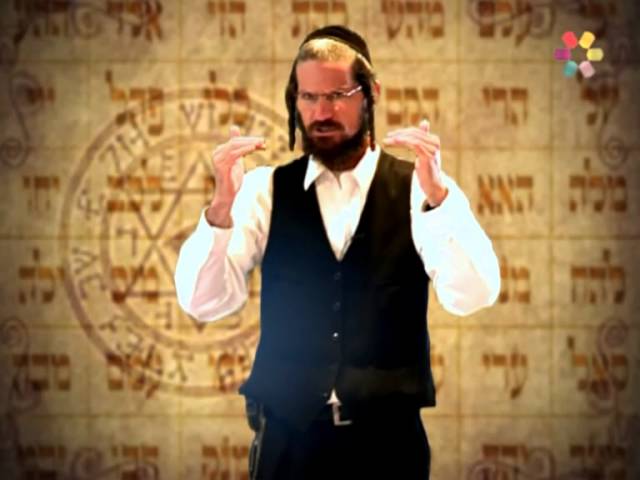
Rabbi Dr. David Gottlieb - 33rd Day of the Omer: Rabbi Shimon's Folk Festival
141 views

Follow us: https://www.hidabroot.com https://www.youtube.com/@Hidabrootcom https://www.instagram.com/hidabroot_global https://whatsapp.com/channel/0029VbCYZjl1CYoa4ulQIK2q Who was Rabbi Shimon Bar Yochai? What is Kabbalah? Rabbi Gottlieb elaborates on the uniqueness of Rabbi Shimon Bar Yochai, the Zohar, mysticism and Lag Ba'omer. For more inspiring content: @Hidabrootcom
Categories:Torah
Comments
Transcript
Auto-generated transcript. Not time-synced to the video.
What I'd like to do is come at a single
subject from two different angles, two
very different angles.
Uh
some of you, I suppose, were privileged
to be here for Lag B'Omer. I was
returning back from Los Angeles late Lag
B'Omer afternoon, so and we had a
grandchild who had a haircut there. So,
I missed it.
But, I've done it before.
Um it is the great
Jewish Israeli folk festival.
Um and for a country this size, it's by
far
the biggest gathering ever during the
year. Nothing matches it.
Hundreds of thousands of people, now
depending on who you trust to say that
200, 300, 400,000 people
within the space of 24 hours, or let's
say 36 hours.
What's going on?
Obviously, it's centered on Rabbi Shimon
bar Yochai.
Who was he?
What did he contribute? Why is he so
special?
Why is he the one that attracts this
kind of
occasion?
Indeed,
the Talmudic coin says that had it not
been for the fact that Rabbi Akiva died
as a martyr,
it would have been celebrated on Rabbi
Akiva's
yahrzeit, not on Rabbi Shimon's
yahrzeit. So,
it's it's a
long and complex story.
Now,
people associate Rabbi Shimon bar Yochai
with the Zohar. That's correct.
But, I don't think many people associate
him correctly.
Rabbi Shimon had a had a yeshiva.
And in that Yeshiva, they specialized in
what we would call today Kabbalistic
topics.
They had many discussions.
Outsiders came from time to time and
participated. Some identified, some
strangers.
Rabbi Shimon assigned one of the
Talmudic one of the disciples
named Rabbi Abba to edit the
discussions.
These were free-standing discussions.
He edited them and he associated them
with verses in the Torah.
But it's not
to be assumed that when you have a piece
of Zohar that's associated with a verse,
that somebody set out to write a
Kabbalistic commentary on the verse. No,
just like Ravina Ashi
took
discussions of Tannaitic material and
attached them to Mishnayot.
It isn't as if the discussion was
centered on the Mishnah. This is a
symposium how should we deal with this
Mishnah? These people made these
remarks.
They had a discussion about a topic. In
the middle of the topic somewhere, this
Mishnah played a role. So they
associated with that Mishnah. Rabbi Abba
did a similar editing job
for the Zohar.
The chief
um
the chief contributor
and the Rosh Yeshiva was Rabbi Shimon.
So
he's representative of the whole
process, but he wasn't the only speaker.
And it's certainly not true that when he
was in the cave for 12 years, that he
wrote the Zohar. That's something which
I've heard many people say, which is
simply has no
no basis in fact.
Now,
it's not wrong to call
Zohar and Kabbalah Jewish mysticism.
But there's considerable misleading
about about it
as well. First of the word Kabbalah
means received.
Kabbalah means to receive.
And Ramchal and others say
that the significance of it is it's not
invented.
It couldn't be invented. It's not the
fruit of speculation and inspiration and
other religions drug-induced highs and
the rest.
It's part of the oral tradition just
like the
rest of the tradition came ultimately
from prophecy, so this two came from
prophecy.
The mystical material was not invented
by Rabbi Shimon bar Yochai, far from it.
All of the material was revealed to
Moses and he taught it to the people of
his time.
And then
it went through evolution.
It wasn't taught publicly to the vast
majority of people. It was kept in a
closed circle of people.
And it got
various different modes of expression.
Anybody who thinks that Rabbi Shimon bar
Yochai invented Jewish mysticism, and I
have read historians who think that and
even worse,
um should go back to the book of Ezekiel
and read the first five or six chapters
and see what you understand.
I guarantee you will understand nothing.
Because it is one of the treasure troves
of Jewish mysticism and it is impossible
to understand.
And there are mystical visions in the
five books of Moses. And it's it's
something which goes all the way back to
the beginning of of Judaism. Indeed, it
must do so because if it didn't, it
would be heresy and no one would have
accepted it.
Now,
it does
track
a certain level, typically, typically,
tracks a certain level of explanation, a
certain level of analysis, which is
I would say very deep.
I'll give you an example.
Let's take the first few words of the
Torah. Bereishit bara Elohim et
hashamaim ve'et ha'aretz.
The literal reading of those words is to
indicate a time.
In the beginning, God created the
heavens and the earth, the way
Maimonides reads it.
Or in the beginning of his creating
heavens and the earth, he made light.
The way Rashi reads it, it's talking
about when things happened.
The Midrash
comments
the base of Bereshit can mean for the
sake of, even in literal Hebrew, even in
the book of Genesis, the word base can
mean for the sake of, the letter base.
Rashi's is a code word for the Torah and
the Jewish people.
And therefore, the beginning words read
for the sake of the Torah and the Jewish
people, God created the heavens and the
earth.
I'm not going into the different levels,
Shabbat, Rosh Hashanah, all of those and
all the rest, but the Midrash's comment
is to tell you the purpose of the
creation. Purpose.
In a certain sense, that's deeper, more
broadly significant than just the time.
So, the Midrash is pushing a level
deeper.
The Zohar says the following.
Says something almost shocking.
The base can be indication of using a
tool.
When you when you dig with a shovel,
then he was is said "Lachpor b'deker."
Deker is a shovel. Base means with, you
use the shovel as a tool.
So, says the Zohar,
there is an unnamed subject, X,
and the first words of the Torah say X
used
Rashi's
to create
Elohim.
Shock establishment.
An unknown subject used Rashi's
to create Elohim. Elohim is
God's names.
So, creating God is just, you know,
seems to be off the map. That's
something which doesn't need to be, you
know.
And then, to have it reference some
unknown subject, so here's the idea.
The idea is, as it said in the
Kabbalistic tradition and in the
philosophic tradition, we don't
understand God
at all.
God is transcendent. May out impossible
to understand.
No thought grasp him at all. No words
describe him.
Okay,
so God is beyond all description. Then
what are we talking about all the time?
What are we talking about? There are
thousands of descriptions of God.
The answer is you're talking about what
he does, not what he is.
Can't talk about what he is.
You can only talk about what he does. In
particular, you can talk about themes
and patterns in what he does.
The things that he does aren't just
random. And they don't come out of an
infinitely complex background that we
can't grasp. God purposely reduced the
complexity of his actions so that we
would be able to understand that. He
created us with certain natural
principles for our understanding, and
then he so to speak reduced himself to
act according to the principles that we
have we possess so that we'll be able to
understand what he's doing. Now, there
are different principles.
One is called loving kindness.
Another one is called strict justice.
Another one is called mercy. Another one
is called charity. These are familiar to
you because they're familiar Hebrew
words. They're familiar because the
Talmud, which is continuous with the
Zohar
and the mystical tradition, uses those
as God's
attributes.
The Zohar thinks it's a step further and
says, all we have are these active
attributes. We don't have anything else.
There's nothing behind them.
Okay, that means every time you see a
name of God,
the Zohar will ask This almost sounds
like like like heresy. The Zohar will
ask which one?
Not which one God out of a multitude of
gods, but which one of God's active
principles is this name of God referring
to?
Ah. Now let's go back to the comment of
the Zohar in the first few words of the
Torah.
There is a principle of God's
action, which is unnamed in the verse.
That unnamed principle used
another principle called Reshith to
create a third principle called Elohim.
What are they? Well, Reshith we know
from the famous verse Reshith Chochmah
Yirat Hashem.
The beginning of wisdom. Reshith is
associated with wisdom.
Wisdom, Chochmah, is one of God's active
principles.
The unnamed subject used wisdom to
create Elohim, which is Binah.
So you have Chochmah and Binah.
And the unnamed principle is what we
call Keter,
the crown, which is the highest of the
10 Sefirot. So what this the Zohar is
saying is Keter, unnamed, used Reshith,
which is Chochmah, to create Binah, and
our world is the product of Binah's
activity.
I would say that's a step deeper even
than the Midrash.
Because here you're finding out who did
it.
Who created the world? What was the
character of the creative principle that
brought the world into into being? And
the answer is that it's Binah. Notice
how the three fit together. The flame
shot is when?
The Midrash says for purpose.
And the Zohar is who?
They all
contribute to a fuller and fuller
picture of
what's going on.
I'll give you one more example, and then
I want to comment on how it relates
everything else.
If you are lucky enough to use
a good Sefardi siddur
or some Chassidic siddur and do this,
sometimes they have the two names of God
interweaved with one another.
The Yud Heh Vav Heh and Vav Heh
interweaved with Aleph Dalet Nun Yud.
The idea is this. This name, Aleph Dalet
Nun Yud, the one we pronounce on that
that we're familiar with,
um if you look at the way it's spelled,
it has an Aleph, and then it has the
letters Dalet Nun Yud. Now if you if you
rearrange them, it's din.
Din means strict judgment.
So, this name contains din. It holds din
within it. It has an aleph outside which
add to din to make this name. So, it's a
container of din.
Okay. Now, what So, what?
The Zohar in parshas Shoftim says there
are four different ways that we
execute capital judgment,
capital punishment on people.
When the When the When the Gamara says
that the end of days God will destroy
the evil inclination,
he will apply all four
forms of capital punishment to the evil
inclination.
Use all four of them to destroy the evil
inclination.
Okay.
One of them is saif. Saif means using a
sword to cut off the head.
And each of the four ways that he will
use capital punishment on the evil
inclination
is done through
the name yud and a hey and a vav and a
hey,
which is a little tricky because that
name is associated with mercy.
But mercy applied to strict justice
yields
destruction.
Because mercy for everybody else.
If you rid the world of strict justice,
that's mercy for everything else.
Okay. So, now, how does it work? Well,
says the Zohar,
the yud and a hey and a vav and a hey
becomes a sword.
How does it become a sword? The yud is
the handle of the sword.
The vav is the blade of the sword.
And the two heys are the two edges, the
two sharp cutting edges of the sword.
So, you picture now
the four-letter name, the proper
four-letter name of God, yud and a hey
and a vav and a hey, as a sword, where
the yud is the handle,
the vav is the blade, and the two heys
are the are the edges of the blade.
Now,
this combination of names is used in the
in the sitter
and they say in the Sefardi sitter or in
a sitter of um
some Hasidim.
When you start the Shmoneh Esrei, when
you start the Shmoneh Esrei, you start
with a verse, "Hashem Sefatai Tiftach
Ufi Yagid Tehilatecha." "Hashem, open my
lips and my mouth to declare your
glory."
Your praise.
And the message is this.
I think it's this way.
If If it's If this is the way the
letters are interleaved, you have the
Yud outside.
Then you have the Aleph-Dalet name which
contains then, holds then, encapsulates
then, covers then, and inside it you
have the Hey-Vav-Hey
of the
four-letter name, which is the blade.
So, you're putting the sword in its
scabbard.
That's the picture.
Now, when you say "Hashem Sefatai
Tiftach Ufi Yagid Tehilatecha," that
name of Hashem there is Aleph-Dalet.
In the verse, it's Aleph-Dalet.
In the sitter, it's spelled this way
because the function of the Aleph-Dalet
there is to put the sword in the
scabbard.
The sword that you held when you said
the Shma, where the sword can be used to
cut off negative elements, that sword is
put away. You don't want to be
functioning with a sword when you go
into the Shmoneh Esrei. You want to be
functioning with a
with the appeal to mercy and only mercy.
So, that's what the Zohar says.
I remember when I read that, I thought
to myself
do I know anything about what's going
on?
I've done you know, thousands of Shmoneh
Esreis, and I said "Hashem Sefatai"
every time. Have I any clue what's going
on? Have I any clue what's going on
whatsoever?
Okay.
Now, having said all of that
let me give you another piece of
background.
I'm putting all these things together
These are things I put together over
decades, but
as a philosopher, when you see these
things coming from different angles, and
they all come together to a consistent
picture, it's to me it's a very exciting
picture.
Um
The Shulchan Aruch is a book of Jewish
law and custom.
The Moreh Nevukhim, Guide of the
Perplexed,
is the most complex, abstract, deep,
complicated, fundamental work of all
Jewish philosophy.
The Ramah,
Ashkenazi source for the Shulchan Aruch,
whose comments are printed in every
edition of the Shulchan Aruch,
starts his commentary
with a quotation from Maimonides' Guide.
Why would he start
his commentary
on the Shulchan Aruch,
a book of law and custom,
with a reference to the most difficult,
abstruse, distant,
specialist
book of Jewish philosophy? The Ramah is
making a statement.
The statement is, don't think that law
and custom's one thing, and philosophy's
something else, different realms,
different dimensions.
Judaism is one organic unity, and every
part lives off the other part. Every
part contributes to every every other
part. You can't understand any one thing
in isolation. Its roots and its growth
has to be traced to all of its
connections, and there'll always be
roots in Jewish philosophy.
The Ramah, by the way, was known for
studying Jewish philosophy, and he
caught flak for it. There were others
like the Maharshal who criticized him
bitterly for it, and he defended himself
that that he felt it was appropriate.
Now,
what he quotes from the Maimonides'
Guide is
a person has a responsibility to be
conscious of God continuously. The verse
says, "Shivisi Hashem negdi somid."
Maimonides says, "If you're in the
palace of the king, in the throne room,
and the king is sitting on the throne,
you behave in a certain way. And the way
you behave is not the way you behave in
the street. You give yourself certain
liberties in the street that you
wouldn't give yourself in the throne
room of the king."
So, says Maimonides, a person has to
realize that our king is with us all the
time.
That in that sense, we're always in the
throne room.
We're always in front of the king on the
throne. And that being the case, that
should affect our behavior.
So, there are more quotes than now.
The The The Mishnah Berurah says, "The
Kabbalists told us how to fulfill this
idea that God is before me continuously,
picture a certain way of spelling God's
name with certain vowels. That
particular spelling and vowels is the
what you keep in mind
when you want to have God in front of
you." So, I read that and thought to
myself, "Here you have a law and a
custom backed up by a quotation from the
Guide of the of the of the Perplexed and
and
implemented through a quote from the
Zohar."
That's a good illustration of what the
Ramah is talking about. Everything is
related to everything.
So, Rabbi Shimon Zohar is very deep,
very complex, very um
um
technical in ways. It's built on
gigantic deductions, complex arguments,
careful definitions of multitudes of
terms, a vast amount of information.
Very, very few people
can
work with it.
But,
it penetrates down to everyday practice.
It's not as if it's just for specialists
who go off, you know, I I'll have to
I'll have to I'll have to tell the time.
The Druze religion, I'm told, is only
understood by a few hundred elders, and
all the rest are ignorant of their
religion. If you ask them what the
principal religions are, they'll tell
you they don't know.
The elders know. That's enough. They
don't have to know.
Judaism wasn't that way. We believed in
a challenge of universal learning, but
in the effort of universal learning some
and accomplished more and some
accomplished less. This was typically
accomplished by many less, but it's
connected. It's all connected. So, as I
showed you, when you say
in the beginning of every Shmone Esrei,
"Hashem, open my mouth, my lips and my
mouth can declare your praise."
If you knew what you were saying, if you
appreciated where it came from, you'd
say it with the interleaved
two names of God, which all the Sefardic
siddurim have it. You know, the
13-year-old Sefardim who daven, they
daven with that in front of their eyes.
How many understand? How many don't
understand? But they do.
It comes down to everything that we do.
It affects everything that we do. It's
part of
the world we live in.
Now, um
here's an illustration also for everyday
practice.
The Talmud says when you take three
steps back after you finish the Shmone
Esrei,
you bow to the right and then to the
left and then straight forward.
You may know some people who don't seem
to do that.
When they step back three paces, the
first way they bow is this way.
Talmud says bow to the right.
They bow this way.
They have a different custom? No.
They're also bowing to
the
right.
Because when you say to the right, you
really have to ask, "To whose
right?" Doesn't say to your right. Says
to the right.
And the Kabbalistic picture is that
since you are standing talking, so to
speak, to the Shechinah,
the Shechinah's facing you.
So, in this interaction, there's your
right and the Shechinah's right. And the
Shechinah's right is on your left.
So, people who bow this way first are
bowing to the Shechinah's right.
People who bow this way first are bowing
to their own right.
Everyone's bowing to the right. Question
is, whose right?
Well, first of all, that takes the
position of Tefillah very seriously.
You know, not just
going through a 6-minute meditation
which you do with half a mind. You're
standing before the screen and before
God's presence.
To the extent that we have a custom is
to bow this way first.
I think, wow, it's all about two
Hashem's right cuz that's he's facing
me.
So, all of a sudden, a little custom
like bowing at the end of the menorah
when you step back takes on very deep
cabalistic significance.
There is a custom, I don't know if you
come across it.
Um, and I'm just mentioning it not
forcing it on anybody.
That you
you put on and take off your shoes.
Put on your right shoe first and you
take off your right shoe
Uh, that said, yeah, take off your right
shoe last.
Put on your right shoe first and take
off your right shoe last.
Why would you do that? What would
possibly be the significance
The answer is that right is loving
kindness.
Left is strict justice.
They are both attributes, so to speak,
of God, but they're not equal.
They're not equal.
Whole purpose of creation is loving
kindness.
Strict justice takes
uh, second place
to loving kindness.
Now, putting shoes on your feet
Putting shoes on your feet is a way of
protecting your feet.
So, we're protecting the right foot
strictly more than the left foot. We're
giving precedence to the right over the
left. We have a lot of mitzvahs that do
that.
So, if you're taught
how to light the Hanukkah lights, you
know, you add you the first night you
put a candle in the rightmost position.
Then the next night you put that one
plus one for the left and you move left
as you add them in. When you light them,
you light the new one
and you go down to the old and to the
old space list, it means you're moving
from left to right. Right is the goal.
Right is guiding the motion.
We have a lot of mitzvahs that
distinguish between left and right.
And they always give precedence to
right, right over left.
So that also ultimately becomes a
capitalistic idea.
Now,
the Jewish people understood this.
They understood that even though I don't
know the Kabbalah personally,
I know some snippets here and there.
I know that everything else is based on
it. Everything else is an expression of
it.
It's an expression of ultimately
capitalistic ideas. Listen to what
Luzzatto says about the the length of
our prayers. Why is Shacharit the
longest prayer?
And Maariv is the next longest, though
considerably shorter.
And Mincha is the shortest. Why is that?
Why is that?
So, Luzzatto says, based on the Arizal,
based on the whole capitalistic
tradition,
every day has a different theme.
The days contribute something to the
development of creation. Every day is
another 24 hours, one 24 hours later.
And therefore it has a different theme.
Now, one function of prayer is to
register that theme
and to project that theme onto the
world. And here the day starts in the
morning
and ends
at the end of night.
Which it does in certain sacrifices as
well. The Jewish day can work both ways.
So,
Shacharit, the morning prayer, is the
longest because you are confronting a
new theme.
Now, there's a sub-variation between
daytime and nighttime,
daylight and and darkness.
So, Maariv carries that theme into its
variation for darkness.
That's why it's the second longest.
Mincha is simply the end of the daytime
period. Okay, there's a minor, even more
minor, variation between the beginning
of day and the end of the day, but it's
a very minor variation, and that's why
my menstrual is so short.
So, we think,
you know, I don't know, it's the middle
of the work day. It's an inconvenience
to have a menstrual so long.
According to the real reason, the real
reason reflects something that's going
on
in a different realm altogether. I'll
give you one more example, then I'll
come to the other side of the issue.
When I
lost both my parents in 1 year,
1992,
um
I studied the laws and the customs of
mourning.
Uh one of which is, if you are a
mourner, you should lead lead the
prayers.
Be the select tsibur.
And the question comes up, suppose
you're in a big congregation, there are
lots of people who need to lead the
prayers because they're mourning for
their parents.
How do you give precedence? Or, if you
have a choice, which should you choose?
We don't do this on Shabbos. Mourners
don't lead the prayers on Shabbos. They
have 18 prayers on an average week.
So, you get one of 18, and you can
choose any one of the 18.
Which one would be best to choose?
I don't know. I I read it question in
the book, and I thought, "Well, I wonder
what I would say."
But, I got it dead wrong, and I don't
I've asked many people since then. Turn
of intuition,
no one got it right.
The right answer is
Maariv Motzei Shabbos.
Evening prayers Saturday night.
What?
I mean, what about Shacharis is much
longer, twice a week you read the Torah
during Shacharis?
This Kedusha? What? Maariv Motzei
Shabbos?
And the explanation is this.
The point of leading the prayers is to
do something good for that deceased
person, for that soul.
Now, when you move from
uh from Shabbos to the week, on Shabbos
the souls are not judged.
They're not judged, and they're not
punished.
Moving to the week, it's returning to
the realm in which
judgment and punishment can take place.
That transition you can have the maximum
benefit for the soul.
If you put in something good for the
soul at that transition,
that gives maximum benefit to the soul.
And if you can't get to my vote of
Shabbos, my the rest will be cuz also
the best because you're going from day
time to night time where the judgement
and punishment intensifies.
I read that and thought to myself, "Wait
a sec.
What I'm doing here is because what's
going on there.
Not because of psychology and economics
and sociology and family you know family
solidarity and so on and so on it's
because of what's going on there. I'm
still connected to that soul. I can
still do something for that soul. What I
do here is because of what it's
connected to there.
That's the cabalistic idea that there's
a there that there surrounds us.
It underlies everything that's going on
in our world and ultimately our laws and
our customs
are expression of that reality.
So as you realize this that
even if his personal acquaintances only
with a few snippets here and there, but
he realizes the reasons for what he's
doing are in that teaching.
Okay.
That's one side. That's sort of the the
position that Rebbi Shimon has vis-a-vis
Jewish scholarship and life generally.
Now let's talk about folk festivals.
There are three the three major holidays
Pesach, Shavuos, and Sukkos.
There's a mitzvah to come to
Yerushalayim.
They are called in English the
pilgrimage festivals. Are they all the
regular?
Let's think about this in practical
terms and in economic terms. There are
places distant from Yerushalayim
a week's travel
or two weeks travel.
Let's take
an intermediate case. You live a week's
travel from Yerushalayim.
That means six weeks a year on the road.
Yom Kippur.
And okay, we we can come to you on
Uh okay, since you mentioned it, I'll
you maybe you heard the story from me.
I gave a a shear once in a business
uh,
in in downtown Chicago.
Somewhere on the 80th floor.
I come down to the street level. I'm
waiting for the car to pick me up.
Over this Jew appears out of nowhere.
He comes over to me and says, "In the
times of the temple, where do you think
they spent Yom Kippur?"
Total stranger. Total stranger.
I don't know.
"In shul, I hope." "No," he said, "on
the road."
Cuz they had to get there for Sukkot.
Yom Kippur is only 4 days before Sukkot.
And if you take us a week or two
Shabbats in between, sometimes two
Shabbats in between, you know, it's
impossible.
So, they slept out on the road. People
are walking and the the happen to come
together, you know, where you people
walk at different speeds. It's a
completely happenstance, so to speak.
It's Hashgacha from Providence that
these people came together. Not with
your favorite chazzan and not with your
favorite person for the illah and so on
and so forth. Yeah, and then you were
there a hay hay stack someplace or
whatever. And that's where he spent Yom
Kippur.
And he walked off and disappeared.
It's just one of those things. I have a
couple of experiences like that. I have
one over here. This is also a little bit
relevant. Where you know where B'nei
Chorin is? Just up up the hill over here
in the Machon Ya'el where all the
Sefardim daven. They have a whole thing
there.
I used to live right near the shul here.
And sometimes convenient, so I go over
there for Mincha Maariv.
So, I daven Mincha, come out, I'm
waiting for Maariv. It's sort of dusk
dusk-like.
And a kid comes over to me. I don't
know, maybe he was 12.
Yeah, 14 or 11, I couldn't tell exactly.
Sefardi kid. He says to me, "Why do we
daven Maariv?"
Total stranger. I've never seen him
before. He's never seen me before. "Why
do we daven Maariv?" So, well, the
Maariv says that uh, it's a it's a
reshus, but it's a reshus that people
took on as a custom and therefore it's
binding as a custom. "No," he says,
"that's not the reason. The reason is
that Zeir Anpin is together with Malchus
and Malchus together with
and he gives me this whole long
cabalistic formula of which I understood
nothing at the time. I didn't understand
a word he was saying. And then he walked
off.
So, you know, now this kid was taught
that.
So when he goes into the he knows why
he's
in terms of Rabbi Shimon bar Yochai, in
terms of the Ari. He knows what the what
the bases are. Okay.
So now, let's talk about 6 weeks on the
road.
6 weeks on the road.
That's a strategic investment. You're
talking about farmers for whom
work time is very precious. It's not
something you can just throw away.
What great Jewish value
is accomplished
by that investment of 6 weeks on the
road? Officially, it's a leader of the
you come up to the base of you present
yourself in the Azara. You give
a carbon shria.
There are all sorts of things written
about what happens in the Azara and so
forth and so on.
And all that is correct.
But there's another element and that is
you experience hundreds of thousands of
Jews serving God together.
And that is even a category.
When you have an opportunity to do a
mitzvah together with many Jews,
that's preferable. It's called
am hadras melech.
In the multitude of the people is the
glory of the king.
And it's preferable for you to do it
there. And I think it works two ways.
Since there's greater glory for the
king, there's a greater contribution.
You are contributing to that greater
glory for the king, but you experience
the glory of the king.
You experience it.
And for you, that's an important element
in your in your spirituality.
To experience God's glory. And it's
found but over in the multitude of the
people. You have to imagine the hills
around here
black with people.
Thousands and thousands of people coming
to serve
the dominant of the minion
and the
hollow you know,
I'm not exaggerating. You know very
well, in the plaza before the Kotel, you
can get 100,000 people. It has happened.
So, if you talk about all the hills
around here, you're talking about a
great multitude of people. You ever go
there if you go to shul this morning,
for example,
and you have minyanim from all over the
world, every different kind of accent,
every different kind of custom. If
you're not just too dazed out by by
being up all night,
it can be a very thrilling experience.
Birkas Kohanim, also during the during
the holidays, where not that many people
sometimes 10, 20, 30,000 Jews can come
and and and pack the place. Judaism is a
religion not only of laws and principles
and philosophies and values and
priorities and behaviors and strategies,
it's also a religion of experiences.
And the experiences are necessary.
They're crucial. You cannot have a
healthy religious life without mass
experiences.
Question then becomes, where do we have
opportunities for that?
Where do we have opportunities for that
kind of mass religious experience?
There are some examples.
Rosh Hashanah
they happen in great advice, great um
funerals.
When one of the leaders of the
generation dies, we had two just just
before Pesach.
Um
we lost him.
Um
so then hundreds of thousands of people
can turn out.
I remember with Moshe Feinstein's
levaya.
And this was to me it was absolutely
shocking.
I guess it shows how little I
understand. When he came here to be
buried here on on Har Hamenuchot,
it was Purim in Jerusalem, Shushan
Purim,
15th of Adar.
I had lived here I'm here since since
January 1981. I don't think in all time
here I heard his name mentioned.
Americans who came from America and who
knew him talked about him, but among
Israelis, among in Yeshivas and so on
and so forth, you never heard his name
mentioned. So, I thought, he's coming on
Purim. Who's going to turn out?
200,000 people turned out. That's what
happened. It was astonishing.
It took more than an hour for the people
to walk past the entrance to the city.
The entrance to the city was blocked,
completely blocked. I walked it.
So,
I couldn't believe what happened. It was
his his his impact, his presence of of
Klal Yisrael was so enormous.
Um so, you have it. Here, in Meron, you
also have it.
And in Meron,
in a way, it's even more broad because,
number one, all of the different streams
of Jews participate,
whether it's Hasidim or Yeshivish light
or
Yekkes or Hungarians or Sefardim,
everybody that participates, and a lot
of people who otherwise you wouldn't
have regarded or noticed that they were
religious also come.
It's a great
festival, and there's a combination of
feeling exalted,
exalted,
thrilled, awed, is there also a
solemnity that that buzzes, together
with a with a sense of sharing.
Sharing and togetherness. You went
the most unbelievable
outpouring of caring.
Every 5 ft, somebody's offering you
something.
Water or milk or or or or soda or coffee
or or cakes or
you know, if you need something, and
please take, and
people just care about you. They care
about you. And this money is contributed
by people all over the world, so that
these things can be available. When you
go up by bus, where you stop at the bus
stations,
the places that are set up, first of
all, they're set up to be separate for
men and women.
And
there are the food and coffee and
whatever you need drinks whatever you
need.
It's
the sense of
spontaneous sharing of class rail.
There's a sense of unity that's that's
very precious.
Now,
I think that that's
contributes something
that's very
precious
in
um
a person's spiritual life. The
phraseology of
Baruch Hashem Hashem Elokim
in the multitude of the people is the
glory of the king. It doesn't talk about
their scholarship.
It doesn't talk about the level of their
righteousness.
We're not now talking about scoffers and
people who disconnect themselves all
together. We're talking about the very
righteous, the most pure, and so on and
so on.
It means
that if you have
in a certain sense, if you have 10 great
tzaddikim
and 100 ordinary people,
the glory of the king is with the 100
ordinary people.
There are other things about the
tzaddikim I'm not discounting, but I'm
just saying this dimension
one can't ignore this dimension
altogether.
And has to be expressed.
I saw it here because I moved here,
but also you have it to see in Maseches.
There's the daf yomi program.
A folio of the Talmud every day. If you
do that, you end up finishing Shas in 7
1/2 years.
Um Baruch Hashem, my wife pushed me into
it about 35 years ago, so
I should say I'm a veteran, but it's
the way I do it becomes a challenge
anyway.
Um
and
it's not easy.
And um
at the end, the people doing it
worldwide on the same schedule.
So, at that date, when they're finishing
it,
uh people get together. Now,
I think three times ago already they
started to take Madison Square Garden.
Since Madison Madison Square Garden
seats 20,000 people.
That time, three cycles ago,
the reporter of the New York Times who
covered it was an Arab Muslim.
That's who the New York Times sent to
cover the Siyum HaShas.
You know, just want to know who they
are. You picture from that. And he
wrote,
"When the people stood up to pray
in this
um
buck this place, this edifice, where
people kill each other.
Sports events, hitting each other,
punching each other, screaming and
screaming at each other, AND THROWING
BOTTLES at each other, and so on and so
on. 20,000 people got up to pray
silently."
He said it impressed him. It impressed
him. It impacted him.
He saw something there. Okay, so I went
This last time was the third time that I
went in a row. My wife went because she
knows I'm doing it. She went with me.
Last time we took one of our sons who
was there also.
Um
and
two times ago, it was in Madison Square
Garden and someplace on Long Island,
another another thing where they had
20,000 there and another 17, 18,000
there.
Last time ago, it was in Madison Square
Garden and the place in New Jersey,
MetLife I don't know which one it is,
big stadium.
And this time it was in MetLife Stadium
and there were 90,000 people there.
90,000 people.
When 90,000 people get up to pray,
when they say "Yisgadal v'yiskadash" to
to Kaddish,
when they say "Borchu" to Borchu, when
they say "Amen".
That's something you don't forget.
You don't forget it. I have the ticket
from the one 17 years ago. I have it in
my pocket. I never put it away.
It's too thrilling an experience to
forget.
And it becomes part of your Yiddishkeit.
You see 90,000 and the emotions that
people had.
Friend of mine was in a slightly
different place from where I was.
He told me
there was a fellow there when they make
the final
Siyum, there's a whole long formula to
say maybe you've been at a Siyum
Maseches, you've seen how they do do it.
They make a whole So, somebody there who
represents the community
and he says it.
One fellow
Mr. Akiva Feld
who had learned
the whole Talmud
was saying it aloud.
Tears pouring down his eyes.
So,
there you see
uh an expression of the glory of
Hakadosh Baruch Hu that you don't see at
other times. This is something that has
to be sought out. And it's a part of a
more general message. The general
message is, as I said before, that the
Torah is a is a Torah of experiences.
These are the mass experiences in which
you experience Hadran Melech. There are
other experiences that a person has to
look for when there are Hashem, when
there are levayas.
Well, if people who are of some
importance announced it, you know,
sometimes the whole yeshiva goes.
Because
if you if you spend all your time in
this yeshiva, you could think that
you've joined a group of about two or
300 people and that's it.
You go out and see the streets of
Yerushalayim clogged with people
and it takes an hour for the procession
to go past. You say, "Well, wait a
second.
There's a whole nation out there. It's
not not not such a simple thing."
Um
just 2 months before
the
um
last Siyum Hashas at MetLife Stadium
there was a
um there was a gathering at the at Citi
Field
stadium with 12,000 people
concerning dangers of the internet.
I was very close to that because our son
organized it.
He organized it.
It was under the leadership of the
Skolener Rebbe and Reb Yisrael Solomon,
but he was the designee to to organize
it.
Up to 3 days before the event,
there was very widespread prediction
that it would be a flop. No one was
going to come.
And all the cynics had their spins on
it, so and so on.
2 days before it became clear
that it was overflow.
In the end, they filled the 42,000 and
they had to rent the
um
Oh gosh, there's another uh
stadium a block away named for a very
famous tennis player.
Arthur Ashe Arthur Ashe tennis stadium,
and they put another 15,000 in there.
So, 57,000 people had turned out
just to hear
what they have to be careful about.
And how can we improve
sanctifying God's blessed name in the
world?
You see that?
You know, they didn't come to get
awards, they didn't come to celebrate
anything.
You know, even even the Siyum Hashas is
a celebration. This wasn't a
celebration. It was just the leaders of
the generation said we have to come
together, and we have to make
resolutions, and we have to deal with
this problem, and they came.
Anyway,
this is something which you should be
mindful of. And if you didn't go to to
Meron this year,
then you plan to go to Meron next year,
and also look for these types of
opportunities. We were here in 1977.
I was about to go and prepare the the
family for Aliyah.
And we were living in Geula,
and at that time Belz was in the Agripas
area.
Um
we decided after our Seder
that we would go to the Belzer Rebbe's
Tisch as his chassidim do. So, he has
the Seder in his in his in his synagogue
room there with hundreds of people, and
then hundreds and hundreds more come
back.
He finishes his seder
and then he goes on
Yitziat Mitzrayim.
The exodus from Egypt. What happens? He
starts to walk. It's 2:00 in the
morning.
He starts to walk in the streets of
Jerusalem. People follow him behind him.
Hundreds and hundreds of people.
And then he stops
and he says some divrei Torah
and then he starts to walk again.
And that's you see you're going hour
hour and a half. You know, you finish
the seder and you're going. You're
going.
That's an unforgettable experience.
So these are things which build a
person's Yiddishkeit together with the
ideas and
arguments and analyses and proofs and
and priorities and values and all the
rest.
The experiences build a person's
Yiddishkeit especially the experiences
of a group. Chassidus taught this and
stressed this. The idea of the
community, the idea of the group is
something which people should have in
mind as a fundamental idea. And it's
very I think it's very indicative that
the biggest such
um expression in our times is Lag BaOmer
because as I said it expresses the idea
that
Judaism is one unified
entity integrated entity from top to
bottom. All parts touch all other parts.
And Rabbi Shimon bar Yochai has been
grasped by many many many common people
as a hero.
And that shows that as refined and as
high and as abstract as he was
his influence has reached down all the
way to the
foundations of the Jewish people.
Up next
24 recommendations shown

Stray Kids
3 years ago




TOOL
8 years ago

The Alan Parsons Project
9 years ago
Ol' Dirty Bastard - Topic
12 years ago

Berel Solomon
3 years ago
Matisyahu
17 years ago